
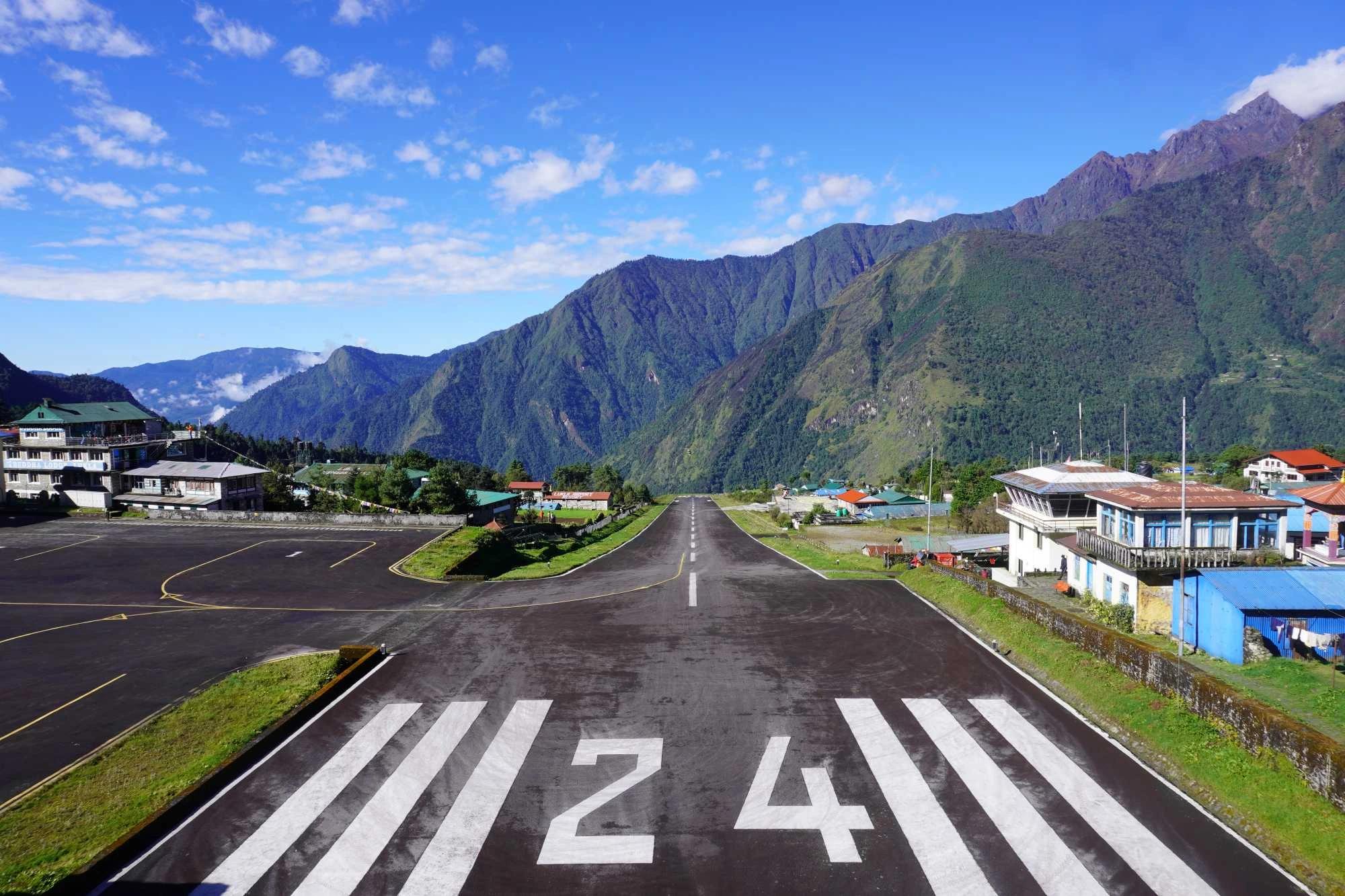
If you’ve ever dreamed of trekking to Everest Base Camp, your journey almost certainly begins at one of the most thrilling, and terrifying, airports on earth. Lukla Airport, also known as Tenzing-Hillary Airport, is a tiny airstrip perched high in the Himalayas of Nepal. It has earned a global reputation as the most dangerous airport in the world, and once you understand its geography, altitude, and runway specs, you’ll know exactly why.
Where Is Lukla Airport?
Lukla Airport is located in the Solukhumbu District of the Koshi Province in northeastern Nepal, in the small Sherpa town of Lukla. The airport sits within the Khumbu region, the gateway to the mighty Mount Everest.
The nearest major city is Kathmandu, the capital of Nepal, from which Lukla is about 140 kilometers (87 miles) to the northeast. There are no roads connecting Kathmandu to Lukla, which means the only practical way to reach the Khumbu region quickly is by air, making this airport not just famous, but absolutely essential.
Lukla Airport Fast Facts
A Brief History of Lukla Airport

Lukla Airport was built in 1964, largely thanks to the efforts of Sir Edmund Hillary, the legendary New Zealand mountaineer who, along with Tenzing Norgay Sherpa, became the first person to summit Mount Everest in 1953. Hillary helped fund and construct the airstrip to support the growing number of trekkers and expedition teams heading into the Khumbu region.
In honor of both Hillary and Tenzing Norgay, the airport was officially renamed Tenzing-Hillary Airport in 2008. Despite the formal name, the world still widely refers to it as Lukla Airport.
Lukla Airport Altitude: How High Is It?
One of the most striking facts about this airport is its extreme elevation. Lukla Airport altitude stands at approximately 2,860 meters (9,383 feet) above sea level. This makes it one of the highest commercial airports in the world.
Flying at this altitude presents unique challenges:
- Thinner air reduces engine performance and lift, meaning aircraft must use shorter takeoff and landing distances with less margin for error.
- Unpredictable mountain weather – including sudden fog, strong crosswinds, and low-visibility cloud cover – can close the airport for hours or even days.
- Hypoxia risk for passengers and crew who are not acclimatized to high altitude.
- Rapid weather changes mean a flight can be cleared for takeoff and encounter a wall of cloud within minutes.
The altitude alone would make Lukla challenging enough. But combine it with the runway, and things get truly extreme.
Lukla Airport Runway Length: How Short Is It?

Here’s where things get genuinely hair-raising. Lukla Airport’s runway length is just 527 meters (1,729 feet), one of the shortest commercial runways in the world.
To put that in perspective, a standard international airport runway is typically between 2,500 and 4,000 meters long. Lukla’s runway is roughly five to eight times shorter than a normal runway.
But the length isn’t even the most alarming part. The runway at Lukla Airport has several extreme characteristics:
- A steep gradient of approximately 11.7% – the runway slopes sharply uphill from south to north. Planes land going uphill to slow down faster, and take off going downhill to gain speed more quickly.
- The runway ends at a cliff on one side and a mountain wall on the other, there is absolutely no room for error or overrun.
- No go-around option from the northern end – once a plane is committed to landing, there is no safe way to abort and circle back.
Only specially trained pilots flying STOL (Short Take-Off and Landing) aircraft are permitted to operate at Lukla. The most common aircraft seen here are the Twin Otter and the Pilatus PC-6, both rugged, reliable planes built for exactly these kinds of extreme conditions.
Why Is Lukla Airport Considered the Most Dangerous Airport in the World?
Lukla Airport has been ranked the most dangerous airport in the world by multiple aviation organizations, travel publications, and even the History Channel. The combination of factors that make it so risky is truly unique:
1. Extreme Altitude
At nearly 2,860 meters above sea level, aircraft performance is significantly reduced. Pilots have less engine power and less aerodynamic lift to work with.
2. Minimal Runway Length
With only 527 meters of runway and no room for overrun on either end, one end drops off a cliff, the other meets a sheer rock face, precision is everything. A miscalculation of even a few meters can be fatal.
3. Severe Gradient
The 11.7% slope of the runway means that landings and takeoffs behave very differently than at flat airports. The uphill slope assists braking during landing but demands perfect technique every single time.
4. Unpredictable Himalayan Weather
Mountain weather is notoriously unstable. Pilots often fly under Visual Flight Rules (VFR), which means they must be able to see where they are going. When clouds roll in, which they do frequently, flights are grounded. On a bad weather day, dozens of flights can pile up, creating operational pressure that can affect judgment.
5. No Instrument Landing System (ILS)
Lukla Airport does not have an Instrument Landing System, which means pilots cannot rely on electronic guidance to land in poor visibility. Everything depends on the pilot’s eyes and skill.
6. One-Way Traffic Pattern
Due to the terrain surrounding the airport, aircraft can only approach and depart from one direction. This eliminates flexibility and increases risk if conditions change mid-approach.
7. Accident History
Over the decades, Lukla has seen a number of serious incidents and fatal crashes. Notable accidents have occurred in 2008, 2010, and 2013, involving different aircraft and circumstances, but all reflecting the inherent dangers of this extraordinary airport.
Who Flies to Lukla Airport?
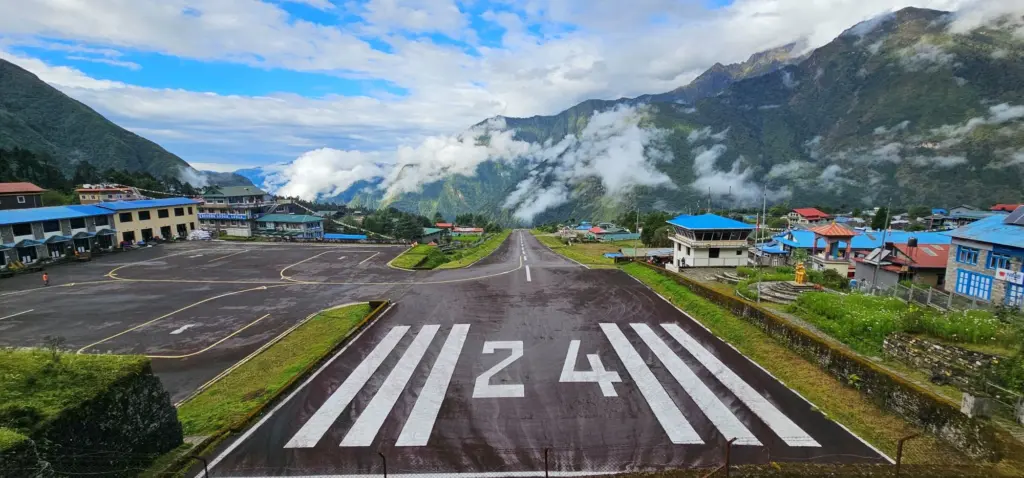
Only a small number of certified Nepal airlines operate scheduled service between Kathmandu’s Tribhuvan International Airport and Lukla Airport. These include:
- Tara Air
- Summit Air
- Sita Air (operated until a crash in 2012)
Helicopter services are also common, especially for emergencies, VIP trekkers, or when fixed-wing flights are grounded due to weather.
Flights from Kathmandu to Lukla take approximately 25 to 40 minutes, but they are among the most scenic and adrenaline-inducing short-haul flights you’ll ever experience, flying low over dramatic green hills before suddenly descending into a tiny mountain airstrip framed by snow-capped peaks.
Tips If You’re Flying Into Lukla Airport
Planning a trek to Everest Base Camp? Here’s what you need to know before your Lukla flight:
1. Book flights early. Lukla flights are in high demand, especially during trekking seasons (March–May and October–November). Book weeks in advance.
2. Build in buffer days. Weather cancellations are extremely common. Budget at least 1–2 extra days on each side of your Lukla flight to account for delays.
3. Fly early in the morning. Most Lukla flights depart between 6 AM and 9 AM, before afternoon winds and clouds make flying impossible.
4. Pack light. Small aircraft have strict baggage limits, typically 15 kg of checked baggage and 5 kg of carry-on for most carriers.
5. Don’t fight the weather. If your flight is cancelled, accept it gracefully. Pilots and airlines make conservative calls for a reason, the mountains are unforgiving.
6. Stay calm. Yes, the approach is dramatic and the runway is short. But the pilots who fly this route are among the most experienced mountain aviators in the world. Trust them.
Final Thoughts: Is Lukla Airport Worth the Risk?
Despite its fearsome reputation as the most dangerous airport in the world, hundreds of thousands of trekkers fly through Lukla Airport every year without incident. Modern aircraft, highly trained pilots, and strict weather protocols have improved safety significantly over the decades.
The risk is real, but so is the reward. From the moment your small aircraft drops onto that steep uphill runway and you step out into the cool, thin Himalayan air, you know you’ve arrived somewhere extraordinary. The trail to Everest Base Camp stretches ahead of you, and the adventure of a lifetime begins.
Understanding Lukla Airport’s altitude, its runway length, its location, and the reasons it’s been called the world’s most dangerous airport only deepens your respect for the pilots, the mountains, and the incredible human spirit that drives people to come here from every corner of the globe.
FAQ’s
-
What is Lukla Airport officially called?
Lukla Airport is officially named Tenzing-Hillary Airport, named in honor of Sir Edmund Hillary and Tenzing Norgay Sherpa, the first two climbers to summit Mount Everest. It was renamed in 2008, though the world still widely refers to it as Lukla Airport.
-
Why is Lukla Airport considered the most dangerous airport in the world?
Lukla Airport is considered the most dangerous airport in the world due to a combination of extreme factors: a very short runway of only 527 meters, a steep 11.7% gradient, high altitude at 2,860 meters above sea level, unpredictable Himalayan weather, no Instrument Landing System (ILS), and terrain on both ends of the runway that leaves zero room for error.
-
Where is Lukla Airport located?
Lukla Airport is located in Lukla town, Solukhumbu District, Koshi Province, northeastern Nepal. It sits in the Khumbu region of the Himalayas and serves as the main entry point for trekkers heading to Everest Base Camp. It is approximately 140 km northeast of Kathmandu.
-
What is the altitude of Lukla Airport?
Lukla Airport altitude is 2,860 meters (9,383 feet) above sea level, making it one of the highest commercial airports in the world. The extreme altitude reduces aircraft engine performance and lift, significantly increasing the difficulty of takeoffs and landings.
-
How long is the runway at Lukla Airport?
Lukla Airport’s runway length is 527 meters (1,729 feet), one of the shortest commercial runways on earth. For comparison, most international airport runways are 2,500 to 4,000 meters long, making Lukla’s runway five to eight times shorter than a typical one.
-
What type of aircraft land at Lukla Airport?
Only specially designed STOL (Short Take-Off and Landing) aircraft are permitted to operate at Lukla Airport. The most common aircraft are the Twin Otter DHC-6 and the Pilatus PC-6 Porter. Helicopters are also frequently used, especially for emergencies and bad weather situations.
-
Which airlines fly to Lukla Airport?
The main airlines operating flights between Kathmandu (Tribhuvan International Airport) and Lukla Airport are Tara Air and Summit Air. Helicopter charter companies also provide service to Lukla when fixed-wing flights are cancelled due to weather.
-
How long is the flight from Kathmandu to Lukla?
The flight from Kathmandu to Lukla takes approximately 25 to 40 minutes. It is one of the most scenic short-haul flights in the world, flying low over the hilly terrain of Nepal before arriving at the dramatic Himalayan airstrip.
-
Can flights to Lukla Airport be cancelled due to weather?
Yes, weather cancellations at Lukla Airport are very common. Since the airport operates primarily under Visual Flight Rules (VFR) and has no Instrument Landing System (ILS), pilots must have clear visibility to land. Fog, low clouds, and strong winds, all frequent in the Himalayas, can ground flights for hours or even multiple days.
-
When is the best time to fly to Lukla Airport?
The best time to fly to Lukla Airport is during Nepal’s main trekking seasons: March to May (spring) and October to November (autumn). These months offer the most stable weather and clearest skies. Most Lukla flights operate early in the morning (6 AM–9 AM) before afternoon winds and clouds develop.
-
Is Lukla Airport safe for passengers?
While Lukla Airport has a reputation as the world’s most dangerous airport, it handles hundreds of thousands of passengers every year safely. The pilots who fly this route are highly trained mountain aviation specialists, and strict weather protocols are enforced. The risk is higher than at a standard airport, but with the right precautions, flying to Lukla is a manageable and rewarding experience.
-
Does Lukla Airport have a control tower?
Yes, Lukla Airport has a basic air traffic control (ATC) tower that manages the flow of arrivals and departures. However, due to the lack of radar systems and instrument landing equipment, controllers rely heavily on visual observation and radio communication with pilots.
-
What is the IATA code for Lukla Airport?
The IATA code for Lukla Airport is LUA and the ICAO code is VNLK. These codes are used when booking flights and in aviation communications.
-
Who built Lukla Airport?
Lukla Airport was built in 1964 with the help and funding of Sir Edmund Hillary, the New Zealand mountaineer famous for being the first person to summit Mount Everest. It was constructed to support the growing number of mountaineering expeditions and trekkers accessing the Khumbu Himalayan region.
-
Can you walk or drive to Lukla instead of flying?
There are no roads connecting Kathmandu to Lukla, so driving is not possible. However, it is possible to trek to Lukla from lower towns like Jiri or Salleri. This traditional overland trekking route takes 7 to 10 days and was the original approach used by early Everest expeditions before the airport was built.