
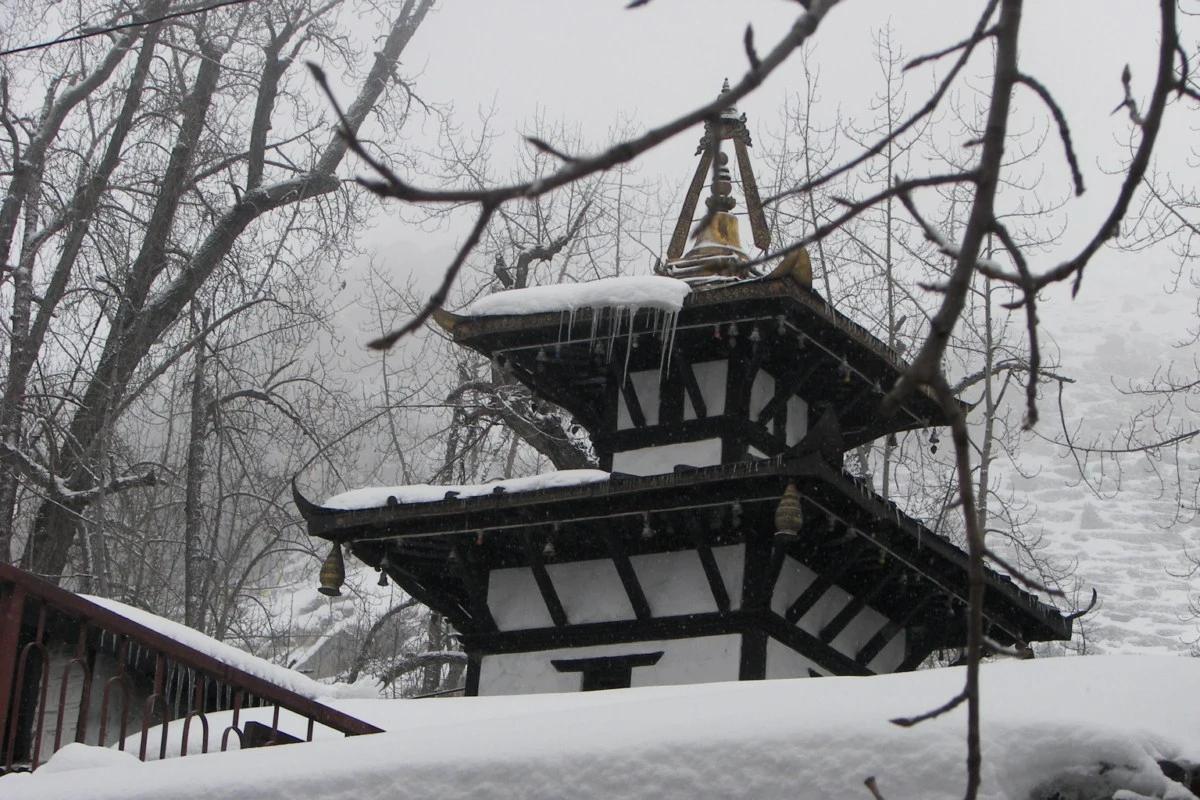
Muktinath Temple sits at about 3,800 meters in Mustang, Nepal, in a landscape of dry hills, high mountains, and the Kali Gandaki valley. For Hindus, it is an important pilgrimage site associated with Lord Vishnu and liberation. For Buddhists, the area is known as Chumig Gyatsa, or “Hundred Waters,” and is also considered sacred.
The temple is best known for its 108 water spouts, Jwala Mai shrine, and the religious traditions shared by Hindu and Buddhist communities.
Muktinath is also one of the major stops on the Annapurna Circuit Trek. But you do not have to complete the circuit to visit it. You can reach the area from Pokhara by road, fly to Jomsom and continue by road, or take a helicopter if you have very limited time.
This guide explains what Muktinath is, why it matters, how to reach it, what you will actually see there, and what to consider before traveling to a temple at nearly 3,800 meters.
Where Is Muktinath Temple?
Muktinath is in Mustang District of Gandaki Province, in north-central Nepal.
The temple complex is near Ranipauwa, above the Kali Gandaki valley. Jomsom is the main transport hub in the area, while Kagbeni lies between Jomsom and Muktinath on the route north.
The surrounding geography is important because Muktinath sits in the transition between the Annapurna region and the dry, high-altitude landscape of Mustang.
If you are traveling through the area, the route is roughly:
Pokhara → Beni → Marpha → Jomsom → Kagbeni → Muktinath
The exact route and transport options depend on road conditions and whether you are trekking or traveling by vehicle.
Muktinath is also reached from the other side by trekkers completing the Annapurna Circuit. After crossing Thorong La Pass at about 5,416 meters, the trail descends toward Muktinath.
How High Is Muktinath?
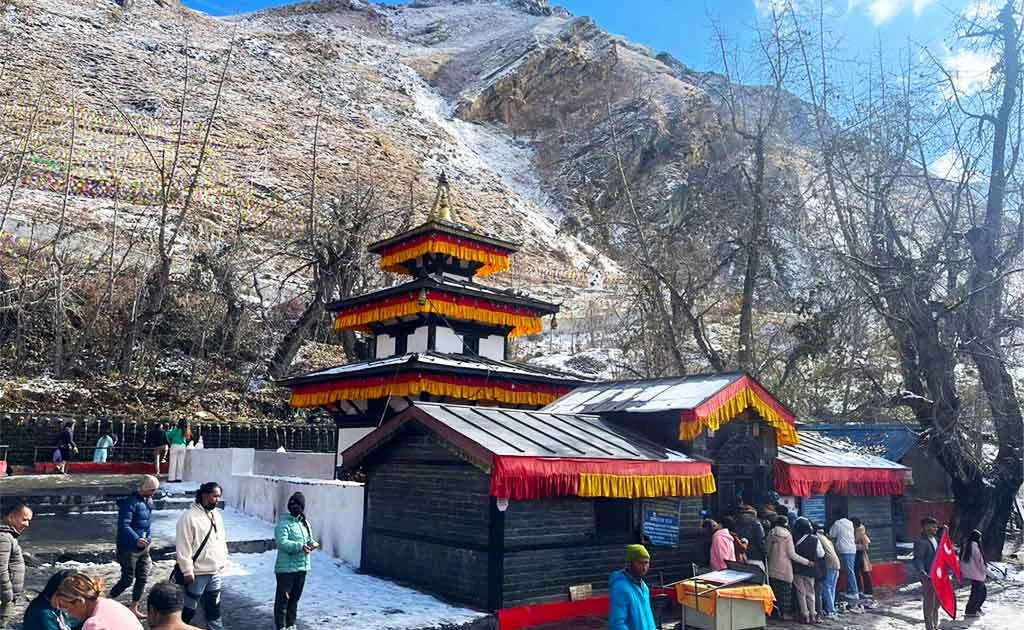
Muktinath is approximately 3,800 meters (12,467 feet) above sea level.
That elevation matters more than many first-time visitors expect.
Someone arriving by road or flight can go from a relatively low elevation to Muktinath within a short period. A person completing the Annapurna Circuit, on the other hand, normally gains altitude more gradually.
This is why the same destination can feel very different depending on how you arrive.
At this elevation, some visitors may experience:
- Headache
- Nausea
- Dizziness
- Tiredness
- Poor sleep
- Shortness of breath
Do not assume that being young or physically fit protects you from altitude sickness. If symptoms become severe or continue to worsen, descending is more important than completing the pilgrimage or sightseeing.
What Is Muktinath Temple?
Muktinath is a sacred temple complex associated with Lord Vishnu in Hinduism and with Chumig Gyatsa in Tibetan Buddhist tradition.
The name Muktinath comes from Sanskrit terms commonly understood as “Lord of Liberation.” This explains the importance of the site to Hindu pilgrims, who visit Muktinath seeking spiritual purification and liberation.
The temple itself is not enormous. What makes the place important is the collection of religious features around it and the traditions attached to the wider site.
These include:
- The main Muktinath shrine
- 108 water spouts
- Two sacred ponds
- Jwala Mai shrine
- Buddhist religious structures
- Prayer wheels and prayer flags
- The surrounding Kali Gandaki landscape
It is therefore better to think of Muktinath as a pilgrimage complex rather than simply a single temple building.
Why Is Muktinath Sacred to Hindus?
Muktinath is one of the important pilgrimage destinations associated with Vishnu.
One reason the wider area is particularly significant is the Kali Gandaki River and its Shaligrams.
Shaligrams are fossilized stones, particularly ammonite fossils, found in the Kali Gandaki region. In Vaishnava Hindu tradition, they are regarded as sacred representations of Vishnu.
This gives the landscape around Muktinath a religious significance beyond the temple itself.
For pilgrims, visiting Muktinath may involve bathing in the sacred water, offering prayers, receiving Darshan, and visiting the other shrines around the complex.
Different pilgrims may follow different rituals, so there is no need for a visitor to assume that every person follows exactly the same sequence.
Why Is Muktinath Sacred to Buddhists?
Muktinath is also an important Buddhist pilgrimage site.
Its Tibetan Buddhist name, Chumig Gyatsa, means “Hundred Waters.” The name relates to the sacred water features of the site.
The area has long-standing connections with Vajrayana Buddhist traditions and is associated with Avalokiteshvara, the Bodhisattva of Compassion.
You will notice Buddhist features throughout the wider complex, including prayer wheels, prayer flags, and religious buildings.
This is one of the interesting things about visiting Muktinath: Hindu and Buddhist traditions are not separated into completely different destinations. They exist within the same sacred landscape.
The 108 Water Spouts at Muktinath

The 108 water spouts are probably the feature most visitors associate with Muktinath.
The spouts are arranged along the wall behind the main temple. Pilgrims traditionally stand beneath the flowing water as part of their religious practice.
The number 108 has significance in both Hindu and Buddhist traditions.
For Hindu pilgrims, bathing under the 108 spouts is traditionally associated with purification and spiritual liberation.
For a visitor who is not performing the ritual for religious reasons, it is still worth understanding what is happening before taking photographs or approaching the area. People may be performing an important religious act, not posing for a tourist attraction.
And there is a practical point: the water is very cold, and you are already at around 3,800 meters.
If you decide to participate, have warm, dry clothing ready afterward.
Jwala Mai and the Natural Flame
Another important part of the Muktinath complex is Jwala Mai Temple.
The shrine is associated with a natural flame, traditionally regarded as sacred. The phenomenon is linked to natural gas emerging from the ground.
The combination of water and naturally occurring fire is one of the unusual physical features of the Muktinath site.
For Hindus and Buddhists, the flame also carries religious meaning, so it is worth visiting rather than treating it simply as a geological curiosity.
What Does a Visit to Muktinath Actually Look Like?
A Muktinath visit is not necessarily a full-day activity once you are already in Ranipauwa.
The amount of time you need depends on whether you are there for Darshan, sightseeing, or both.
A typical visit might involve:
Arriving at the temple area → visiting the water spouts and ponds → entering the main shrine → visiting Jwala Mai → seeing the Buddhist religious sites → returning to Ranipauwa.
Some pilgrims may spend considerably longer because of their religious practices.
If you are coming after crossing Thorong La, you may also want to take things slowly. The combination of physical fatigue and altitude can make a short walk feel much harder than expected.
How to Reach Muktinath from Pokhara
You have several options, and the best one depends on your purpose.
Pokhara to Jomsom by Flight
The fastest conventional option is to fly from Pokhara to Jomsom and continue toward Muktinath by road.
Jomsom Airport is the main air connection for the area.
The flight itself is short, but mountain flights are highly dependent on weather. A flight schedule should therefore not be treated as a guarantee.
From Jomsom, you can continue toward Kagbeni and Muktinath by road.
This option works particularly well if your priority is visiting Muktinath rather than spending several days trekking.
Pokhara to Muktinath by Road
You can also travel overland from Pokhara.
The route follows the Kali Gandaki corridor through places such as Beni, Tatopani, Ghasa, Marpha, Jomsom, and Kagbeni before reaching the Muktinath area.
The journey takes considerably longer than flying, but it allows you to see more of the landscape along the way.
Road conditions can change with weather, construction, and seasonal conditions, so it is better to allow flexibility rather than plan around an exact travel time.
Muktinath as Part of the Annapurna Circuit
For trekkers, Muktinath is naturally part of the Annapurna Circuit.
The traditional route crosses Thorong La and then descends toward Muktinath.
This is one of the most dramatic changes on the circuit. You leave the high pass behind and enter the Mustang side of the mountains, where the landscape becomes noticeably drier.
Muktinath then leads toward Kagbeni and Jomsom, depending on your direction of travel.
If your main goal is the pilgrimage, there is no reason to complete the entire Annapurna Circuit just to reach Muktinath. But if you already want a Himalayan trek, combining the two gives you both the trekking experience and the pilgrimage site.
Can You Visit Muktinath Without Trekking?
Yes.
This is an important point for travelers who see Muktinath associated with the Annapurna Circuit and assume they need to trek for days to reach it.
You can visit Muktinath by road from the Pokhara side, and many pilgrims do exactly that.
You can also fly to Jomsom and continue by road.
A trek is one way to reach Muktinath, not a requirement.
Can Elderly People Visit Muktinath?

Yes, but the main concern is altitude rather than simply walking distance.
A road journey can make the destination physically accessible to people who cannot manage a multi-day trek. However, arriving by vehicle does not change the fact that Muktinath is around 3,800 meters above sea level.
If you are traveling with elderly parents or family members:
- Avoid rushing the journey.
- Allow time for rest.
- Keep warm clothing easily accessible.
- Use comfortable footwear.
- Watch for symptoms of altitude sickness.
- Discuss high-altitude travel with a doctor if there are existing medical concerns.
A helicopter can reduce travel time, but it does not remove the effects of altitude.
Muktinath Temple Opening Hours
Exact temple opening hours can vary, particularly around festivals and religious events.
Rather than relying on an old fixed schedule, check the current opening and Darshan arrangements with your local operator or temple authorities before traveling if timing is important to your pilgrimage.
This is especially relevant if you are making a short trip and have only a few hours available at Muktinath.
Muktinath Temple Entry Fee
There is generally no standard tourist admission fee for entering the Muktinath Temple itself.
That does not mean your entire trip is free of charges. You still need to budget for:
- Transportation
- Accommodation
- Food
- Trekking permits where applicable
- Guide or porter services if required
- Optional helicopter services
- Donations or religious offerings
If you are trekking through the Annapurna region, make sure you understand the current permit and guide requirements for your route before starting.
What Should You Wear to Muktinath?
Muktinath is both a high-altitude destination and an active religious site.
You therefore need clothing that handles cold, wind, and religious etiquette.
For most visitors, useful clothing includes:
- Warm jacket
- Fleece or insulating layer
- Thermal base layer
- Warm trousers
- Gloves
- Warm hat
- Comfortable walking shoes
- Sunglasses
- Sunscreen
Dress modestly around the temple.
If you plan to take part in the water-spout ritual, keep a dry change of clothes with you. Standing in freezing water at 3,800 meters without a way to warm up afterward is an unnecessary risk.
Muktinath Accommodation
Most visitors stay around Ranipauwa, the settlement near the temple.
Accommodation is generally made up of small hotels, lodges, and guesthouses rather than large luxury properties.
You can expect basic trekking-style facilities, with standards varying from one property to another.
During busy pilgrimage and trekking seasons, accommodation can become crowded, so booking ahead is sensible if you are traveling with family or following a fixed schedule.
If you are traveling by road, ask about the current condition of accommodation before setting out, particularly outside the main seasons.
Muktinath and Shaligram Stones
The connection between Muktinath and Shaligrams deserves special attention.
The Kali Gandaki River is one of the most important sources of these fossil stones. In Hindu tradition, Shaligrams are sacred and associated with Vishnu.
You may therefore encounter Shaligrams being sold, displayed, or discussed around the pilgrimage route.
They should not be treated simply as ordinary souvenirs.
Their religious significance is important to local communities and pilgrims, and collecting fossils from natural areas can also have environmental and cultural implications.
What Should You Know Before Visiting Muktinath?
A few practical things can make the difference between a comfortable visit and a difficult one.
Expect the altitude
Muktinath is high. Do not plan it like a normal temple visit in Kathmandu or Pokhara.
Keep transportation flexible
Jomsom flights and mountain roads are weather dependent.
Carry cash
Do not assume every lodge, restaurant, or local transport provider accepts cards.
Bring warm clothes
Even when the daytime sun feels strong, mornings, evenings, and windy conditions can be very cold.
Do not rush the pilgrimage
If you are traveling with older family members, give them time to rest.
Respect religious practices
People may be praying, bathing, or performing rituals. Give them space and ask before photographing people.
Check current regulations
Permit, guide, transport, and trekking requirements can change. Confirm the current rules before your departure rather than relying on an old blog post.
Is Muktinath Worth Visiting?
If you are interested in Nepal’s religious and cultural landscape, yes.
But Muktinath is worth visiting for a more specific reason than simply being “beautiful.”
The place brings together things that are rarely found in one destination: Hindu pilgrimage, Tibetan Buddhist traditions, the Kali Gandaki and its Shaligrams, a high-altitude Mustang landscape, and the Annapurna trekking route.
For a pilgrim, the religious meaning comes first.
For an Annapurna Circuit trekker, Muktinath is the cultural change that becomes obvious after Thorong La.
For a traveler arriving by road, it is an opportunity to experience Mustang without committing to a long trek.
That is what makes Muktinath interesting. The same place serves very different purposes depending on why you came.
Plan Your Muktinath Journey with Hi Nepal
Getting to Muktinath is straightforward in theory, but the details matter when you are traveling at nearly 3,800 meters. Flights to Jomsom depend on weather, road conditions can change, and the best route is different for a pilgrim, a family, and a trekker.
Hi Nepal Travels & Treks can help arrange a Muktinath trip based on how you want to travel. You can visit Muktinath as a dedicated pilgrimage from Pokhara, combine it with a wider Mustang journey, or include the temple as part of an Annapurna Circuit Trek.
Our local team can help with transportation, accommodation, route planning, and the practical arrangements needed for the journey, so you can focus on the pilgrimage and the places along the way.
If you are not sure whether road travel, a Jomsom flight, helicopter, or a trekking route makes the most sense for your trip, talk to Hi Nepal about your itinerary before booking.
Frequently Asked Questions
Where is Muktinath Temple located?
Muktinath Temple is located in Mustang District of Gandaki Province, Nepal, near Ranipauwa, at approximately 3,800 meters above sea level.
How high is Muktinath Temple?
Muktinath is approximately 3,800 meters (12,467 feet) above sea level.
Why is Muktinath famous?
Muktinath is famous for its importance to both Hindus and Buddhists, the 108 water spouts, Jwala Mai shrine, Shaligram connection, and its location on the Annapurna Circuit.
Is Muktinath a Hindu or Buddhist temple?
It is associated with both Hindu and Buddhist traditions. Hindus worship the site as Muktinath, associated with Vishnu, while Buddhists know the area as Chumig Gyatsa and consider it a sacred pilgrimage site.
How do I get to Muktinath from Pokhara?
You can travel by road from Pokhara through the Kali Gandaki valley, fly from Pokhara to Jomsom and continue by road, or reach Muktinath as part of the Annapurna Circuit. Helicopter services are another option.
Can I drive to Muktinath?
Yes. Muktinath is accessible by road, although conditions and travel times can vary depending on the season.
Can I visit Muktinath without trekking?
Yes. You do not need to complete the Annapurna Circuit or another multi-day trek to visit Muktinath.
What are the 108 water spouts at Muktinath?
They are sacred water spouts near the main temple where Hindu pilgrims traditionally bathe as part of their pilgrimage. The number 108 has important religious significance.
Is Muktinath safe for elderly people?
It can be visited by elderly travelers, especially by road or other assisted transport, but the altitude of around 3,800 meters should be taken seriously. Allow plenty of time for rest and seek medical advice before high-altitude travel if necessary.
What is Chumig Gyatsa?
Chumig Gyatsa is the Tibetan Buddhist name for Muktinath and means “Hundred Waters,” referring to the sacred water features of the site.
When is the best time to visit Muktinath?
Spring and autumn are generally the easiest seasons for travel, particularly if you are combining Muktinath with trekking. Muktinath can also be visited during other seasons, but winter conditions and monsoon-related transportation problems can affect the journey.
How long should I stay in Muktinath?
A few hours may be enough for Darshan if you are traveling through the area. If you arrive after a long trek, especially after crossing Thorong La, staying overnight gives you more time to rest and explore without rushing.
Is there an entry fee for Muktinath Temple?
There is generally no standard admission charge simply to enter the temple. However, transportation, accommodation, trekking permits, and other trip expenses still apply.