
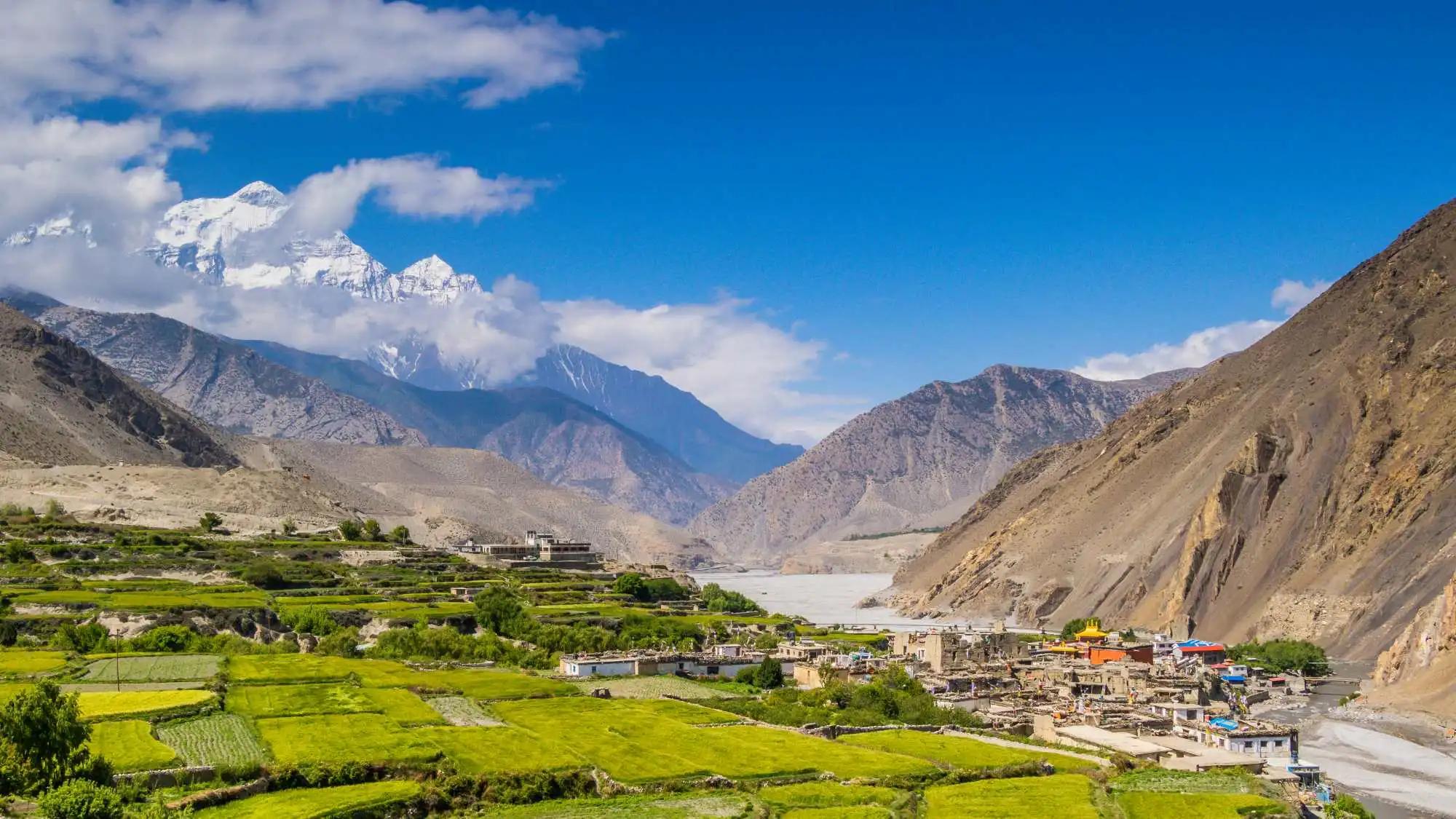
Kagbeni is one of those villages that feels noticeably different as soon as you arrive. The green hills of lower Mustang give way to a much drier landscape, the Kali Gandaki River cuts through the valley, and the traditional houses reflect the Tibetan influence of the region.
Located between Jomsom and Muktinath, Kagbeni is an important stop on the Annapurna Circuit and the access point toward Upper Mustang. It is also home to Kag Chode Thupten Samphel Ling Monastery and sits at an altitude of around 2,800 meters (9,186 feet).
Whether you are trekking through the Annapurna region, visiting Muktinath, or continuing toward Upper Mustang, Kagbeni is worth more than a quick overnight stop.
What Is Kagbeni Known For?
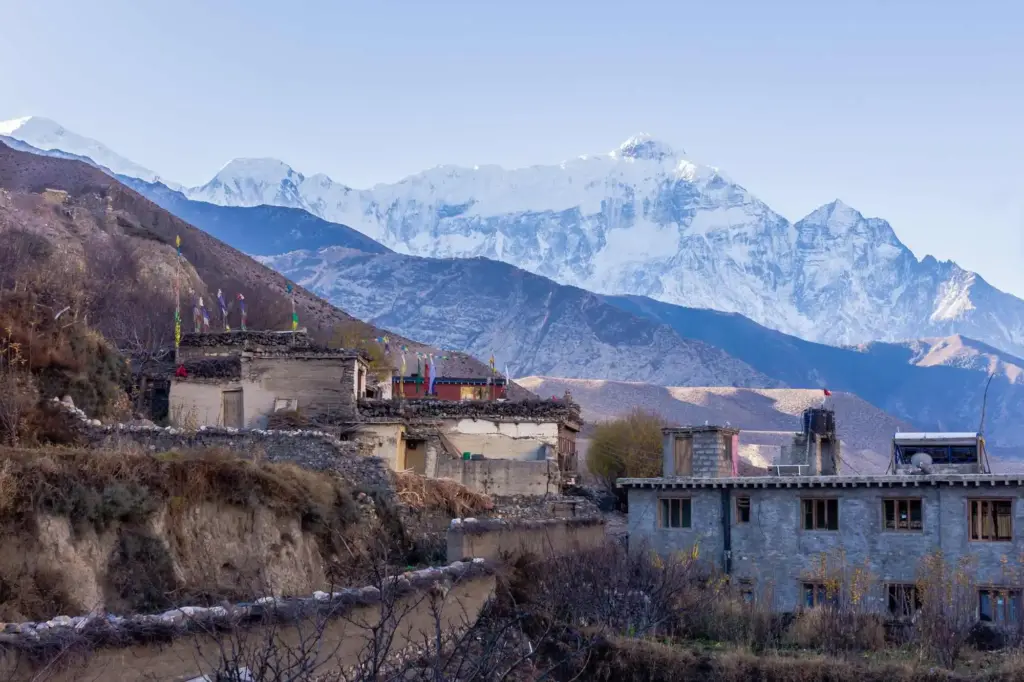
Kagbeni is known for its traditional village architecture, Buddhist heritage, location along the Kali Gandaki River, and its position between the Annapurna and Mustang regions.
The village sits in a dramatic landscape where the character of the valley changes quickly. To the south, the trail connects with Jomsom and the wider Annapurna region. To the north, the landscape leads toward Upper Mustang.
For trekkers, Kagbeni is particularly significant because it combines several experiences in one place:
- Traditional Mustang village life
- Kag Chode Thupten Samphel Ling Monastery
- Views of the dry Himalayan landscape
- The Kali Gandaki River
- The route toward Muktinath
- Access toward Upper Mustang
This makes Kagbeni more than simply another overnight village on a trekking itinerary.
Where Does Kagbeni Lie in Nepal?
Kagbeni lies in Mustang District of Gandaki Province in north-central Nepal, along the Kali Gandaki River.
It is located roughly between Jomsom and Muktinath, making it an important settlement on routes through the lower Mustang region.
Kagbeni is also situated near the point where the route north leads toward Upper Mustang. Nepal Tourism Board describes Upper Mustang as lying north of Kagbeni, and travelers entering the restricted Upper Mustang area need a special permit.
Its location gives Kagbeni an interesting geographical position: it is connected to the popular Annapurna trekking routes while also sitting at the edge of the culturally distinct Mustang landscape.
Kagbeni Altitude: How High Is Kagbeni?
The Kagbeni altitude is approximately 2,800 meters (9,186 feet) above sea level.
That makes altitude an important consideration if you are arriving from lower elevations such as Pokhara.
For trekkers, the change in elevation can be noticeable even though Kagbeni is not yet at the highest point of the Annapurna Circuit. If you are continuing toward Muktinath and Thorong La, your body still has more altitude to gain.
Kagbeni Elevation Compared With Nearby Places
| Place | Approx. elevation |
|---|---|
| Pokhara | 822 m |
| Jomsom | 2,700 m |
| Kagbeni | 2,800 m |
| Muktinath | 3,800 m |
| Thorong La Pass | 5,416 m |
The jump from Kagbeni to Muktinath is significant. If you are trekking the Annapurna Circuit, take the increase in elevation seriously and avoid treating Kagbeni as just another low-altitude village.
If you experience symptoms such as persistent headache, dizziness, unusual fatigue, nausea, or difficulty breathing, do not simply push through them. Tell your guide or trekking partner and follow appropriate altitude-safety advice.
Kagbeni Village and Its Historic Character
The first thing you notice about Kagbeni village is its architecture.
Traditional stone and mud-brick buildings line narrow passages, while the surrounding mountains create a stark backdrop. The village has retained much of the visual character associated with the Mustang region, although modern roads, guesthouses, shops, and trekking facilities have also become part of everyday life.
Walking through Kagbeni is therefore quite different from simply passing through a roadside settlement.
Look beyond the main trail and you will find:
- Narrow lanes between traditional houses
- Old-looking stone and mud walls
- Prayer flags and Buddhist religious features
- Courtyards and traditional building designs
- Views toward the Kali Gandaki valley
- Small shops, teahouses, and local guesthouses
The best way to experience the village is to walk rather than immediately move on after checking into your accommodation.
Kag Chode Monastery in Kagbeni
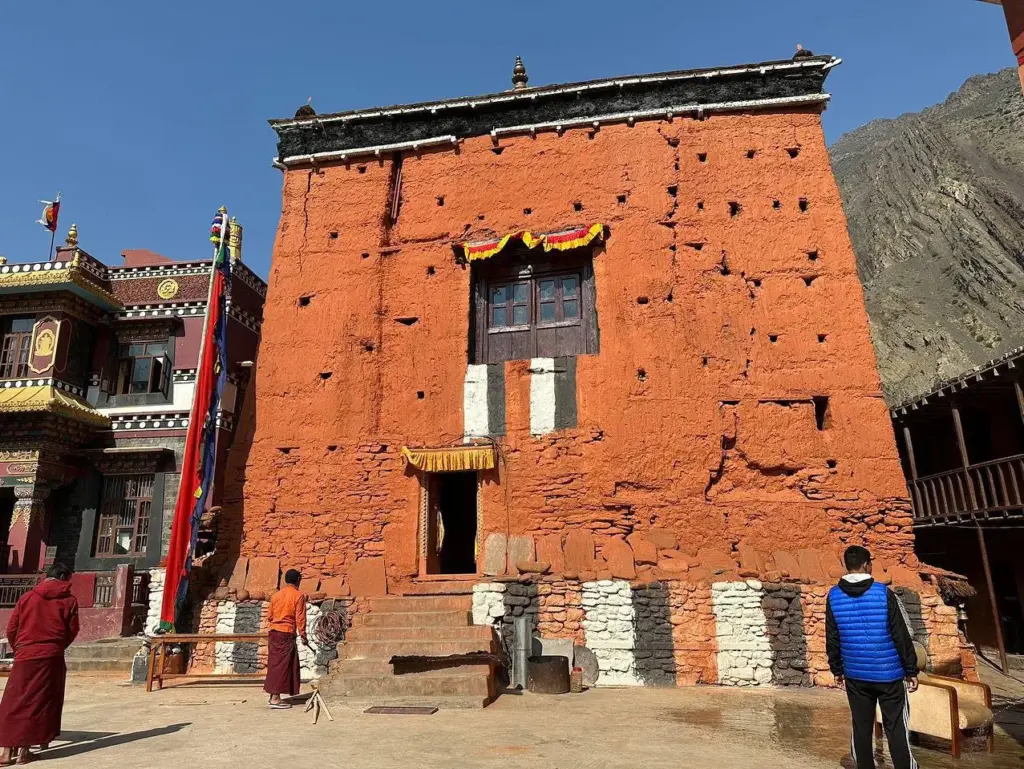
One of the most important cultural sites in the village is Kag Chode Thupten Samphel Ling Monastery, commonly referred to as Kag Chode Monastery.
The monastery represents the Buddhist heritage of the Mustang region and is an important reason many travelers spend time exploring the village rather than treating Kagbeni as a transit point.
If the monastery is open to visitors, take time to observe the surroundings respectfully. Religious buildings are active places of worship, not simply tourist attractions.
Photography may also be restricted in certain areas, so follow the instructions given by monks or local residents.
For travelers interested in the cultural side of Mustang, the monastery provides a useful introduction before continuing farther north.
Kagbeni on the Annapurna Circuit
Kagbeni is a familiar stop on the Annapurna Circuit Trek, particularly on the section connecting Jomsom, Muktinath, and the wider Annapurna route.
The village is especially useful as a stopping point because it gives trekkers an opportunity to experience the changing landscape of the Kali Gandaki valley before continuing toward higher elevations.
A typical route through this part of the region can include:
Jomsom → Kagbeni → Muktinath
Depending on the itinerary and transportation arrangements, travelers may spend a night in Kagbeni before continuing toward Muktinath.
If you are planning the complete Annapurna Circuit, you can learn more about the overall route, elevation, itinerary, permits, and preparation in our [Annapurna Circuit Trek guide].
Kagbeni to Muktinath
The Kagbeni to Muktinath route is one of the most popular short trekking sections in the Mustang region.
Muktinath sits at approximately 3,800 meters, considerably higher than Kagbeni. The route therefore isn’t only about distance; the elevation gain is an important part of the journey.
Along the way, the landscape becomes increasingly dry and rugged. The contrast between the river valley around Kagbeni and the barren mountain scenery toward Muktinath is one of the highlights of this section.
Muktinath itself is an important pilgrimage destination for both Hindus and Buddhists. The area is also associated with Shaligram fossils found along the Kali Gandaki River.
If you have enough time, walking this section can provide a much richer experience than simply driving between the two villages.
Is Kagbeni the Gateway to Upper Mustang?
Kagbeni is commonly described as the gateway to Upper Mustang, but there is an important distinction.
Kagbeni itself is not the restricted Upper Mustang area. Upper Mustang lies north of Kagbeni, and entering the restricted area requires a special permit.
This distinction matters if you are planning your trip around Mustang.
The Upper Mustang region includes destinations such as Lo Manthang and requires additional planning compared with a standard visit to Kagbeni or Muktinath. Nepal Tourism Board states that Upper Mustang opened to non-Nepali trekkers in 1994 and that a special permit is required for the region.
As of the current Department of Immigration fee schedule, the Upper Mustang restricted-area permit costs USD 500 for the first 10 days, followed by USD 50 per additional day.
Permit requirements and trekking regulations can change, so check the latest requirements before your trip.
What to See and Do in Kagbeni
You do not need a long list of activities to enjoy Kagbeni. The village itself is the main attraction.
1. Explore the Old Village
Walk through the narrow lanes and observe the traditional architecture. Early morning or late afternoon is particularly pleasant when the light changes across the surrounding mountains.
2. Visit Kag Chode Monastery
Visit the monastery to learn more about the Buddhist traditions of the area. Remember that it remains a religious site, so dress and behave respectfully.
3. Walk Along the Kali Gandaki
The Kali Gandaki is one of the defining features of the valley. A short walk beside the river offers a different perspective of the village and surrounding landscape.
4. Enjoy the Mustang Landscape
Kagbeni is an excellent place to appreciate the transition from the greener southern Annapurna region to the dry, high-altitude environment of Mustang.
5. Try Local Food
Teahouses and guesthouses serve familiar trekking meals alongside dishes influenced by the local Himalayan food culture.
If you have time, slow down and eat locally rather than treating the village as nothing more than a place to sleep.
How to Reach Kagbeni
There are several ways to reach Kagbeni, depending on your starting point and trekking plans.
From Jomsom
Jomsom is one of the most common access points for Kagbeni.
You can travel from Jomsom toward Kagbeni by road or trek through the Kali Gandaki valley. The distance is relatively short, making Kagbeni an accessible stop for travelers arriving through Jomsom.
From Pokhara
Travelers coming from Pokhara can reach the Mustang region by air or overland routes.
A flight from Pokhara to Jomsom is one of the quicker ways to reach the area, although flights are dependent on weather and operating conditions. From Jomsom, you can continue to Kagbeni.
If you are completing the Annapurna Circuit, however, Kagbeni will usually be reached as part of the trekking route rather than as a standalone destination.
From Muktinath
Kagbeni is also connected with Muktinath by road and trekking routes.
Many travelers visit Muktinath and then continue south through Kagbeni and Jomsom.
Best Time to Visit Kagbeni
The best time to visit Kagbeni depends on what you want to do.
Spring: March to May
Spring brings relatively favorable trekking conditions and pleasant daytime temperatures. The lower sections of the Annapurna region also become more colorful with vegetation and flowers.
Autumn: September to November
Autumn is generally one of the most popular trekking seasons in Nepal. Clear mountain views and stable weather make it a strong choice for Annapurna and Mustang journeys.
Winter: December to February
Winter brings colder temperatures and potential snow at higher elevations. Kagbeni can still be visited, but you should prepare properly for cold conditions and check route and accommodation availability.
Monsoon: June to August
Kagbeni lies in the rain-shadow area of the Himalayas, so the Mustang region receives considerably less rainfall than many parts of Nepal during the monsoon.
This makes the region possible to visit during a period when many other trekking destinations are wet. However, road and flight conditions elsewhere in the journey can still be affected by monsoon weather.
Accommodation and Facilities in Kagbeni
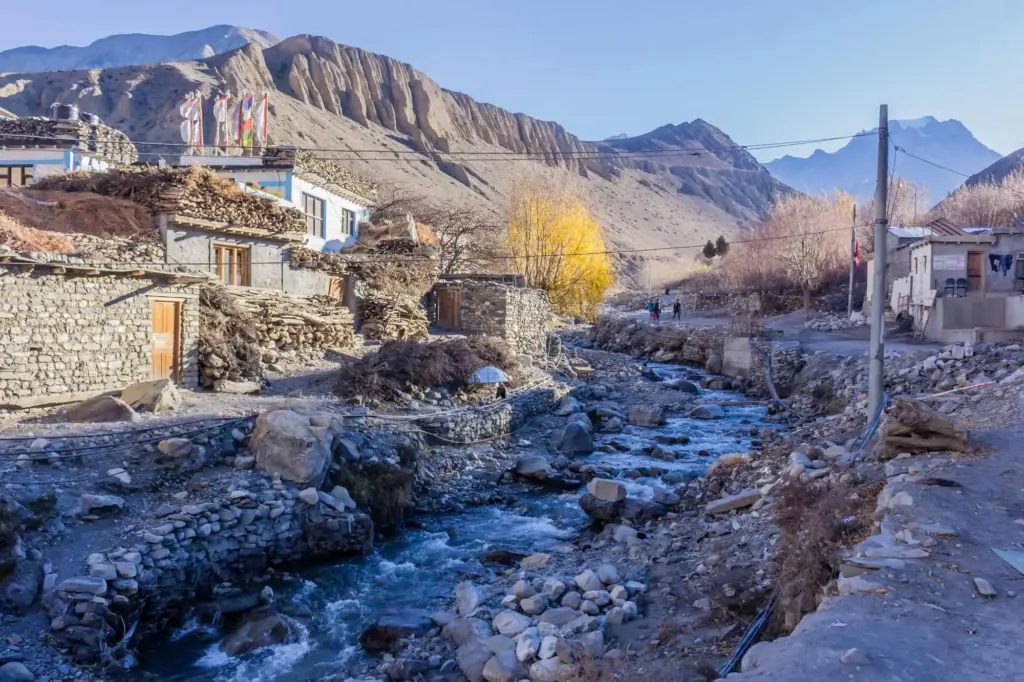
Kagbeni has a range of teahouses, guesthouses, and small lodges catering to trekkers and travelers.
Facilities are more basic than what you may find in Pokhara or Kathmandu, but you can generally find the essentials needed for an overnight stay.
Before traveling, keep in mind that:
- Accommodation standards vary between properties.
- Hot showers may cost extra.
- Internet and mobile connectivity can be inconsistent.
- Card payments may not be available everywhere.
- Carry enough Nepalese rupees for your journey.
- Facilities become more limited as you continue farther into remote areas.
If you are traveling during a busy trekking season, booking ahead can be useful, particularly if you have a fixed itinerary.
How Long Should You Stay in Kagbeni?
For travelers simply passing through on the Annapurna Circuit, one night is usually enough to experience the village.
However, staying longer makes sense if you want to explore the village properly, visit the monastery, walk along the Kali Gandaki, or use Kagbeni as part of a slower Mustang itinerary.
Your ideal stay depends on your route:
- Passing through Annapurna Circuit: 1 night
- Exploring Kagbeni: 1–2 nights
- Combining Kagbeni with Muktinath: 1–2 nights
- Continuing into Upper Mustang: depends on your full itinerary
There is no need to add an extra day simply because Kagbeni is at altitude. Your itinerary should instead account for your overall elevation gain and how you are feeling.
Kagbeni Travel Tips
A few practical considerations can make your visit easier.
Carry cash. Remote mountain settlements do not always offer reliable card-payment facilities.
Prepare for wind. The Kali Gandaki valley can become noticeably windy, particularly later in the day.
Dress in layers. Temperatures can change quickly between sunny daytime conditions and cold mornings or evenings.
Take altitude seriously. Kagbeni is already around 2,800 meters, and the route toward Muktinath climbs considerably higher.
Respect religious sites. Ask before taking photographs inside monasteries or other sacred spaces.
Check road and flight conditions. Weather can affect transportation in the Mustang region.
Check permit requirements before entering Upper Mustang. Visiting Kagbeni does not mean you automatically have permission to continue into the restricted Upper Mustang area.
Is Kagbeni Worth Visiting?
Yes—especially if you are already traveling through the Annapurna or Mustang region.
Kagbeni offers something that is difficult to understand from photographs alone: a visible transition between the lower Annapurna landscape and the drier, culturally distinctive environment of Mustang.
You can walk through the old village, visit Kag Chode Monastery, follow the Kali Gandaki, and watch the landscape change toward Muktinath and Upper Mustang.
For Annapurna Circuit trekkers, it is a natural stopping point. For travelers heading toward Upper Mustang, it marks an important point on the journey north.
And for anyone interested in Mustang, Kagbeni is one of those places where slowing down for a few hours can be more rewarding than simply checking it off the itinerary.
Frequently Asked Questions
What is the altitude of Kagbeni?
Kagbeni is approximately 2,800 meters (9,186 feet) above sea level. Its elevation makes altitude awareness important, particularly for travelers continuing toward Muktinath and Thorong La.
Where does Kagbeni lie?
Kagbeni lies in Mustang District, Gandaki Province, Nepal, along the Kali Gandaki River between Jomsom and Muktinath.
Is Kagbeni in Upper Mustang?
No. Kagbeni is outside the restricted Upper Mustang area. Upper Mustang lies north of Kagbeni and requires a special permit for entry.
What is Kagbeni famous for?
Kagbeni is known for its traditional village architecture, Buddhist heritage, Kag Chode Monastery, the Kali Gandaki River, and its location on routes toward Muktinath and Upper Mustang.
What is the Kagbeni monastery called?
The main monastery is Kag Chode Thupten Samphel Ling Monastery, commonly known as Kag Chode Monastery.
How far is Kagbeni from Muktinath?
Kagbeni and Muktinath are connected by trekking and road routes. The exact travel time varies according to whether you walk or drive and the condition of the route.
Is Kagbeni on the Annapurna Circuit?
Yes. Kagbeni is an important settlement on the Mustang section of routes associated with the Annapurna Circuit, particularly between Jomsom and Muktinath.
Do I need an Upper Mustang permit to visit Kagbeni?
No. The special restricted-area permit is required when entering Upper Mustang, not simply for visiting Kagbeni. If you plan to continue north into the restricted area, arrange the required permit before entering.
How many days should I spend in Kagbeni?
One night is generally enough for trekkers passing through. If you want to explore the village, monastery, river valley, and surrounding area at a slower pace, consider staying for one or two nights.