
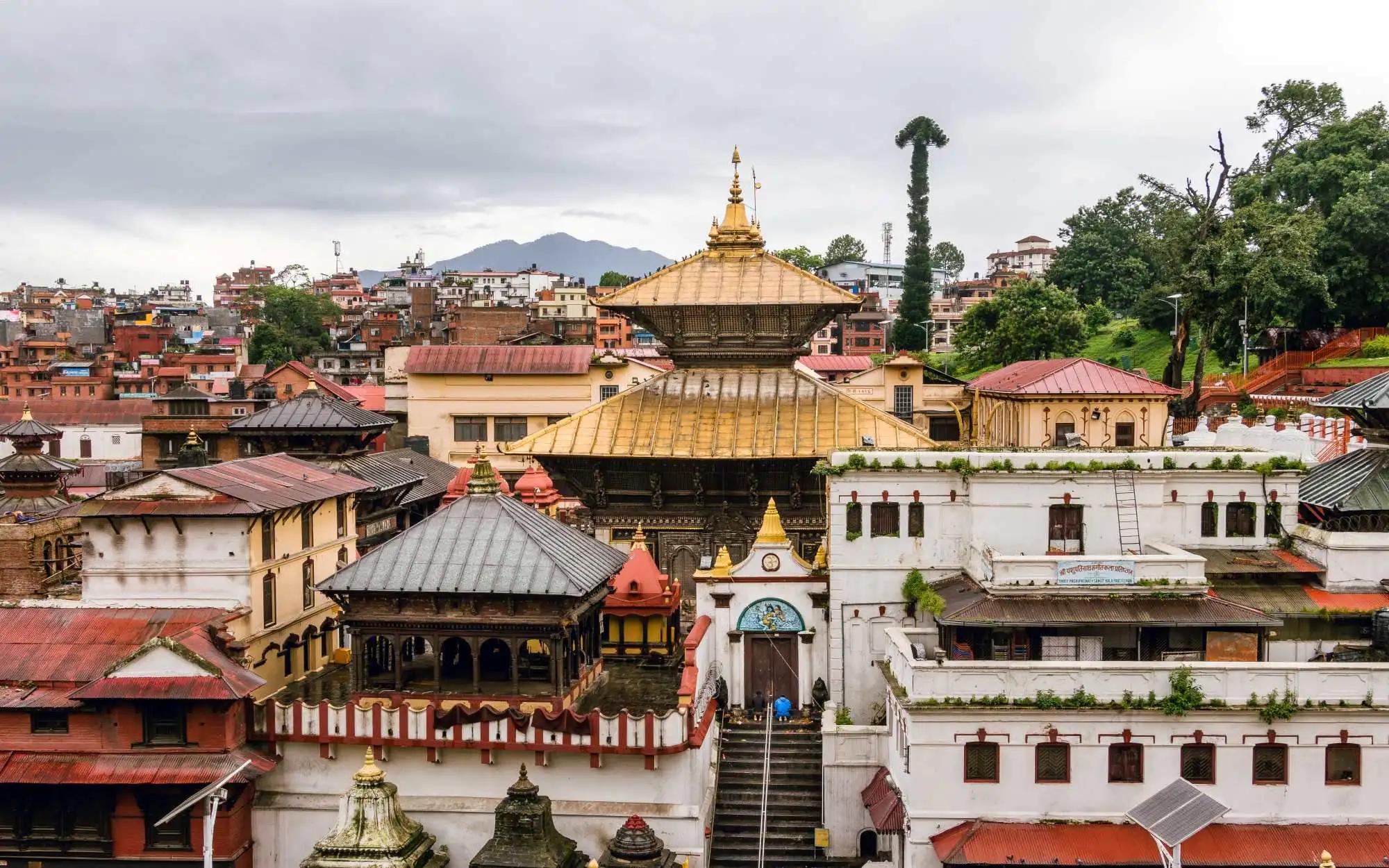
If you are planning a visit to Pashupatinath Temple, one of the first things to check is the Pashupatinath Temple opening hours. The temple follows separate morning and evening visiting hours, with a break in the middle of the day.
Pashupatinath is located on the banks of the Bagmati River in Kathmandu and is one of the most important Hindu temples in Nepal. But you do not need to spend an entire day here. For most visitors, 2–4 hours is enough to explore the temple complex and nearby areas at a comfortable pace.
Here is what you need to know about Pashupatinath Temple timings, the best time to visit, entry rules, Aarti, and getting there.
Pashupatinath Temple Opening Hours
The current visiting hours listed for Pashupatinath Temple are:
| Visiting period | Opening hours |
|---|---|
| Morning | 4:00 AM – 12:00 PM |
| Evening | 5:00 PM – 9:00 PM |
The temple closes between 12:00 PM and 5:00 PM for rituals and other temple activities.
So, if you are searching for the Pashupatinath Temple opening time, the morning opening time is 4:00 AM.
If you are looking for the Pashupatinath Temple closing time, the morning session ends at 12:00 PM, while the evening session ends at 9:00 PM.
Because temple activities and visiting arrangements can change, it is worth checking the latest local information before making a special trip around a particular ritual or festival.
What Time Is Best to Visit Pashupatinath Temple?
The best time depends on what you want to experience.
Early morning, around 4:00–6:00 AM, is a good choice if you want a quieter visit and want to see the temple during its morning rituals. The early hours also avoid the stronger daytime heat.
Evening, around 5:00–7:00 PM, works well if you want to experience the atmosphere around the Bagmati River and the evening rituals.
If your main goal is simply to explore the complex, avoid arriving around the middle of the day. Apart from being warmer, this falls within the temple’s midday closure.
For many visitors, early morning or early evening is more practical than visiting around midday.
Pashupatinath Temple Aarti Timings
Aarti is one of the important experiences for visitors interested in the religious side of Pashupatinath.
The temple has morning rituals after opening, while the evening period is associated with rituals and Aarti around the Bagmati River.
The exact timing of individual rituals can vary, particularly during festivals and special occasions. If seeing a particular Aarti is the main reason for your visit, check the day’s local schedule rather than relying only on a general timetable.
The evening Aarti is especially visible from the Bagmati River area, where visitors can observe the ceremony from the permitted viewing areas.
Where Is Pashupatinath Temple?
Pashupatinath Temple is in Kathmandu, Nepal, on the banks of the Bagmati River.
The main complex is located along Pashupati Nath Marg, around 5 km from Thamel. Tribhuvan International Airport is also relatively close, making Pashupatinath an easy place to visit either before a flight or shortly after arriving in Kathmandu.
If you are staying in Thamel, a taxi is generally the simplest option. Depending on traffic, the journey can take around 20–30 minutes.
Who Can Enter Pashupatinath Temple?
There is an important distinction between visiting the Pashupatinath Temple complex and entering the main temple.
Non-Hindu visitors can explore parts of the wider complex and see areas around the temple, including the Bagmati River and surrounding shrines. However, the main temple and inner sanctum are restricted to Hindus.
This is important to know before visiting because you may see photographs of the temple’s interior online that are not accessible to every visitor.
Rather than trying to enter restricted areas, visitors can explore the permitted parts of the complex and observe the temple’s architecture, shrines, ghats and religious activities respectfully.
Pashupatinath Temple Entry Fee and Tickets
The current guide information lists the following entry arrangements:
- SAARC visitors: NPR 1,000
- Other foreign visitors: NPR 1,500
- Hindu pilgrims: Free
- Children under 10: Free
Tickets are available at the entrance according to the current information.
Because fees and entry arrangements can change, especially around major festivals, check the latest information before your visit.
What Can You See at Pashupatinath?
Pashupatinath is much larger than the main temple building. The surrounding complex contains numerous shrines, religious spaces and areas connected with Hindu traditions.
Some of the main things to see include:
The Main Pashupatinath Temple
The main temple is built in the traditional pagoda style and is dedicated to Lord Shiva in the form of Pashupatinath, meaning “Lord of All Living Beings.”
Although non-Hindus cannot enter the main temple, its exterior and surrounding area can still be viewed from permitted locations.
Bagmati River and Ghats
The Bagmati River runs alongside the temple complex and is an important part of Pashupatinath’s religious life.
The ghats are also used for Hindu cremation ceremonies. If you see a cremation taking place, give the family and mourners space. This is not a tourist performance, and photography should be avoided in sensitive areas.
Smaller Shrines and Temples
The wider Pashupatinath area contains many smaller shrines and religious structures. You do not need to visit every one of them to understand the importance of the complex.
Walking through the permitted areas is often the best way to experience the scale of the site.
Sadhus
Sadhus can often be seen around Pashupatinath. They are Hindu ascetics associated with religious traditions and pilgrimage.
If you want to photograph someone, ask first rather than assuming that a camera automatically gives you permission.
Dress Code and Visitor Rules
There is no complicated dress code for exploring the permitted parts of the complex, but modest clothing is the safest choice.
Keep your shoulders and knees reasonably covered and avoid wearing clothing that would be inappropriate in a religious site.
A few basic rules will make your visit easier:
- Remove your shoes where required.
- Keep your voice low around religious areas.
- Do not touch religious objects or the temple structure without permission.
- Do not photograph restricted areas.
- Avoid photographing cremation ceremonies.
- Do not litter.
- Follow instructions from temple authorities and security staff.
- Respect worshippers, priests and families using the ghats.
The simplest approach is to treat Pashupatinath as an active religious site rather than just another historical attraction.
How Long Do You Need at Pashupatinath Temple?
For most visitors, 2–4 hours is enough.
If you only want to see the main areas and the Bagmati River, you can spend less time. If you want to walk through more of the complex, visit nearby shrines and observe the rituals, allow closer to three or four hours.
You can also combine Pashupatinath with other nearby Kathmandu attractions.
Boudhanath Stupa is a practical addition to the same outing, while Guhyeshwari Temple is close to the Pashupatinath complex.
If you are planning a wider Kathmandu visit, you can also see our Kathmandu tour options to build the temple visit into your travel plans.
Best Time of Year to Visit Pashupatinath
Pashupatinath can be visited throughout the year, but the experience changes with the season.
Spring: March to May
Spring generally brings warmer weather and can be a comfortable period for exploring Kathmandu. Expect more visitors as the season progresses.
Monsoon: June to August
The monsoon brings rain to Kathmandu. The rain can make walking around the complex less convenient, but visitors who do not mind wet weather may find the area less crowded.
Autumn: September to November
Autumn is one of the most popular periods to travel around Nepal. The weather is generally favorable, but popular attractions such as Pashupatinath can be busy.
Winter: December to February
Winter mornings in Kathmandu can be cold, especially if you arrive around the 4:00 AM opening. The daytime can be more comfortable for visitors who prefer avoiding the cold early hours.
If you are choosing purely for convenience, autumn and spring are good overall periods, while the best time of day is usually early morning or early evening.
Visiting Pashupatinath During Maha Shivaratri
Maha Shivaratri is one of the biggest occasions at Pashupatinath.
The temple attracts large numbers of Hindu pilgrims and sadhus during the festival, creating an atmosphere very different from an ordinary day.
If you are visiting specifically for Maha Shivaratri, expect:
- Very large crowds
- Long waiting periods
- Increased security and crowd management
- Limited convenience compared with an ordinary temple visit
- Heavy demand for accommodation and transport
It is worth planning well ahead rather than treating the festival like a normal sightseeing day.
How to Reach Pashupatinath Temple
From Thamel, a taxi is the easiest option for many visitors. The journey generally takes around 20–30 minutes depending on traffic.
From Tribhuvan International Airport, Pashupatinath is only a short drive away, making it a convenient stop around your arrival or departure.
Local buses also operate toward the Pashupati area, although they can be less straightforward for visitors unfamiliar with Kathmandu.
If you are travelling with a group or planning several Kathmandu attractions in one day, arranging private transportation can be more convenient.
Can You Combine Pashupatinath With a Nepal Trek?
Yes. Pashupatinath is in Kathmandu, so it is easy to visit before or after a trek.
Many travellers arrive in Kathmandu, spend time exploring the city’s cultural sites, and then continue toward their trekking destination.
If you are planning a trip to the Everest, Annapurna or Manaslu regions, you can use your Kathmandu stay to visit Pashupatinath without adding a separate long-distance journey.
For travellers who prefer to arrange transportation, accommodation and trekking together, Hi Nepal Travels & Treks can help organize the different parts of a Nepal trip.
FAQs
What time does Pashupatinath Temple open?
Pashupatinath Temple opens at 4:00 AM during the morning visiting period.
What are the Pashupatinath Temple timings?
The listed visiting hours are 4:00 AM to 12:00 PM and 5:00 PM to 9:00 PM.
Is Pashupatinath Temple open all day?
No. The temple has a midday closure between 12:00 PM and 5:00 PM.
What is the best time to visit Pashupatinath Temple?
Early morning and early evening are generally the most useful times to visit. Early morning is particularly suitable if you want to experience the temple during its opening rituals.
Can non-Hindus enter Pashupatinath Temple?
Non-Hindus cannot enter the main temple and inner sanctum, but they can visit permitted parts of the wider complex.
How long does it take to visit Pashupatinath Temple?
Plan around 2–4 hours if you want enough time to explore the main areas without rushing.
Can I take photos at Pashupatinath?
Photography is possible in permitted areas, but restrictions apply around sensitive religious spaces and cremation areas. Always follow signs and local instructions.
What should I wear to Pashupatinath Temple?
Wear modest clothing that covers your shoulders and knees. Comfortable clothing and shoes that are easy to remove are practical for a temple visit.
Plan Your Visit Around the Temple Timings
Pashupatinath is not a place where you need to rush through a long sightseeing checklist. Check the Pashupatinath Temple opening hours first, choose whether you prefer the morning or evening session, and give yourself a couple of hours to explore the complex respectfully.
If you want to see the morning rituals, arrive early. If you are more interested in the atmosphere around the Bagmati River and evening ceremonies, the evening session may suit you better.
And if Pashupatinath is only one part of your Nepal trip, it is easy to fit the temple into a wider Kathmandu visit before heading toward the mountains.