
The Annapurna Circuit Trek from Pokhara takes you from the green hills around the Marsyangdi River to the high mountain landscape of Manang, across Thorong La Pass at 5,416 m, and down through the Kali Gandaki Valley before returning to Pokhara.
Starting from Pokhara makes the logistics simple. You can prepare for the trek in the city, travel to the trailhead, and finish the circuit back in Pokhara. Along the way, the landscape changes dramatically—from subtropical forests and terraced farmland to Tibetan-influenced villages, alpine terrain, and the dry valleys around Muktinath and Mustang.
This guide covers the route, 14-day itinerary, elevation, difficulty, best seasons, permits, cost, packing, and the main things to know before trekking the Annapurna Circuit from Pokhara.
Annapurna Circuit Trek from Pokhara: Quick Facts
| Trek Information | Details |
|---|---|
| Trek name | Annapurna Circuit Trek from Pokhara |
| Duration | 14 days |
| Starting point | Pokhara |
| Ending point | Pokhara |
| Highest point | Thorong La Pass – 5,416 m |
| Trek style | Teahouse trekking |
| Difficulty | Moderate to challenging |
| Best seasons | Spring and autumn |
| Main permits | ACAP and TIMS, where applicable |
| Accommodation | Teahouses and lodges |
| Main highlights | Manang, Thorong La, Muktinath, Marpha, Tatopani, Ghorepani and Poon Hill |
Why Start the Annapurna Circuit from Pokhara?
Pokhara is one of the most convenient bases for an Annapurna trek. The city has trekking agencies, equipment shops, accommodation, restaurants, transport connections and plenty of places to make final preparations before heading into the mountains.
For the circuit, starting from Pokhara also gives you a straightforward route toward the Marsyangdi Valley before the trail climbs gradually toward Manang.
Another advantage is the finish. After crossing Thorong La and descending through the Kali Gandaki Valley, the route continues through Ghorepani and Ghandruk before bringing you back toward Pokhara.
So, rather than treating Pokhara only as a place to stay before or after the trek, you can use it as the natural starting and finishing point of your Annapurna Circuit journey.
Can You See the Annapurna Range from Pokhara?
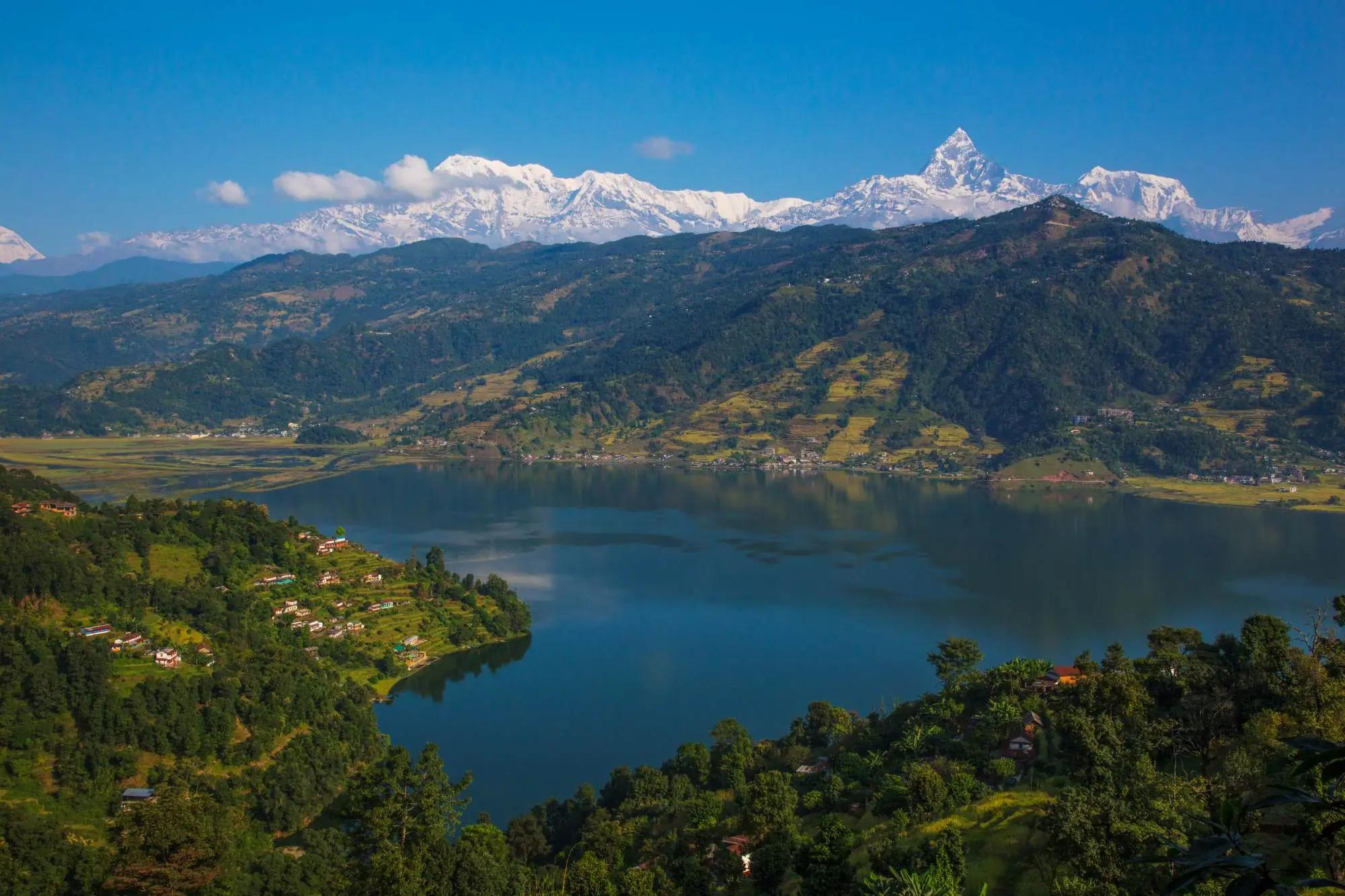
Yes, the Annapurna range from Pokhara can be seen on clear days.
The mountains form the northern backdrop of the city, with Machhapuchhre (Fishtail) being one of the most recognizable peaks from Pokhara. Depending on the viewpoint and weather, you can also see several peaks of the Annapurna massif.
The views become much closer and more dramatic once you enter the Annapurna region.
During the circuit, the landscape changes from distant mountain views around the lower valleys to close-up Himalayan scenery around Pisang and Manang. The Upper Pisang route, in particular, offers impressive views toward Annapurna II and the surrounding peaks.
If your search for Annapurna from Pokhara is mainly about seeing the mountain rather than trekking around the massif, you do not necessarily need to complete the entire circuit. But if you want to experience the different landscapes, villages and high-altitude terrain of the Annapurna region, the circuit offers a much broader experience.
Annapurna Circuit Route from Pokhara
The Annapurna Circuit follows a large loop around the Annapurna massif.
The route from Pokhara generally follows this progression:
Pokhara → Besisahar → Bahundanda → Chame → Pisang → Manang → Thorong Phedi → Thorong La → Muktinath → Marpha → Tatopani → Ghorepani → Poon Hill → Tadapani → Ghandruk → Pokhara
The eastern side follows the Marsyangdi Valley. As you gain elevation, subtropical vegetation gradually gives way to pine forests, alpine landscapes and the dry terrain around Manang.
After crossing Thorong La, the scenery changes again. You descend toward Muktinath and enter the Kali Gandaki Valley, passing through places such as Kagbeni, Marpha and Tatopani before climbing toward Ghorepani.
The final section through Poon Hill and Ghandruk brings you back into the greener middle hills.
Main sections of the route
Pokhara to Manang:
Lower hills, river valleys, villages, forests and gradually increasing altitude.
Manang to Thorong La:
The highest and most demanding part of the trek, with acclimatization around Manang before the pass crossing.
Thorong La to Tatopani:
A major descent through Muktinath and the Kali Gandaki Valley, with a noticeable change in climate and landscape.
Tatopani to Pokhara:
A final climb through forests toward Ghorepani and Poon Hill, followed by the descent through Ghandruk.
Annapurna Circuit Trek Itinerary from Pokhara
The 14-day itinerary below combines road transport, trekking and the major highlights of the traditional circuit.
Day 1: Pokhara to Besisahar
Altitude: 760 m
Activity: Drive
Overnight: Besisahar
Your Annapurna Circuit journey begins with a drive from Pokhara to Besisahar.
The route follows Nepal’s mid-hill landscape, passing through river valleys, terraced farmland and small settlements before reaching Besisahar.
Besisahar is an important gateway to the Annapurna region and provides a convenient overnight stop before the trek begins.
Use the afternoon to organize your trekking gear, prepare your daypack and get some rest before heading higher into the Marsyangdi Valley.
Day 2: Besisahar to Bahundanda
Altitude: 1,310 m
Trekking: Around 5–6 hours
Overnight: Bahundanda
Today you begin walking.
The trail passes through villages, farmland and forest as it follows the Marsyangdi River. Suspension bridges and terraced hillsides become regular features of the route.
Bahundanda sits on a ridge above the valley and provides your first proper mountain-village experience of the trek.
The elevation is still relatively low, so this section is more about getting comfortable with walking several hours each day than dealing with high-altitude conditions.
Day 3: Bahundanda to Chame
Altitude: 2,670 m
Activity: Trek/transport depending on route conditions
Overnight: Chame
The route continues toward Chame, the administrative center of Manang District.
The landscape gradually changes as you move deeper into the mountains. Forests become more prominent, the valley narrows, and the surrounding peaks become easier to see.
Chame is an important stop before the route climbs further toward Pisang and Manang.
Because road access has changed the Annapurna Circuit over the years, the exact balance between walking and road transport can vary depending on the itinerary and trail conditions.
Day 4: Chame to Upper Pisang
Altitude: 3,300 m
Trekking: Around 5–6 hours
Overnight: Upper Pisang
The landscape becomes noticeably more alpine today.
You pass through pine forest and the dramatic rock formations around the Marsyangdi Valley before reaching Pisang.
Upper Pisang is particularly rewarding because of its traditional village atmosphere and mountain views. The village sits beneath the surrounding peaks, giving you a closer look at the Himalayan landscape than you had in the lower valleys.
Take the afternoon slowly and allow your body to adjust to the increasing altitude.
Day 5: Upper Pisang to Manang
Altitude: Around 3,500 m
Trekking: Around 5–6 hours
Overnight: Manang
This is one of the most scenic days of the Annapurna Circuit.
The trail climbs toward Manang through increasingly dry terrain, with views of the Annapurna range and surrounding peaks.
You can take either the higher scenic route or the lower route depending on the itinerary and conditions. The higher route provides more dramatic mountain views but also involves more elevation gain.
Manang is more than an overnight stop. It is the main acclimatization point before the route climbs above 4,000 m.
Day 6: Manang Acclimatization Day
Altitude: Around 3,500 m
Activity: Rest and short acclimatization hike
Overnight: Manang
Spend another night in Manang rather than immediately continuing toward Thorong La.
A common approach is to take a short hike to a higher elevation during the day and return to Manang to sleep.
Possible walks include viewpoints and nearby villages, while stronger trekkers may choose a longer hike toward Ice Lake.
The purpose is not simply to add another sightseeing day. Spending time around Manang gives your body more opportunity to adjust before the route reaches higher elevations.
Avoid treating this as a full rest day spent entirely indoors. A gentle acclimatization walk is generally more useful than complete inactivity, provided you feel well.
Day 7: Manang to Thorong Phedi / High Camp
Altitude: Up to around 4,900 m
Trekking: Around 4–7 hours
Overnight: Thorong Phedi or High Camp
The landscape becomes increasingly rugged as you leave Manang.
The trail passes through areas such as Yak Kharka and continues toward Thorong Phedi, the main staging point for the Thorong La crossing.
Depending on the itinerary, fitness, weather and accommodation availability, trekkers may stay at Thorong Phedi or continue toward High Camp.
This is a demanding day because of the elevation. Walk steadily, drink regularly and pay attention to how your body feels.
If you develop significant symptoms of altitude sickness, tell your guide rather than trying to push through them.
Day 8: Thorong La Pass to Muktinath
Highest point: Thorong La – 5,416 m
Trekking: Around 8–9 hours
Overnight: Muktinath
This is the biggest day of the Annapurna Circuit.
The climb to Thorong La Pass begins early because weather conditions can become less favorable later in the day.
The trail climbs steadily from the high camp or Thorong Phedi toward the pass. Reaching 5,416 m is a major achievement, but the crossing is not simply about reaching the highest point.
The descent afterward is long.
From Thorong La, the trail drops dramatically toward Muktinath. The change in landscape is striking: the green valleys of the eastern Annapurna region give way to the drier terrain associated with Mustang.
Muktinath is also an important pilgrimage site for both Hindus and Buddhists.
What makes Thorong La difficult?
The challenge comes from a combination of factors:
- High elevation
- Long walking hours
- Cold and wind
- Steep sections
- Reduced oxygen availability
- A significant descent after reaching the pass
You do not need mountaineering skills to cross Thorong La under normal trekking conditions, but you do need reasonable fitness, acclimatization and preparation.
Day 9: Muktinath to Marpha
Altitude: Around 2,670 m
Activity: Trek/drive depending on route
Overnight: Marpha
After the high point of the trek, the route descends through the Kali Gandaki Valley.
Muktinath, Kagbeni and the villages toward Marpha have a distinctly different character from the Manang side of the circuit.
The dry landscape, stone houses and Tibetan-influenced culture make this section feel almost like another region entirely.
Marpha is known for its traditional Thakali village architecture and apple products. It is also one of the most pleasant places to slow down after the Thorong La crossing.
Day 10: Marpha to Tatopani
Altitude: Around 1,200 m
Activity: Trek/transport depending on route
Overnight: Tatopani
The descent continues toward Tatopani.
The scenery changes quickly as you lose elevation. Dry mountain terrain gradually gives way to greener valleys and warmer temperatures.
Tatopani is famous for its natural hot springs, making it a popular place for trekkers to relax after the demanding high-altitude section of the circuit.
This is also where you begin to feel the return to Nepal’s warmer middle-hill environment.
Day 11: Tatopani to Ghorepani
Altitude: Around 2,874 m
Trekking: Around 6–7 hours
Overnight: Ghorepani
Unlike the previous days, today’s route involves a substantial climb.
You leave the lower Kali Gandaki Valley and ascend toward Ghorepani through forested hills.
The trail passes through areas known for rhododendron, oak and other vegetation. During spring, rhododendron flowers add another layer of color to the forest.
Ghorepani is one of the busiest trekking settlements in the Annapurna region and is best known for its access to Poon Hill.
Day 12: Ghorepani to Poon Hill to Tadapani
Poon Hill: 3,210 m
Trekking: Around 6 hours
Overnight: Tadapani
An early morning climb to Poon Hill gives you one of the classic mountain viewpoints of the Annapurna region.
From the viewpoint, you can see several Himalayan peaks, including Dhaulagiri, Annapurna South and Machhapuchhre, depending on visibility.
After returning to Ghorepani for breakfast, continue through the forest toward Tadapani.
The environment here feels very different from the high-altitude section around Thorong La. You are back among dense forests and greener hills.
Day 13: Tadapani to Ghandruk to Pokhara
Altitude: Around 1,940 m at Ghandruk
Activity: Trek + drive
Overnight: Pokhara
Your final trekking section takes you toward Ghandruk, one of the well-known Gurung settlements in the Annapurna region.
Ghandruk offers mountain views, traditional architecture and an opportunity to experience the culture of the middle hills.
After exploring the village, continue toward the roadhead and travel back to Pokhara.
Arriving in Pokhara marks the completion of your Annapurna Circuit journey.
Day 14: Pokhara – Leisure or Departure
Altitude: 822 m
Activity: Leisure or onward travel
Keep the final day flexible.
If your travel schedule allows, you can relax around Phewa Lake, explore Pokhara, visit the International Mountain Museum or simply recover after the trek.
You can also continue your Nepal trip toward destinations such as Chitwan or Kathmandu.
Annapurna Circuit Trek Difficulty
The Annapurna Circuit is generally considered a moderate to challenging trek.
You do not need technical climbing experience, but the route demands more than simply being able to walk for a few hours.
The main challenges are:
- Long trekking days
- Continuous elevation gain
- Thorong La at 5,416 m
- Cold and changing weather
- Steep ascents and descents
- Walking at high altitude
- Limited facilities in remote sections
The Thorong La crossing is usually the most demanding part of the trek.
Good preparation helps. Regular walking, stair climbing, hiking and cardiovascular exercise in the weeks before the trek can make the long trekking days more manageable.
Best Time for the Annapurna Circuit Trek from Pokhara
The main trekking seasons are spring and autumn.
Spring: March to May
Spring brings warmer conditions and increasingly colorful forests.
March and April are particularly attractive for trekkers who want to see rhododendrons in bloom on the lower sections of the route.
Autumn: September to November
Autumn is one of the most popular periods for trekking in Nepal.
After the monsoon, the skies often become clearer and mountain visibility improves. October and November are particularly popular for the Annapurna Circuit.
Winter: December to February
Winter brings colder conditions and more challenging conditions around Thorong La.
Snow and strong winds can affect the high pass, so winter trekkers need appropriate equipment and greater flexibility.
Monsoon: June to August
The lower sections of the Annapurna Circuit receive substantial rainfall during the monsoon.
The rain-shadow areas around Manang and Mustang can remain considerably drier, but the journey to and from the trail can still be affected by wet roads, landslides and transportation delays.
Annapurna Circuit Trek Permits
Trekkers on the Annapurna Circuit need to consider the permits and registration requirements that apply to the route.
The main permit associated with the region is the Annapurna Conservation Area Permit (ACAP).
TIMS requirements can also apply depending on whether you are trekking independently or through a registered trekking agency and according to the current regulations.
Because permit rules and fees can change, confirm the current requirements before departure rather than relying on an old fee table.
If you book the trek through Hi Nepal, the team can arrange the required trekking documentation as part of the trip preparation.
Annapurna Circuit Trek Cost from Pokhara
The cost of an Annapurna Circuit Trek from Pokhara depends on the itinerary, group size, accommodation, transportation and services included.
A package price can include:
- Private ground transportation
- Trekking permits
- Guide
- Porter service
- Teahouse accommodation
- Meals during the trek
- Trek briefing
- Government taxes and service charges
You should also budget separately for expenses such as:
- International airfare
- Nepal visa
- Travel insurance
- Personal trekking equipment
- Snacks and drinks
- Wi-Fi and charging
- Hot showers
- Tips
- Personal expenses
- Emergency evacuation, if required
If you are comparing trekking packages, do not look only at the headline price. Check how many trekking days are included, whether transportation is private or shared, what meals are covered and whether permits and accommodation are already included.
What to Pack for the Annapurna Circuit
You do not need to carry your entire wardrobe, but you do need to prepare for very different temperatures.
Clothing
- Moisture-wicking base layers
- Fleece or warm mid-layer
- Down or insulated jacket
- Waterproof jacket
- Trekking trousers
- Warm thermal layers
- Warm hat
- Gloves
- Trekking socks
- Comfortable underwear
Footwear
- Well-broken-in trekking boots
- Lightweight camp shoes or sandals
- Extra socks
Trekking equipment
- Backpack
- Duffel bag if using porter service
- Sleeping bag suitable for the season
- Trekking poles
- Headlamp
- Sunglasses
- Water bottles or hydration system
- Water purification method
- Sunscreen
- Personal first-aid supplies
Documents and essentials
Keep your passport, permits, insurance details, money and other important documents somewhere dry and easily accessible.
For full packing guide, check this link.
Altitude on the Annapurna Circuit
Altitude is one of the most important things to consider when trekking the Annapurna Circuit.
You begin around the lower Marsyangdi Valley and eventually reach 5,416 m at Thorong La.
The increase in elevation means your body has progressively less oxygen available.
Common symptoms of mild altitude sickness can include:
- Headache
- Tiredness
- Reduced appetite
- Dizziness
- Difficulty sleeping
- Nausea
Do not ignore worsening symptoms.
The most useful approach is gradual acclimatization, sensible pacing, adequate hydration and communicating with your guide if you feel unwell.
If serious altitude-related symptoms develop, descending to a lower elevation is more important than completing the itinerary.
Can You Add Tilicho Lake to the Annapurna Circuit?
Yes. Tilicho Lake is one of the most popular additions to the Annapurna Circuit.
The lake sits at around 4,919 m and requires additional trekking days from the main circuit.
Adding Tilicho makes the itinerary longer and more demanding, so it should be considered based on your fitness, available time and acclimatization.
If you specifically want Tilicho Lake, it is better to choose an itinerary designed around the side trip rather than trying to squeeze it into an already tight schedule.
Annapurna Circuit vs Other Annapurna Treks
The Annapurna region has several trekking routes, and they offer very different experiences.
Annapurna Circuit:
Best for trekkers who want a longer journey around the massif, multiple landscapes and the Thorong La crossing.
Annapurna Base Camp:
A shorter route focused more directly on reaching the Annapurna Sanctuary and viewing the surrounding peaks.
Ghorepani Poon Hill:
A shorter trek suited to travelers with less time who still want Himalayan scenery and a sunrise viewpoint.
If you are unsure which route fits your time and fitness level, comparing the different trekking routes in Nepal can help before choosing a package.
Why Trek the Annapurna Circuit from Pokhara?
The biggest attraction of the Annapurna Circuit is not one particular viewpoint.
It is the change in the journey.
You start among green hills and river valleys. You move through pine forests and mountain villages, enter the dry highlands around Manang, cross a 5,416 m mountain pass, descend into the Mustang region, and eventually return to forests and Gurung villages.
That variety is what makes the Annapurna Circuit different from a trek that simply takes you toward one mountain or one base camp.
Starting and finishing in Pokhara also makes the journey easier to combine with the rest of a Nepal trip.
Frequently Asked Questions
How long is the Annapurna Circuit Trek from Pokhara?
The Hi Nepal itinerary is designed as a 14-day journey from Pokhara and back to Pokhara. Longer itineraries are possible if you add side trips such as Tilicho Lake or spend additional days on the trail.
Is the Annapurna Circuit Trek suitable for beginners?
A reasonably fit first-time trekker can complete the Annapurna Circuit with proper preparation, acclimatization and a sensible pace. However, the high altitude and Thorong La crossing make it more demanding than a short low-altitude trek.
How high is Thorong La Pass?
Thorong La Pass reaches 5,416 m (17,769 ft) above sea level.
What is the hardest day of the Annapurna Circuit?
The Thorong La crossing is usually the most demanding day because of the altitude, early start, long walking time and significant descent to Muktinath.
Can I do the Annapurna Circuit without a guide?
The practical requirements for trekking independently can change with Nepal’s current regulations. Check the latest rules before planning an independent trek.
What is the best month for the Annapurna Circuit?
October and November are among the most popular months because of generally favorable trekking conditions and good mountain visibility. March, April and May are also strong choices, particularly for spring scenery.
Is Tilicho Lake part of the Annapurna Circuit?
Tilicho Lake is not on the main circuit route but can be added as a side trip. Allow additional days if you want to include it.
Can I see Annapurna from Pokhara?
Yes. The Annapurna range forms part of the mountain panorama visible from Pokhara on clear days. Machhapuchhre is particularly prominent from many viewpoints around the city.
Do I need travel insurance for the Annapurna Circuit?
Travel insurance is strongly recommended for high-altitude trekking. Make sure your policy covers trekking at the maximum elevation of your itinerary and emergency medical evacuation if required.
Plan Your Annapurna Circuit Trek from Pokhara
The Annapurna Circuit is a long journey, but you do not need to rush it.
The key is to choose an itinerary that gives you enough time to adjust to altitude, prepare properly for Thorong La and enjoy the villages and landscapes along the way.
If you are planning to trek the circuit from Pokhara, you can review the full itinerary, check the current package cost and discuss your preferred dates with Hi Nepal Travels & Treks before booking.