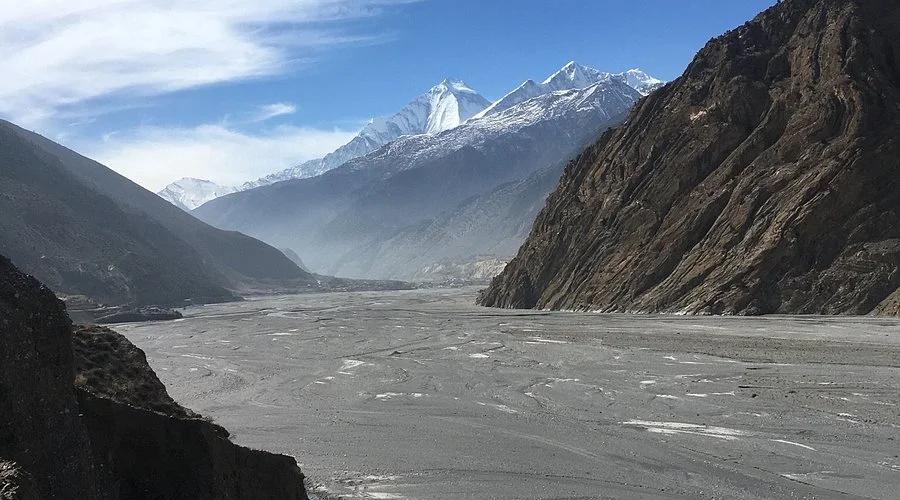
Imagine standing in a spot where the earth literally splits open, carving a path so profound it defies logic. While most travelers look up at the soaring peaks of the Nepal Himalayas, there is a silent giant hiding right before their eyes. Welcome to the Kali Gandaki Gorge, a geological marvel widely regarded as one of the deepest gorge in the world.
Tucked between the towering giants of Annapurna and Dhaulagiri, this ancient valley is more than just a gap in the landscape; it is a bridge between worlds. Whether you are a seeker of ancient myths or a lover of rugged trails, there is a story here that remains largely untold.
In this blog, we’ll dive into the fascinating geography, the sacred history, and the vibrant culture that makes trekking through this canyon a true once-in-a-lifetime adventure. Let’s explore the mystery of the Kali Gandaki.
Where is the Kali Gandaki Gorge Located?
To find the Kali Gandaki Gorge, you must look toward the heart of the Nepal Himalayas, specifically the rugged and mystical Mustang region. This legendary canyon acts as a natural divider between two of the world’s most formidable peaks: Annapurna I to the east and Dhaulagiri to the west. Both mountains soar above 8,000 meters, creating a staggering vertical drop that places this gorge among the deepest in the world.
For travelers, this means you are walking through a valley that has served as a vital trade route between Tibet and India for centuries. Whether you’re heading toward Jomsom or exploring the high deserts of Upper Mustang, the gorge is your constant, awe-inspiring companion.
Why is Kali Gandaki Considered One of the Deepest Gorges in the World?
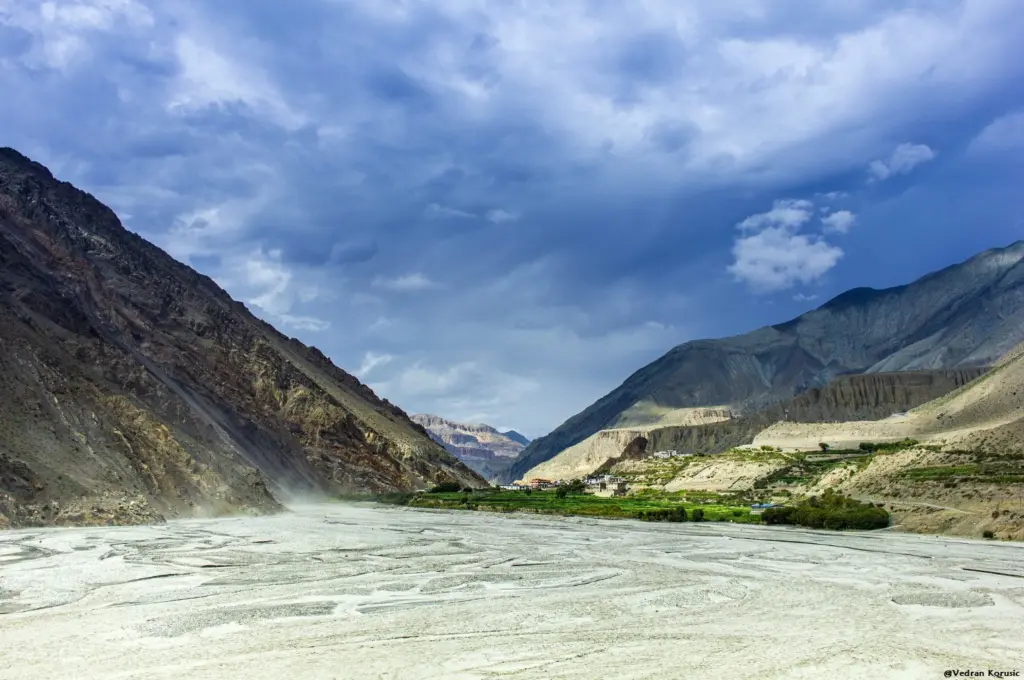
What makes the Kali Gandaki Gorge so legendary isn’t just its beauty, but its staggering scale. To understand why it’s one of the deepest gorges in the world, look at the math of the Nepal Himalayas. The riverbed sits at an elevation of about 2,520 meters, while the peaks of Annapurna and Dhaulagiri tower over 8,000 meters just a few miles away. This creates a vertical drop of more than 5,500 meters, a measurement that rivals any gorge on Earth.
To put that in perspective, the famous Grand Canyon in the USA reaches a depth of about 1,800 meters. The Kali Gandaki is nearly three times deeper by this measure.
While the title of “world’s deepest gorge” is debated by geographers, with the Yarlung Tsangpo in Tibet and Cotahuasi Canyon in Peru also making strong claims, few places on Earth can match the sheer drama of standing at the bottom of this canyon, hemmed in by two of the highest mountains in the world.
Here, the river flows through the mountains rather than around them, the result of millions of years of tectonic movement. It is a humbling reminder of nature’s raw power.
An Ancient Gateway: The Historic Salt Trade Route
Long before modern roads reached the remote corners of the Nepal Himalayas, the Kali Gandaki Gorge served as a vital artery for the region. For centuries, this massive canyon was the primary link between the high plateau of Tibet and the lush valleys of Nepal and India. It wasn’t just a path, it was a lifeline.
Known famously as the “Salt Trade Route,” the gorge saw endless caravans of yaks and mules laden with precious salt from the dried lakebeds of Tibet. In exchange, traders from the south brought grain, spices, and other goods to the mountain communities. You can almost still hear the rhythmic clanging of mule bells echoing off the steep canyon walls, a sound that has defined this journey for generations.
Walking through the deepest gorge in the world today, you are literally stepping in the footprints of ancient merchants. This history has left behind a rich tapestry of culture, seen in the traditional stone teahouses and the unique blend of Buddhist and Hindu traditions that still thrive in the villages along the river. It’s a place where history isn’t found in books, but in the very dust of the trail.
The Sacred Soul: Spirituality and the Kali Gandaki

Beyond its geological wonders, the river flowing through the Kali Gandaki Gorge holds a deep spiritual significance that resonates through the Nepal Himalayas. For Hindus and Buddhists alike, this isn’t just water, it is a sacred presence.
The most mystical aspect of the river is the presence of Shaligrams. These are ancient, black fossilized ammonites, remnants of a time when the Himalayas lay beneath a prehistoric sea, found in the Kali Gandaki riverbed and the surrounding Mustang region.
To Hindus, each Shaligram is a natural manifestation of Lord Vishnu, the preserver of the universe. Finding one is considered a divine blessing, and they are treated with the utmost reverence in homes and temples across the world.
As you trek through the gorge, you’ll often see pilgrims bowed by the riverbank, searching the silt for these prehistoric treasures. There is a quiet, powerful energy here. The roar of the river sounds like a constant chant, reminding every traveler that this landscape is as much a spiritual sanctuary as it is a natural marvel. It’s a place where the earth’s ancient past and living faith flow together as one.
Life Within the Shadows of the Giants
Living in the Kali Gandaki Gorge is a testament to human resilience. As you move deeper into the Nepal Himalayas, the landscape shifts dramatically from lush greenery to a high-altitude desert that feels like another planet. This is the heart of Thakali culture, a community world-renowned for their incredible hospitality and their famous, hearty mountain cuisine.
In legendary villages like Jomsom and Kagbeni, life is dictated by the rhythm of the mountains. Jomsom, the bustling hub of the region, is famous for its powerful afternoon winds that howl through the canyon. These winds are so consistent that they have shaped the local architecture. Houses are built with flat roofs and heavy stones to keep everything secure. Further along, the medieval village of Kagbeni stands as a stunning mud-brick gateway to the forbidden kingdom of Upper Mustang, where ancient traditions remain untouched by time.
The terrain here is rugged and dry, yet the local people have carved out a vibrant existence. From the sweet apple orchards of Marpha to the silent, cliffside monasteries, life in the deepest gorge in the world is a beautiful blend of hard work and spiritual peace. For any traveler, witnessing this unique lifestyle is just as rewarding as seeing the snow-capped peaks themselves.
Trekking Through the Depths: The Annapurna Circuit Experience
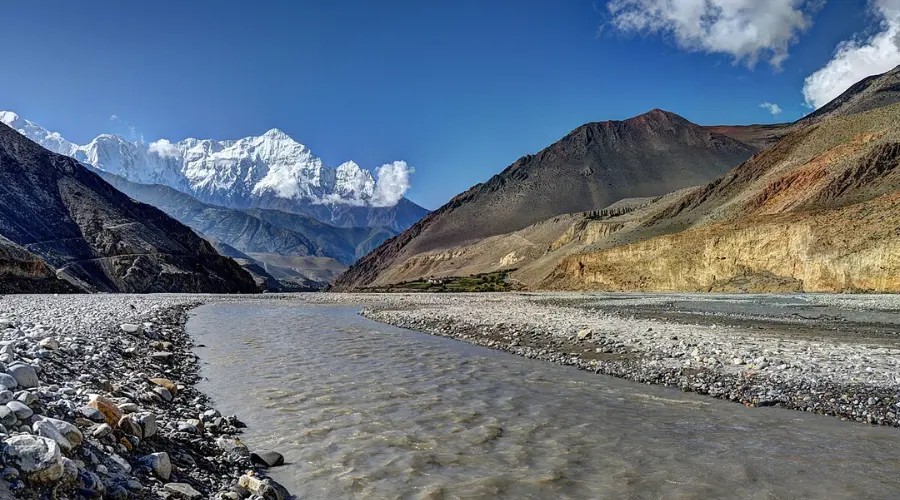
Trekking through the Kali Gandaki Gorge is a highlight of the classic Annapurna Circuit, offering a dramatic transition that few other trails can match. As you move through the deepest gorge in the world, the scenery shifts from the lush, subtropical forests of the lower hills to the stark, wind-swept landscapes of the high desert.
One of the most rewarding stops is Tatopani, where you can soak your tired muscles in natural riverside hot springs. From there, the trail leads you to the bustling town of Jomsom, the gateway to the Mustang region. Be prepared for the famous afternoon “wind tunnel” of the gorge, a powerful breeze that carries the scent of pine and ancient dust. The journey eventually takes you to the sacred site of Muktinath at 3,800 meters, where 108 stone spouts and an eternal flame draw pilgrims from across the Nepal Himalayas.
In terms of difficulty, this section is generally considered moderate. While the terrain is rugged, the paths are well-established and supported by comfortable teahouses. The main challenge for trekkers is the gradual gain in altitude and the dusty afternoon winds. However, the reward is an immersive journey through a landscape that feels as though it was carved by the gods themselves. It is an essential experience for anyone wanting to see the true heart of the mountains.
Best Time to Visit the Kali Gandaki Gorge
Timing is everything when planning a trip to the Nepal Himalayas. To see the Kali Gandaki Gorge in all its glory, you will want to aim for the two peak trekking seasons.
Autumn (September to November) is widely considered the best time. After the summer rains, the air is incredibly crisp and the sky is a deep blue, offering the sharpest views of the surrounding 8,000-meter peaks. This is also a festive time in Nepal, adding a vibrant cultural layer to your journey.
Spring (March to May) is another favorite for travelers. The weather is comfortably warm, and as you trek through the lower parts of the gorge, you’ll be treated to forests of blooming rhododendrons.
While the deepest gorge in the world is a marvel year-round, the monsoon season (June to August) is usually not ideal. Heavy rains can make the trails slippery and often hide the magnificent mountain views behind thick clouds. For the most comfortable and scenic experience, sticking to the spring or autumn months ensures your adventure is truly unforgettable.
What Makes the Kali Gandaki Gorge Truly Unique?
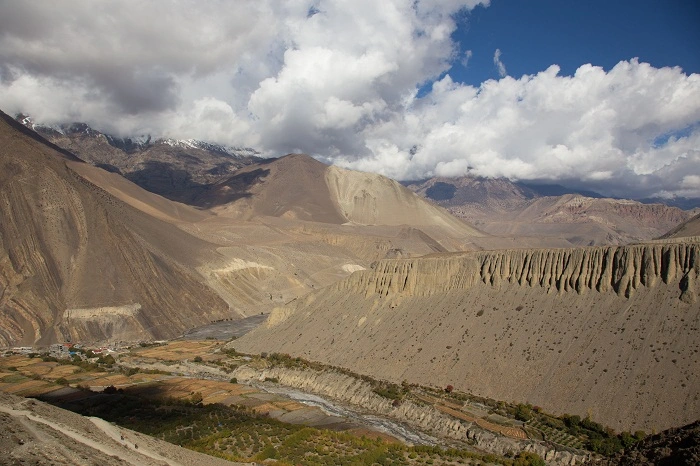
What sets the Kali Gandaki Gorge apart is its sheer, dramatic contrast. It is the only place on Earth where you can stand on a valley floor and look up at two massive 8,000-meter peaks Annapurna I and Dhaulagiri towering directly on either side of you. This unique geography is what officially defines it as the deepest gorge in the world.
But its uniqueness goes beyond the height of the mountains. In the Nepal Himalayas, few places offer such a raw blend of natural wonder and cultural soul. From the prehistoric fossils found on the riverbanks to the ancient Thakali villages, the gorge is a living museum. It is a rare destination where the power of nature and centuries of human history meet in perfect harmony.
Practical Travel Tips for Your Journey
Exploring this remarkable gorge is an incredible adventure, but a little preparation goes a long way. Here are some practical tips to help you navigate the Kali Gandaki like a pro:
- Secure Your Permits: You will need the Annapurna Conservation Area Project (ACAP) permit and a TIMS (Trekkers’ Information Management Systems) card. If you plan to head north of Kagbeni into Upper Mustang, a special Restricted Area Permit is required.
- Pack for Dust and Wind: The Nepal Himalayas are famous for strong afternoon winds, especially in the Jomsom area. Bring a high-quality buff or scarf to protect your face from dust, along with windproof outer layers.
- Layer Up: Temperatures can shift rapidly. Carry moisture-wicking base layers for the sunny daytime walks and a warm down jacket for the chilly mountain evenings.
- Hire a Local Guide: While the trails are well-marked, a local guide is invaluable. They can help you spot hidden Shaligrams, bridge the language gap in remote villages, and provide deep insights into the local culture and history that you won’t find in any guidebook.
- Stay Hydrated: The air is dry and the sun is intense at high altitudes. Carry a reusable water bottle and use purification tablets or a filter to stay hydrated while protecting the environment.
Experience the Magic of the Kali Gandaki Gorge
The Kali Gandaki Gorge is far more than a geographical record-holder, it is a journey through the very soul of the Nepal Himalayas. From the sacred whispers of the river to the towering shadows of Annapurna and Dhaulagiri, every step through this ancient canyon tells a story of trade, faith, and extraordinary resilience. Whether you are hunting for prehistoric fossils or simply seeking a perspective that only the high mountains can offer, this gorge delivers an experience that stays with you long after the dust has settled.
The legends of this valley are waiting to be explored, and there is no better way to uncover them than by walking these historic trails yourself. Reach out to a reputable local trekking agency to begin planning your Himalayan journey, your adventure into the deep awaits.
Frequently Asked Questions About the Kali Gandaki Gorge
-
Where is the Kali Gandaki Gorge located?
The Kali Gandaki Gorge is located in the Mustang region of the Nepal Himalayas. It sits dramatically between two of the world’s highest mountains: Annapurna I (8,091m) and Dhaulagiri (8,167m). This unique position creates a massive natural corridor that has connected Nepal and Tibet for centuries.
-
Is it really the deepest gorge in the world?
The Kali Gandaki is widely cited as one of the deepest gorges on Earth, with a vertical drop of over 5,500 meters between the riverbed and the surrounding peaks. However, the title is geographically contested, with the Yarlung Tsangpo in Tibet and Cotahuasi Canyon in Peru also considered strong candidates. What’s undisputed is that the scale and drama of this canyon place it among the world’s most extraordinary natural formations.
-
Is it safe to trek through the Kali Gandaki Gorge?
Yes, trekking through the gorge is very safe for most travelers. The trails are well-established parts of the Annapurna Circuit. The strong afternoon winds in the Jomsom area can be quite dusty, so wearing a buff and staying hydrated is important.
-
What is the best time of year to visit?
The best times to visit are autumn (September to November) and spring (March to May). During these seasons, skies are clear with excellent mountain views and stable trekking conditions.
-
Do I need special permits to visit the Kali Gandaki Gorge?
Most travelers need the Annapurna Conservation Area Project (ACAP) permit and a TIMS card. If your journey extends into Upper Mustang, a special Restricted Area Permit is also required. A reputable trekking agency can help you arrange all of these.
-
What are Shaligrams and where are they found?
Shaligrams are black, fossilized ammonites found in the Kali Gandaki riverbed and the surrounding Mustang region. In Hinduism, they are considered sacred manifestations of Lord Vishnu. Many pilgrims and trekkers search for these ancient stones along the riverbanks as they journey through the canyon.
-
How difficult is the Kali Gandaki trek?
The trek is generally considered moderate. While the terrain is rugged, the elevation gain is more gradual compared to other high-altitude treks in the Nepal Himalayas, making it suitable for anyone with a reasonable level of fitness, provided they allow time to acclimatize properly.
-
Can I see both Annapurna and Dhaulagiri from the gorge?
Absolutely. The Kali Gandaki Gorge offers one of the rare vantage points on Earth from which you can see two separate 8,000-meter peaks from the valley floor. The contrast between the riverbed and the towering snow-capped summits is truly extraordinary.
-
What kind of accommodation is available in the gorge?
The route is dotted with charming teahouses, local mountain guesthouses that provide warm beds and delicious local meals, including the famous Thakali Khana set. In larger towns like Jomsom, more modern hotels with increased comfort and amenities are also available.
-
Why is the Kali Gandaki historically significant?
For centuries, the gorge served as the legendary Salt Trade Route, the main highway for traders carrying salt from Tibet south into Nepal and India. This history created a unique cultural blend of Buddhist and Hindu traditions that travelers still encounter today.