
The Annapurna Circuit is one of the world’s most iconic treks, winding through the Annapurna Conservation Area (ACA), Nepal’s largest protected area at 7,629 sq km. Whether you are crossing the legendary Thorong La Pass (5,416 m), exploring the medieval streets of Manang, or gazing at the sacred shrines of Muktinath, planning starts with understanding one thing: your Annapurna Circuit Trek permits.
Planning your Annapurna Circuit trek in 2026/2027 requires careful preparation, and one of the most important steps is understanding the permit requirements and associated costs.
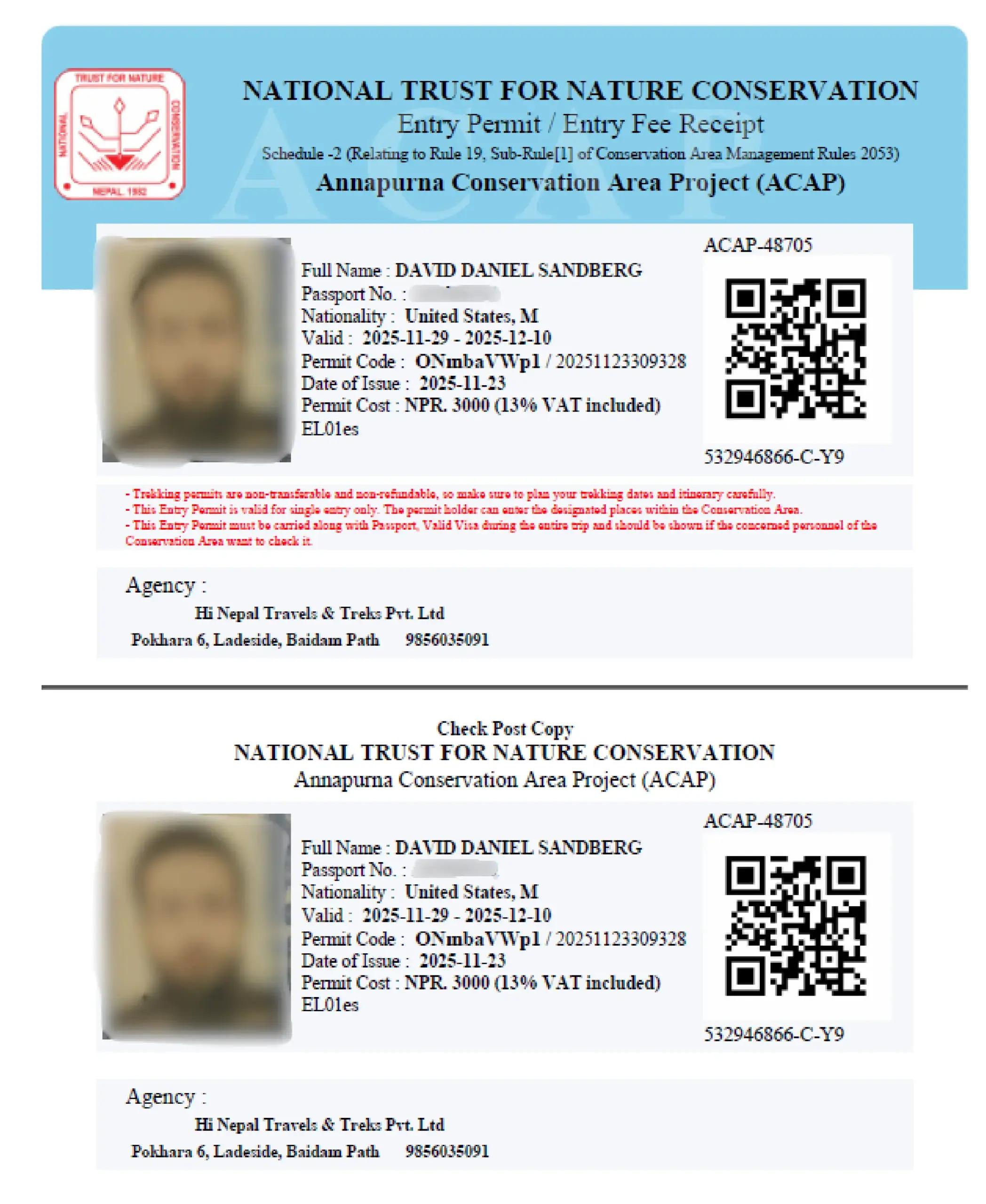
To legally enter and trek this region, every foreign trekker must hold one mandatory permit: the Annapurna Conservation Area Permit (ACAP). This permit grants access to the full circuit, including major trekking hubs such as Manang, Thorong La Pass, Muktinath, Pisang, Chame, and Jomsom.
Nepal’s trekking regulations have changed significantly since 2023. This guide gives you the current, on-the-ground reality, no outdated tables, no recycled misinformation. Just what you actually need to know before you arrive.
Annapurna Circuit Trek Permits in Nepal Overview
Let’s cut straight to what matters. Many blogs still list two permits as mandatory for the Annapurna Circuit. That is no longer accurate. Here is the real picture for 2026:
| Permit Type | Requirement Status |
|---|---|
| ACAP Permit | ✅ MANDATORY |
| TIMS Card | ❌ NOT REQUIRED (Annapurna, since April 2023) |
The TIMS (Trekkers’ Information Management System) card was officially discontinued for the Annapurna region effective April 1, 2023. In practice, only the ACAP is checked at trail checkpoints. Any source, blog, agency brochure, or forum post, still listing TIMS as a required Annapurna cost is working from outdated information.
The two essential things every trekker must have in 2026 are:
- Annapurna Conservation Area Permit (ACAP) – the only mandatory entry permit for the region
- A licensed guide from a government-registered trekking agency, legally required for all foreign trekkers since April 2023
Note: Children under 10 years of age are exempt from the ACAP permit fee, but should still be registered at checkpoints for safety and record-keeping.
What Permits Are Required for the Annapurna Circuit Trek in Nepal?
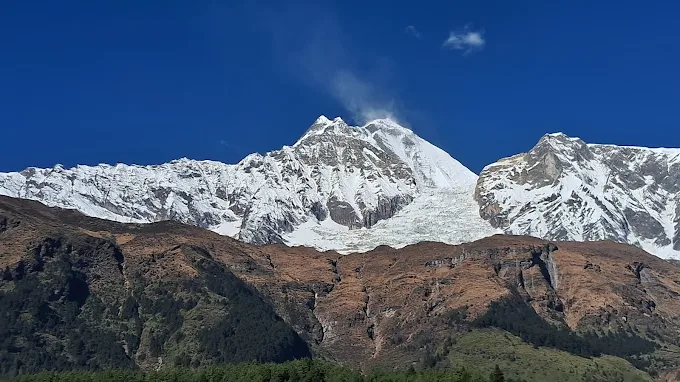
Understanding exactly which permits apply to your trek, and which no longer do is the most important step in your preparation. Here is a clear, honest breakdown.
Annapurna Conservation Area Permit (ACAP) – The Only Mandatory Permit
The ACAP is issued by the National Trust for Nature Conservation (NTNC) and grants legal entry into the Annapurna Conservation Area. It covers the entire standard circuit, including all major trekking hubs: Besisahar, Chame, Pisang, Manang, Thorong La Pass, Muktinath, and Jomsom.
- Cost (2026): NPR 3,000 (~$23 USD) for foreign nationals
- Cost (2026): NPR 1,000 (~$8 USD) for SAARC nationals
- Valid for the full duration of a single entry into the conservation area
- Fees fund trail maintenance, wildlife protection, hydropower projects, and local community development
- Checked and stamped at multiple official checkpoints along the route
TIMS Card – No Longer Required for Annapurna (Since April 2023)
The TIMS card was a safety-tracking document introduced in 2008. As of April 1, 2023, it has been officially discontinued for the Annapurna region. The mandatory guide system (see below) has replaced its safety-tracking function, your guide’s agency registration ensures your presence on the trail is recorded.
Important note: If an agency charges you separately for a TIMS card on the Annapurna Circuit, ask for written clarification. You are only legally required to pay for the ACAP.
Restricted Area Permits (RAP) – For Optional Side Trips Only
The standard Annapurna Circuit does not require a Restricted Area Permit. RAPs are only needed if you choose to venture off the main circuit into:
| Destination | 2026 Permit Cost | Notes |
|---|---|---|
| Nar Phu Valley | $100/week (peak) $75/week (off-season) |
Very remote; requires RAP + guide |
| Upper Mustang | $50 per day | New daily rate effective Dec 2025 — replaces old $500/10-day flat fee |
| Tilicho Lake | Covered by ACAP | No additional permit needed |
| Thorong La Pass | Covered by ACAP | No additional permit needed |
Note: The Upper Mustang permit structure changed significantly in December 2025. The old mandatory flat fee of $500 per person for 10 days has been replaced by a flexible $50 per day rate, making short Jeep tours and single-day visits far more accessible.
Why Certain Annapurna Side Trips Require a Restricted Area Permit?
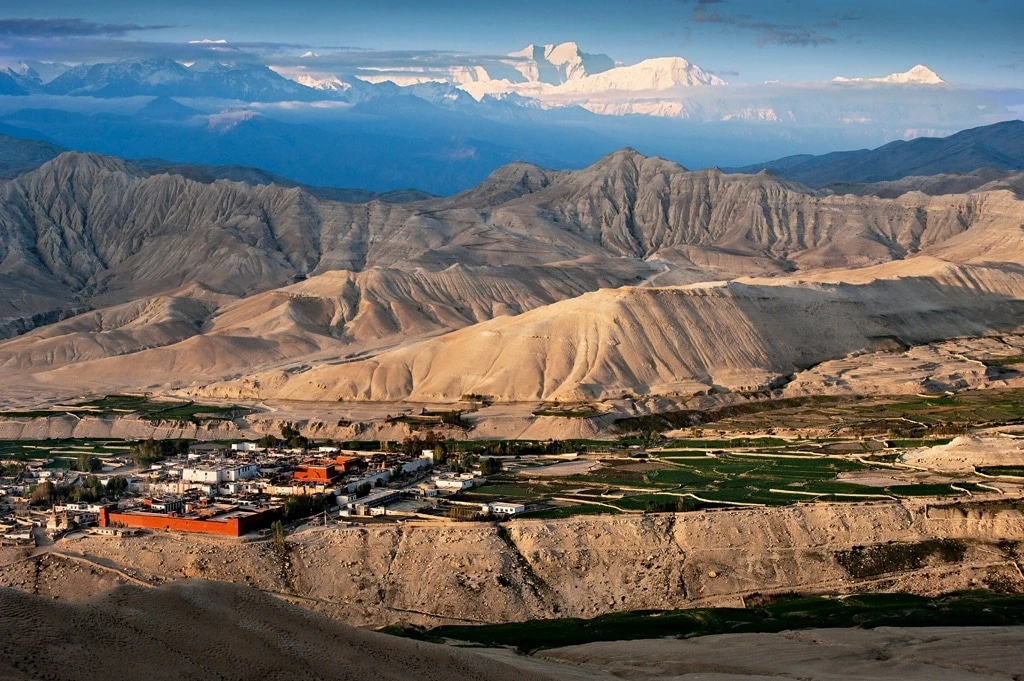
While the main Annapurna Circuit is open to all trekkers with a standard ACAP, certain detours into remote or culturally sensitive areas fall under Nepal’s Restricted Area Permit (RAP) system. Here is why these permits exist and what they protect:
- Environmental & Cultural Conservation:
Areas like Nar Phu Valley and Upper Mustang contain fragile high-altitude ecosystems and ancient Tibetan-derived cultures. The RAP limits visitor numbers to prevent over-tourism and funds local heritage preservation.
- Enhanced Visitor Tracking:
In remote zones with sparse infrastructure, the RAP system allows the Department of Immigration to monitor trekker movements, critical in areas bordering international boundaries.
- Safety & Emergency Response:
Restricted zones involve higher altitudes and more technical terrain. Permit registration ensures trekkers are linked to a licensed agency, making helicopter rescue coordination significantly faster.
- Local Community Support:
A portion of RAP fees is allocated directly to the specific districts you traverse, funding schools, health posts, and trail maintenance in villages that see far fewer trekkers than the main circuit.
- Mandatory Guide Requirement:
All restricted area treks require a licensed guide and must be arranged through a registered agency, consistent with Nepal-wide 2026 regulations.
Annapurna Circuit Trek Permit Cost in 2026 – Complete Fees Guide
Nepal’s permit fee structure for the Annapurna region is straightforward in 2026: one mandatory permit, one fixed price, consistent year-round. There are no peak-season or off-season price differences for the ACAP itself (though guide and accommodation rates do vary by season).
Standard ACAP Permit Fees (2026)
| Permit | Foreign Nationals | SAARC Nationals | Status |
|---|---|---|---|
| ACAP (Annapurna Conservation Area Permit) | NPR 3,000 (~$23) | NPR 1,000 (~$8) | Mandatory |
| TIMS Card | NOT REQUIRED | NOT REQUIRED | Discontinued for Annapurna (April 2023) |
| Total Permit Cost | NPR 3,000 (~$23) | NPR 1,000 (~$8) | ACAP only |
Note: Fees are consistent year-round and have not changed for the 2026 season. Always carry cash in Nepali Rupees (NPR) for in-person applications.
What Does the ACAP Fee Cover?
- Trail Maintenance: Upkeep of the physical routes, bridges, signage, and rest areas along the circuit
- Wildlife Protection: Conservation programs for snow leopards, Himalayan tahr, and other endemic species
- Community Development: Support for schools, health posts, and sustainable energy projects in remote villages
- Checkpoint Infrastructure: Operation of official checkpoints at Dharapani, Chame, Manang, Muktinath, and Jomsom
- Environmental Monitoring: Scientific research and Leave No Trace enforcement programs
Additional Budget Considerations
Beyond the ACAP permit itself, plan for these essential costs:
| Item | Approximate Cost | Notes |
|---|---|---|
| Licensed Guide (daily rate) | $25–$35 per day | Legally mandatory for all foreign trekkers |
| Porter (optional) | $15–$25 per day | Recommended for heavy loads |
| Travel Insurance | Varies | Must cover heli-evacuation to 6,000m+ |
| Nar Phu RAP (if doing side trip) | $75–$100/week | Only if leaving main circuit |
| Upper Mustang RAP (if visiting) | $50/day | New 2025 daily rate |
Key 2026 Regulation Updates Every Trekker Must Know
If you last researched the Annapurna Circuit before 2023, the regulatory landscape has changed enough that your previous knowledge may get you turned back at a checkpoint. Here is what is new, current, and fully enforced:
1. TIMS Discontinued for Annapurna (April 2023)
The independent Green TIMS Card, previously available directly from NTB for solo trekkers, no longer exists. For the Annapurna region specifically, TIMS in any form is no longer required or enforced on the trail. The mandatory guide registration system has replaced its safety-tracking role.
2. Mandatory Guide Rule – Fully Enforced in 2026
This is the most significant regulatory change for trekkers. Effective April 1, 2023, and rigorously enforced in 2026: every foreign trekker in any National Park, Conservation Area, or Restricted Area in Nepal must be accompanied by a licensed guide from a TAAN-registered trekking agency.
- Trekkers found without a licensed guide are turned back at checkpoints
- Purchased permits become invalid if you are trekking without a guide
- Checkpoints throughout the Annapurna region actively verify guide credentials
- Attempting to continue without a guide can result in fines or blacklisting from future permits
Note: This rule applies regardless of your experience level, nationality, or previous trekking history in Nepal. There are no exceptions for the major routes.
4. Upper Mustang Permit Structure Overhauled (December 2025)
The old $500 flat fee for a mandatory 10-day Upper Mustang permit has been replaced by a $50 per person per day system, effective December 22, 2025 (Paus 7 in the Nepali calendar). This landmark change makes shorter visits – Jeep tours, motorcycle trips, 2–3 day treks, significantly more affordable and is expected to increase visitor numbers to the region. ACAP fees and mandatory guide requirements remain in place.
5. Digital Permit Applications Now Available
Nepal has transitioned to digital permit tracking in 2026. Permits can be applied for online using your Nepali visa number, and international applicants can pay fees in advance before arriving in Kathmandu. Your trekking agency can typically handle the entire process digitally on your behalf. Note that physical permit documents are still required at trail checkpoints, keep originals in a waterproof sleeve.
6. Travel Insurance Enforcement Tightened
Travel insurance with helicopter evacuation coverage has been mandatory for years, but enforcement is stricter in 2026. Most reputable agencies now require a copy of your insurance policy before the trek commences. Your policy must specifically include:
- Emergency helicopter evacuation coverage to altitudes of at least 6,000 metres
- Medical treatment for altitude-related conditions (AMS, HACE, HAPE)
- Medical repatriation coverage
Important note: Standard travel insurance without explicit high-altitude provisions does not meet this requirement. Check your policy carefully before departing.
Annapurna Trek Permit Cost vs. Other Nepal Treks (2026)
When planning a Himalayan adventure, understanding how permit costs compare across Nepal’s major trekking regions helps you budget accurately and choose the right route for your goals.
| Trek | Required Permits | Approx. Total Permit Cost (USD) | Best For |
|---|---|---|---|
| Annapurna Circuit | ACAP only | ~$23 | Variety, culture & value |
| Everest Base Camp | Sagarmatha NP + Local Entry Permit (LEP) | ~$45–$50 | Iconic peaks & Sherpa culture |
| Langtang Valley | Langtang NP Permit | ~$23–$35 | Shorter duration, fewer crowds |
| Manaslu Circuit | RAP + MCAP + ACAP | ~$175–$205 | Remote, restricted adventure |
| Upper Mustang | RAP ($50/day) + ACAP | $500+ for 10 days | Tibetan culture & unique landscape |
Key Differences at a Glance
Annapurna vs. Everest Base Camp
The Everest region uses a unique Local Entry Permit (LEP) system through the Khumbu Pasang Lhamu Rural Municipality, replacing TIMS in that region. While permit costs are broadly similar to Annapurna, Everest has notably higher on-trail costs for accommodation and food, and the permit structure is slightly more complex.
Annapurna vs. Manaslu (Restricted Area)
The Manaslu Circuit sits entirely within restricted area territory, meaning its permit costs are seasonal and significantly higher. Unlike the Annapurna Circuit, permits for Manaslu must be processed by a registered agency, you cannot apply individually. This makes it better suited for trekkers specifically seeking a remote, off-the-beaten-path experience.
Annapurna vs. Upper Mustang (Premium Route)
Upper Mustang is one of Nepal’s most expensive regions to trek due to its restricted area status. However, the new daily rate system introduced in December 2025 has made shorter trips to Lo Manthang much more financially accessible than before. If you are considering adding Mustang to your Annapurna trip, budget an additional $50 per day for the RAP alone.
How to Get Annapurna Circuit Trek Permits in Nepal?
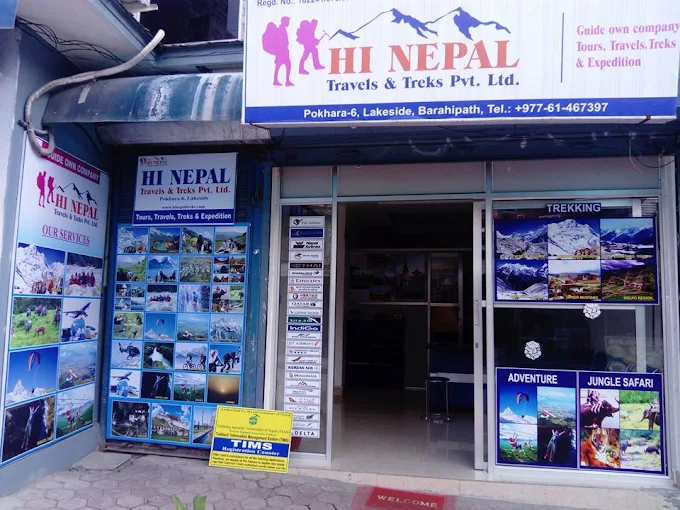
Getting your ACAP permit is straightforward, the key is doing it before you start the trail. Here is a step-by-step guide for 2026.
Step 1: Gather Your Documents
Whether applying in person or through your agency, have these ready before arrival:
- Original passport valid for at least 6 months from your Nepal entry date
- Valid Nepal tourist visa (15, 30, or 90 days) covering your full trekking period
- 2–4 passport-sized photographs (physical copies required even for digital applications)
- General trekking itinerary with entry and exit points
- Proof of travel insurance explicitly covering high-altitude trekking and heli-evacuation
Step 2: Choose Your Application Method
Option A — In Person (Kathmandu or Pokhara)
Visit the ACAP/NTNC office or Nepal Tourism Board:
- Kathmandu: Bhrikutimandap, Thamel area, open Sunday to Friday, 10:00 AM to 5:00 PM
- Pokhara: Lakeside/Damside, open Sunday to Friday, 10:00 AM to 5:00 PM
- Bring exact cash in Nepali Rupees, most offices do not accept credit cards for walk-in applications
- Walk-out time is typically 30–60 minutes if not busy
Pro Tip: Government offices are closed on Saturdays and public holidays. Plan to arrive in Kathmandu at least one full business day before your trek starts.
Option B — Through Your Registered Agency (Recommended)
This is the smoothest route in 2026 given the mandatory guide requirement. Your agency applies for the ACAP using their official credentials, often before you even arrive in Nepal. Provide them with a digital copy of your passport and photos in advance, and your permit will be waiting at your pre-trek briefing.
Option C — Online Pre-Registration
Nepal now allows online permit applications using your Nepali visa number. International applicants can pay fees in advance. However, you will still need to visit a physical counter in Kathmandu or Pokhara to collect your stamped physical permit booklet before heading to the mountains.
Step 3: On the Trail
- Carry original permits in a waterproof sleeve at all times, digital copies are backup only
- Register your permit at every official checkpoint (Dharapani, Chame, Manang, Muktinath, Jomsom)
- Your guide is jointly responsible for checkpoint registration, do not skip any checkpoint
Important note: Do not attempt to buy your ACAP at a trailhead checkpoint. Trekkers issued permits on the trail are typically charged double the standard rate as a penalty for non-compliance.
Mandatory Requirements for Annapurna Circuit Trek Permits in Nepal
Beyond the ACAP permit itself, Nepal’s 2026 regulations establish a broader set of requirements for foreign trekkers. Meeting all of these before you set foot on the trail ensures a legal, safe, and stress-free journey.
Core Identification & Legal Documents
- Original passport – valid for at least 6 months from your Nepal entry date
- Valid Nepal tourist visa, must cover your full trekking duration plus buffer days
- 4–6 passport-sized photographs for permits, registration forms, and checkpoints
- Digital copies of passport, visa, and insurance stored securely on your phone or in the cloud
Mandatory Trekking Permits
- ACAP Permit — NPR 3,000 (~$23) for foreign nationals; NPR 1,000 (~$8) for SAARC nationals. The single mandatory entry document for the Annapurna region.
- TIMS Card — Not required for Annapurna as of April 2023. Do not pay for this separately.
The No Solo Trekking Rule (Fully Enforced 2026)
This is the most important practical requirement for 2026. Every foreign trekker must be accompanied by a licensed guide from a TAAN-registered agency. This is not optional, not loosely enforced, and has no exceptions for the Annapurna Circuit and other major trekking regions.
- Checkpoints actively verify guide credentials alongside your ACAP permit
- Trekkers found without a licensed guide are turned back; permits become invalid
- Guide daily rate: $25–$35 per day; porter rates: $15–$25 per day
- One licensed guide may lead up to seven trekkers
Mandatory Travel Insurance
Proof of insurance is required before your trek commences. Your policy must explicitly cover:
- High-altitude trekking to at least 6,000 metres
- Emergency helicopter evacuation (typical cost: $3,000–$7,000 per rescue)
- Medical treatment for altitude-related illness in Kathmandu or Pokhara
- Medical repatriation to your home country
Pro Tip: Purchase your insurance before leaving your home country. Nepal-based policies often exclude pre-existing conditions and may not meet the heli-evacuation threshold.
Age & Health Considerations
There is no strict upper age limit for the Annapurna Circuit, but the trek reaches 5,416 m at Thorong La Pass. Physical fitness and cardiovascular health are essential. Disclose any pre-existing conditions, particularly respiratory, cardiac, or previous altitude sickness history, to your guide before departure. Children under 10 are exempt from the ACAP fee but must still be registered at checkpoints.
Terms and Conditions for Annapurna Circuit Trek Permits
Understanding the legal terms attached to your ACAP permit avoids surprises and potential penalties on the trail.
- Single-Entry Validity: The ACAP is valid for one entry only. If you exit the conservation area and wish to re-enter, you must purchase a new permit at full price.
- Non-Transferable: Permits are issued in your name and cannot be shared, loaned, or transferred to another trekker under any circumstances.
- ID Required at All Times: Carry your original passport alongside your physical permit. Checkpoint officials cross-reference both documents; a photocopy of your passport alone may not be accepted.
- Non-Refundable: Once issued, permit fees are 100% non-refundable and non-exchangeable, regardless of weather conditions, injury, illness, or changes to your travel plans.
- Guide Compliance: Your permit remains valid only while you are trekking with your licensed guide. Separating from your guide without authorisation may void your permit.
- Route Adherence: Your permit covers the approved Annapurna Circuit route. Entering restricted areas (Nar Phu, Upper Mustang) without the appropriate RAP is a legal violation and may result in fines.
- Environmental Compliance: Permit holders are bound by Nepal’s National Park and Wildlife Conservation Act. Littering, disturbing wildlife, or damaging flora is strictly prohibited and enforceable.
- Checkpoint Registration: You and your guide are jointly responsible for registering at every official checkpoint. This data is the backbone of Nepal’s search and rescue coordination system.
Pro Tip: Store your ACAP in a waterproof dry bag or laminated sleeve. High-altitude weather can arrive without warning, a rain-soaked, illegible permit causes unnecessary delays at checkpoints like Thorong Phedi or Jomsom.
Ready to Trek the Annapurna Circuit?
At Hi Nepal Treks, we handle your ACAP permit, licensed guide, and all logistics, so you can focus entirely on the trail ahead. Contact us to plan your 2026/27 Annapurna Circuit adventure.
FAQ
-
Do I need a TIMS card for the Annapurna Circuit in 2026?
No. The TIMS card was officially discontinued for the Annapurna region effective April 1, 2023. Only the ACAP is required and enforced at trail checkpoints. If an agency quotes you a separate TIMS fee for the Annapurna Circuit, ask for written clarification, it is not a legal requirement.
-
What are the mandatory permits for the Annapurna Circuit trek?
One permit: the Annapurna Conservation Area Permit (ACAP). This grants access to the full circuit. In addition to the permit, a licensed guide from a registered agency is legally required for all foreign trekkers.
-
How much does the ACAP permit cost in 2026?
NPR 3,000 (approximately $23 USD) for foreign nationals. SAARC nationals (India, Bangladesh, Bhutan, Pakistan, Sri Lanka, Maldives, Afghanistan) pay a discounted rate of NPR 1,000 (~$8 USD). Fees are consistent year-round and have not changed for the 2026 season.
-
Is solo trekking allowed on the Annapurna Circuit?
Not for foreign trekkers. Since April 1, 2023, all foreign nationals must be accompanied by a licensed guide from a TAAN-registered trekking agency when trekking in any National Park, Conservation Area, or Restricted Area in Nepal. Trekkers found without a guide are turned back at checkpoints.
-
Can solo travellers now do restricted area treks?
Yes, as of March 22, 2026. TAAN removed the previous requirement for a minimum of two trekkers per group in restricted areas. Individual trekkers can now obtain RAPs and trek alone, provided they are accompanied by a licensed guide and book through a registered agency.
-
Where can I get the ACAP permit?
ACAP/NTNC offices in Kathmandu (Bhrikutimandap) or Pokhara (Lakeside/Damside), open Sunday–Friday, 10:00 AM–5:00 PM. A registered trekking agency can also handle the full application process before you arrive. Online pre-registration is also available using your Nepali visa number, though physical permit collection is still required.
-
What documents do I need to apply?
A valid passport and photocopy; a valid Nepal tourist visa; 2–4 passport-sized photographs; cash in NPR for in-person applications; and proof of travel insurance covering high-altitude trekking and helicopter evacuation.
-
Are permit costs different in peak vs. off-season?
No. ACAP fees are fixed year-round at NPR 3,000 for foreign nationals. However, guide fees and teahouse accommodation prices are typically 15–25% higher during peak seasons (March–May and September–November).
-
How long is the permit valid?
Permits are issued for a single entry and remain valid for the duration of your trek as specified in your application itinerary. Once you exit the conservation area, typically at Jomsom or Tatopani, the permit cannot be reused.
-
Does the ACAP cover Tilicho Lake and Thorong La Pass?
Yes. The standard ACAP covers the entire Annapurna Circuit, including the side trip to Tilicho Lake and the crossing of Thorong La Pass (5,416 m). Separate RAPs are only needed if you plan to enter Nar Phu Valley or Upper Mustang.
-
What happened to Upper Mustang’s permit fee?
In December 2025, Nepal replaced the old $500 flat fee (mandatory for 10 days) with a flexible $50 per day system. This makes shorter trips to Upper Mustang, whether by Jeep, motorcycle, or trekking, significantly more affordable. ACAP fees and guide requirements remain unchanged.
-
Can I get my permit on the trail?
Technically, some checkpoint offices can issue permits at trailheads like Besisahar, but trekkers issued permits on the trail are typically charged double the standard rate. Always obtain your ACAP in Kathmandu or Pokhara before your trek begins.
-
Do children need permits?
Children under 10 years of age are exempt from the ACAP permit fee. However, their presence must still be reported at the registration office for safety and record-keeping, and they should carry their passport at trail checkpoints.