
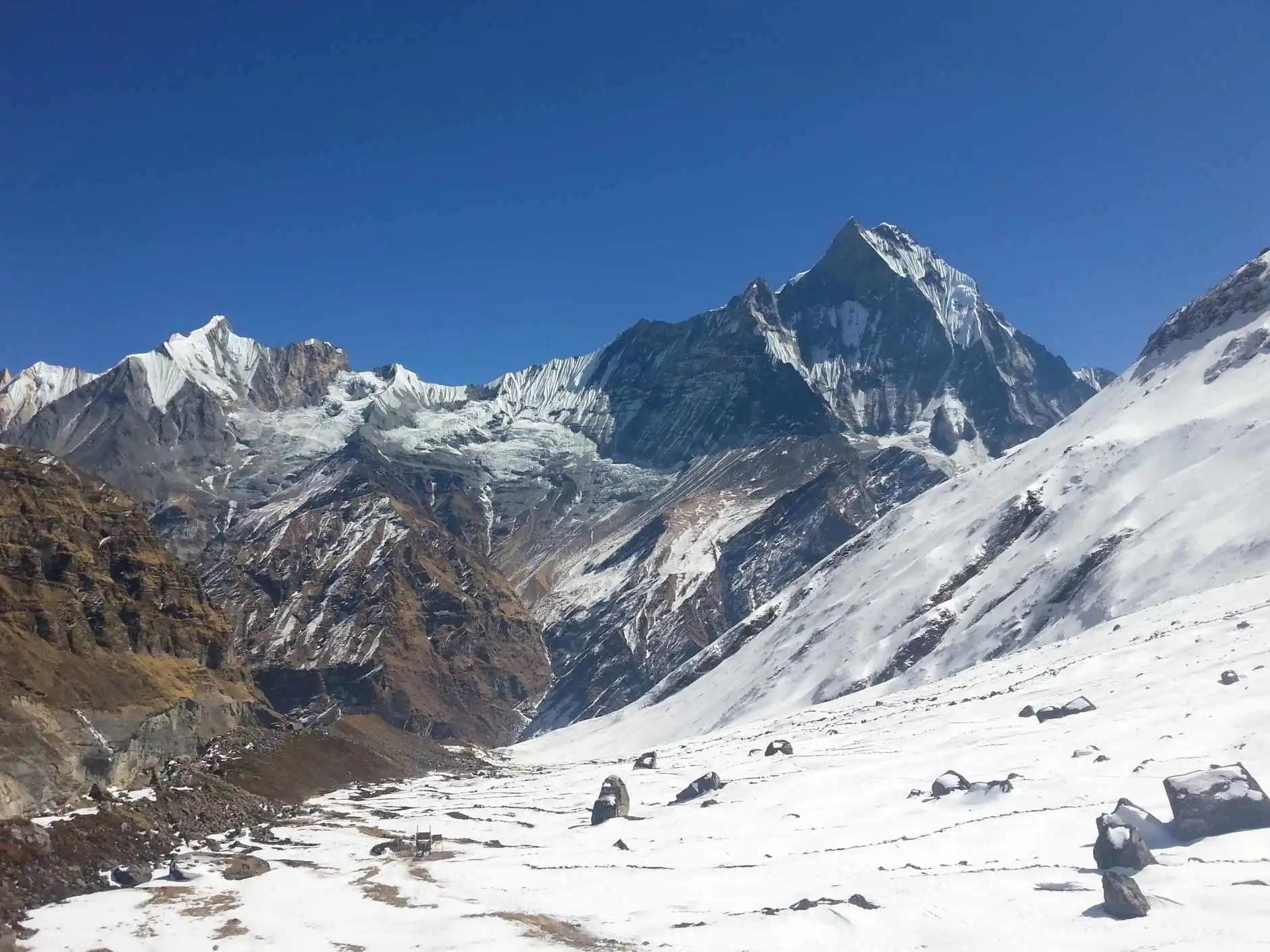
If you are choosing when to trek to Annapurna Base Camp, October, November, March and April are usually the easiest months to recommend. These periods generally offer good mountain visibility, comfortable daytime walking conditions and better trail conditions.
But there isn’t one perfect month for everyone.
You may want to see rhododendrons in bloom, walk through fresh snow, avoid the busiest trails, or simply trek when the weather is most predictable. The best time for the Annapurna Base Camp Trek depends on what matters most to you.
The trail also changes considerably with altitude. A warm afternoon around Ghandruk does not mean it will feel warm at Annapurna Base Camp, which sits at 4,130 m. Rain that is manageable lower down can also turn into snow higher on the trail.
So rather than simply calling one season “best,” here’s what you can expect from spring, autumn, winter and monsoon on the ABC Trek.
When Is the Best Time for Annapurna Base Camp Trek?
For most trekkers, autumn and spring are the best seasons for Annapurna Base Camp.
| Season | Months | What to expect | Best for |
|---|---|---|---|
| Spring | March–May | Mild weather, rhododendrons, good visibility | First-time trekkers, nature lovers |
| Autumn | September–November | Stable weather, clear mountain views, busy trails | Best overall conditions |
| Winter | December–February | Cold, possible snow, quieter trails | Experienced trekkers, snow lovers |
| Monsoon | June–August | Rain, clouds, slippery trails, lush landscapes | Flexible trekkers, fewer crowds |
Nepal Tourism Board lists March–May and September–November among the best periods for trekking in the Annapurna region.
For a first ABC trek, I’d generally choose October, November, March or April.
Annapurna Base Camp Trek in Autumn: September to November
Autumn is the most reliable season for trekkers who want a combination of clear mountain views and comfortable walking conditions.
The monsoon has cleared much of the atmosphere by this period, and the higher sections of the trail are usually much drier than they are during summer.
September
September is a transition month.
Early September can still receive some monsoon influence, particularly at lower elevations. Conditions usually improve as the month progresses.
The advantage is that the trail can be greener and quieter than later in autumn.
If your dates are flexible, late September is generally a better bet than early September for mountain views.
October
October is one of the strongest months for the ABC Trek.
The weather is generally stable, the skies are often clearer and the mountain views can be excellent. It is also a popular time to trek, so you should expect more people on the trail and greater demand for teahouse rooms.
If your priority is:
Clear views + comfortable trekking + reliable conditions → October is one of the best choices.
November
November continues to offer good trekking conditions, although temperatures begin to drop as winter approaches.
The mornings and evenings at higher elevations can feel distinctly cold, but daytime walking can remain comfortable when the sun is out.
November is particularly attractive if you want clear mountain views without the slightly warmer conditions of early autumn.
Annapurna Base Camp Trek in Spring: March to May
Spring is another excellent period for ABC.
The biggest difference compared with autumn is the landscape. Instead of the post-monsoon clarity of autumn, you get a trail coming alive with rhododendrons, greenery and warmer conditions at lower elevations.
The Annapurna region is well known for its rhododendron forests, which add colour to the lower sections of the trek during spring.
March
March marks the beginning of the spring trekking season.
Higher sections can still be cold, and snow may remain around the upper trail depending on the year’s conditions. But lower elevations become increasingly pleasant for walking.
March works well if you want:
- Fewer crowds than peak autumn
- Spring scenery
- Cooler walking temperatures
- A chance of encountering snow higher up
April
April is arguably the best spring month for many trekkers.
The weather is generally comfortable, rhododendrons are prominent in the lower and middle sections, and mountain views can be excellent on clear days.
If you want colourful forests and good trekking conditions, April is difficult to beat.
May
May is warmer at lower elevations and marks the approach of the monsoon.
Early May can still provide good trekking conditions, but clouds and rain become increasingly likely as the month progresses.
If your schedule allows, early May is preferable to late May for a better chance of stable conditions.
Annapurna Base Camp Trek in Winter: December to February
Winter doesn’t make the ABC Trek impossible.
It simply changes what you need to prepare for.
Temperatures drop sharply at higher elevations, and snowfall can affect the upper trail. Conditions around the Base Camp section can become much more demanding than they are in spring or autumn.
The reward is a quieter trail and a very different Himalayan landscape.
Why trek ABC in winter?
Winter can be a good choice if you:
- Prefer quieter trails
- Want a chance to see snow-covered landscapes
- Don’t mind cold mornings and nights
- Have appropriate winter clothing
- Are comfortable with changing trail conditions
However, winter requires more flexibility.
Snow can make sections of the higher trail slower or more difficult, and shorter daylight hours give you less room to recover from delays.
For an inexperienced trekker, spring or autumn is generally the easier choice.
Annapurna Base Camp Trek During Monsoon: June to August
Monsoon is the least predictable period for the standard ABC Trek.
The southern slopes of the Annapurna region receive substantial rainfall during the monsoon, while clouds can obscure the mountains for long periods. Nepal receives around 80% of its annual precipitation during the June–September monsoon period.
That doesn’t mean you cannot trek.
It means you need to accept a different experience.
What makes monsoon difficult?
Expect some combination of:
- Frequent rain
- Wet and muddy trails
- Slippery stone steps
- Leeches in lower, wetter sections
- Cloudy mountain views
- Possible landslides or trail disruption
- Changes to your walking schedule
The upside is that the landscape becomes exceptionally green, waterfalls are fuller and the trail is considerably quieter.
If clear Himalayan views are your main reason for doing ABC, however, monsoon is not the season I’d choose.
Spring vs Autumn: Which Is Better for ABC?
Both seasons are excellent, but they offer different experiences.
| Factor | Spring | Autumn |
|---|---|---|
| Mountain views | Very good | Excellent |
| Weather | Generally stable | Generally stable |
| Rhododendrons | Excellent | Limited |
| Greenery | Excellent | Good |
| Snow | Possible early in season | Less likely |
| Crowds | Moderate to busy | Busy |
| Temperature | Gradually warmer | Gradually colder |
| Best months | March–April | October–November |
Choose spring if the landscape, flowers and warmer conditions appeal to you.
Choose autumn if your priority is clear mountain views and stable trekking weather.
Which Month Is Best for Annapurna Base Camp?
If you want a simple month-by-month answer:
March: Good, but higher sections can still be cold and snowy.
April: One of the best months for flowers, scenery and comfortable trekking.
May: Good early in the month; increasingly affected by pre-monsoon weather later.
June: Rain begins to become a serious consideration.
July: Wet, cloudy and generally not the first choice for ABC.
August: Similar to July, although conditions can vary from year to year.
September: Improving conditions, particularly toward the end of the month.
October: One of the best choices for clear skies and stable conditions.
November: Excellent views and cooler temperatures.
December: Cold but possible with proper preparation.
January: Very cold at higher elevations, with potential snow.
February: Still cold, but conditions gradually begin moving toward spring.
Best Time for ABC Based on What You Want
You don’t necessarily have to choose a season first.
Choose based on your priority.
For the clearest mountain views
October and November are excellent choices.
Post-monsoon conditions often provide the clear atmosphere that trekkers hope for when they reach the Annapurna Sanctuary.
For rhododendron flowers
Choose March and April.
The lower and middle sections of the trail can be particularly colourful during spring.
For snow
Choose winter, particularly when conditions are favourable.
But don’t plan a winter ABC trek simply because you want photographs of snow. Snow can also mean slower walking, colder nights and changes to the route.
For fewer crowds
Winter and monsoon are generally quieter than the major spring and autumn periods.
The trade-off is obvious: you give up some of the predictable weather that makes peak trekking seasons popular.
For first-time trekkers
I’d choose October, November, March or April.
These months give you a better balance between weather, trail conditions and overall comfort.
How Does Weather Affect the ABC Trek?
Weather doesn’t only determine whether you get a good photograph.
It can affect how far you walk, how long the day takes and whether your planned itinerary remains realistic.
A rainy morning can make lower trails slippery. Snow higher up can slow your pace. Cloud can remove the mountain views you expected to see from the sanctuary.
This is particularly important because ABC is not a high-altitude trek only at the end. You gradually move from lower, warmer areas into a much colder environment.
At 4,130 m, conditions around Annapurna Base Camp can be very different from those in Pokhara or lower villages.
That’s why packing for the ABC Trek should always account for the conditions at your highest elevation, not just the weather you experience when you start.
What Should You Pack for ABC by Season?
Your basic trekking equipment remains similar throughout the year, but the emphasis changes.
Spring and autumn:
Focus on layers, a warm jacket, trekking shoes, rain protection and sun protection.
Winter:
Add warmer layers, a better insulated jacket, gloves, warm socks and suitable protection for snow and cold conditions.
Monsoon:
Prioritize waterproof protection, quick-drying clothing, a rain cover and footwear with reliable grip.
Regardless of season, you should be prepared for changing weather once you move higher into the mountains.
Is Annapurna Base Camp Trek Possible in Winter?
Yes, the ABC Trek can be done in winter, but it requires more preparation than trekking in spring or autumn.
Snowfall can affect the upper trail, temperatures can fall well below freezing and the shorter daylight hours leave less flexibility in your schedule.
If you’re planning a winter trek, check current trail conditions and be prepared to adjust your itinerary if weather changes.
Can You Do the ABC Trek During Monsoon?
Yes, but monsoon is not the easiest time.
The lower sections can be wet and slippery, while clouds can block mountain views. Rain can also affect transportation and trail conditions.
If you are flexible with your schedule and don’t mind rain, the green landscapes and quieter trails can still make it worthwhile.
If your priority is seeing Annapurna and Machhapuchhre clearly, however, choose spring or autumn instead.
Is Spring or Autumn Better for Beginners?
Both are suitable, but autumn is probably the simplest choice for a first-time trekker who prioritizes predictable conditions and mountain views.
Spring is equally attractive if you want rhododendrons and greener landscapes.
The important thing is not simply choosing a good month. You should also choose a sensible itinerary, walk at a manageable pace and prepare for the altitude as you approach 4,000 m.
Conclusion
For most people, October, November, March and April are the safest recommendations for planning an ABC Trek around good weather and scenery.
But the “best” month depends on what you want from the trek.
- Best overall: October and November
- Best for rhododendrons: March and April
- Best for clear mountain views: October and November
- Best for snow: Winter
- Best for fewer crowds: Winter or monsoon
- Best for first-time trekkers: Spring or autumn
- Best for lush landscapes: Spring and monsoon
The Annapurna Base Camp Trek is possible beyond the main seasons, but the further you move away from spring and autumn, the more important it becomes to understand what you’re trading for quieter trails or seasonal scenery.
If you already know your travel month, the next step is to plan the itinerary around the conditions you are likely to encounter rather than simply choosing a standard number of days.
FAQs
What is the best month for Annapurna Base Camp Trek?
October, November, March and April are among the best months. They generally offer a good combination of weather, trail conditions and mountain visibility.
Can I trek to Annapurna Base Camp in winter?
Yes. Winter trekking is possible, but snow and freezing temperatures can make the upper sections more difficult. Proper winter clothing and flexibility are important.
Is June a good time for Annapurna Base Camp?
June marks the beginning of the monsoon period, so conditions become increasingly wet and cloudy. It is not usually the first choice for ABC if clear mountain views are your priority.
Is Annapurna Base Camp Trek possible during monsoon?
Yes, but expect rain, muddy or slippery trails, leeches at lower elevations and less reliable mountain views. The landscape is greener and the trail is quieter.
When can I see rhododendrons on the ABC Trek?
Spring, particularly March and April, is the best period to see rhododendrons blooming along the lower and middle sections of the trail.
Is ABC Trek suitable for beginners?
Yes. ABC is a demanding mountain trek but does not require technical climbing. Beginners should still prepare physically, choose a sensible itinerary and take altitude seriously.
How high is Annapurna Base Camp?
Annapurna Base Camp is at approximately 4,130 m (13,550 ft) above sea level.
Is autumn better than spring for ABC Trek?
Not necessarily. Autumn generally has an advantage for clear mountain views, while spring offers rhododendrons, greener landscapes and comfortable trekking conditions. Both are strong choices.