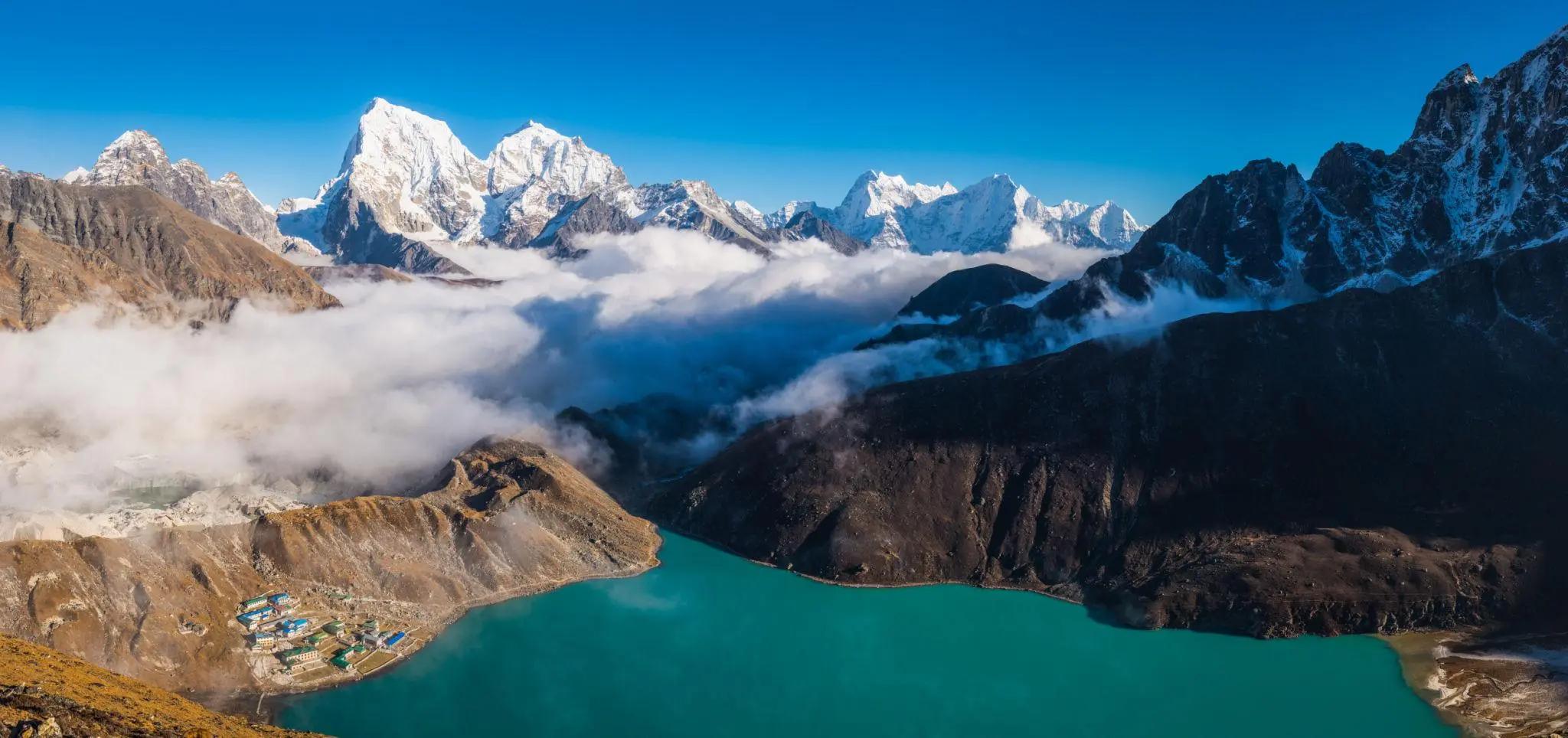
There is a moment on Gokyo Ri, just after sunrise, when four of the world’s fourteen 8,000-metre peaks appear in the same frame. Everest. Lhotse. Makalu. Cho Oyu. Below you, a chain of turquoise glacial lakes catches the early light. There are no crowds. The silence is total. This is why seasoned trekkers, photographers, and repeat Himalayan visitors increasingly choose the Gokyo Lakes Trek over the classic Everest Base Camp route, and why 2026 may be the perfect year to go before word fully gets out.
This guide covers everything: altitude and elevation profile, the full route day by day, 2026 permit costs, what it genuinely costs to trek Gokyo, how difficulty compares to EBC, and the honest case for why Gokyo Ri beats Kala Patthar for panoramic views. Whether you are planning your first high-altitude trek or returning to the Khumbu for something quieter and more rewarding, this is the resource you need.
Ready to book? Explore the full Gokyo Valley Trek package here.
What Is the Gokyo Lakes Trek?
The Gokyo Lakes Trek is a high-altitude trekking route in Nepal’s Khumbu (Everest) region that takes trekkers through the Gokyo Valley to a system of six sacred glacial lakes and up to the summit of Gokyo Ri at 5,357 meters. The route runs through Sagarmatha National Park, a UNESCO World Heritage Site, along the flanks of Nepal’s largest glacier, the Ngozumpa Glacier.
Unlike the Everest Base Camp Trek, which follows a busy highway of trekkers to a single famous landmark, the Gokyo Lakes Trek is a quieter, wilder, and arguably more visually rewarding journey. You do not see EBC from the trail, but from the top of Gokyo Ri you see Everest itself, along with three other giants, in a single sweeping panorama that EBC simply cannot match.
The standard Gokyo Valley Trek runs 13 days from Kathmandu, including flights to and from Lukla. It can be extended or combined with the Cho La Pass to reach Everest Base Camp as well, a route Hi Nepal Treks offers as the 16-Day Cho La Pass Gokyo Trek:
Gokyo Lakes Trek Altitude Profile

Understanding the altitude is the single most important piece of trip planning. Altitude sickness (Acute Mountain Sickness, or AMS) does not distinguish between fit and unfit trekkers; it is about how quickly you ascend, not how strong you are.
Here is the full altitude profile across the 13-day itinerary:
Day 1 – Kathmandu: 1,300 m
Day 2 – Lukla (flight) then Phakding: 2,860 m → 2,610 m
Day 3 – Namche Bazaar: 3,440 m
Day 4 – Namche Bazaar (acclimatization rest day): 3,440 m
Day 5 – Dole: 3,680 m
Day 6 – Machhermo: 3,870 m
Day 7 – Gokyo Village (Third Lake): 4,800 m
Day 8 – Gokyo Ri Summit + Fifth Lake: 5,357 m (Gokyo Ri) / 4,980 m (Fifth Lake)
Day 9 – Descend to Dole: 3,680 m
Day 10 – Namche Bazaar: 3,440 m
Day 11 – Lukla: 2,860 m
Day 12 – Flight back to Kathmandu: 1,300 m
Day 13 – Departure
The maximum sleeping altitude is around 4,800 m at Gokyo Village. This is notably lower than the maximum sleeping altitude on the standard EBC trek (roughly 5,140 m at Gorak Shep), which is one reason many trekkers find Gokyo physically more manageable despite similar summit altitudes.
The mandatory acclimatization day at Namche Bazaar on Day 4 is not optional. Use it well: hike up to the Everest View Hotel at 3,880 m, rest, eat well, and drink water. Your summit attempt on Day 8 depends entirely on the groundwork you lay in Namche.
The Six Gokyo Lakes: Names, Altitudes & What Makes Them Special
The Gokyo Lakes are the centerpiece of this trek and among the most beautiful high-altitude bodies of water anywhere in the Himalayas. There are six lakes in total, all within Sagarmatha National Park, and together they form the world’s highest freshwater lake system. They are considered sacred by both Hindu and Buddhist communities and draw pilgrims during the annual Janai Purnima festival.
Lake 1 – Longponga: 4,650 m. The first lake you reach on the approach from Machhermo. Deep blue and deceptively large, many trekkers are surprised by their size at this altitude.
Lake 2 – Taboche Tsho: 4,710 m. Larger and deeper than the first. The trail hugs its eastern edge with views of Taboche peak above.
Lake 3 – Gokyo Cho (Dudh Pokhari): 4,790 m. The most famous one that Gokyo village sits beside. Turquoise in clear conditions. This is where you sleep on Days 7 and 8.
Lake 4 – Thonak Tsho: 4,870 m. The largest by surface area of all six lakes. Less visited, most day-trek itineraries turn around at Lake 3, which means it retains extraordinary quiet.
Lake 5 – Ngozumpa Tsho: 4,980 m. Near Nepal’s largest glacier. Trekkers visit this on Day 8 after the Gokyo Ri summit.
Lake 6 – Gyazumpa Tsho: 5,000 m. The highest and most remote. A serious extension from the standard itinerary, reached only by the most determined trekkers.
The color of the lakes shifts with the angle of light and the season: deep sapphire in early morning, turquoise at midday, and a pale silver-grey as the sun drops behind the peaks. Bring a good camera and a polarizing filter.
Day-by-Day Route Guide: Gokyo Lakes Trek 2026
Day 1: Arrive Kathmandu (1,300 m) Fly into Tribhuvan International Airport.
Your Hi Nepal Treks team meets you on arrival and transfers you to your hotel in Thamel. Trek briefing in the evening, gear check, and any last-minute equipment shopping on Thamel’s trekking street.
Day 2: Kathmandu to Lukla to Phakding (2,610 m) | 40-minute flight + 3–4 hours trekking
The early-morning flight to Lukla is one of the great travel moments in Nepal, the runway appears to emerge from nowhere between ridgelines and drops away sharply at the lower end. From Lukla (2,860 m), the trail descends gently through Sherpa villages and pine forest to Phakding. A relaxed first day by design.
Day 3: Phakding to Namche Bazaar (3,440 m) | 6–7 hours
The most dramatic day of the lower section. You cross several iconic suspension bridges, including the Hillary Suspension Bridge, with the Dudh Koshi River roaring far below. The trail enters Sagarmatha National Park at Monjo (permit check).
The final two-hour climb to Namche is steep and feels long, but Namche reveals itself as a full town carved into a horseshoe valley, bakeries, cafes, gear shops, and, on a clear day, a first glimpse of Everest above the ridge to the north.
Day 4: Acclimatization at Namche Bazaar (3,440 m)
Do not stay in bed. The Himalayan principle is “climb high, sleep low.” Take a morning hike to the Everest View Hotel at 3,880 m for your first proper view of the Everest massif, then return to Namche for lunch. Optional visits: the Sherpa Museum, Khumjung Village, or Hillary School. Drink two to three liters of water. Avoid alcohol. Sleep well.
Day 5: Namche Bazaar to Dole (3,680 m) | 6 hours
Here, the route diverges from the EBC trail and enters the Gokyo Valley, quieter, greener, and increasingly wild. The trail climbs through rhododendron and pine forest with views of Thamserku and Kangtega. Dole is a small cluster of teahouses at the edge of the treeline.
Day 6: Dole to Machhermo (3,870 m) | 4 hours
A shorter but steep day. The trail gains altitude quickly in the first section before levelling into a high ridge walk with panoramic views of Thamserku (6,623 m), Kangtega (6,779 m), m), and ahead, the first hints of the high peaks to come. Machhermo is the last settlement before the lakes; stock up on snacks here.
Day 7: Machhermo to Gokyo (4,800 m) | 4 hours
One of the most spectacular days of the trek. The trail crosses the Ngozumpa Glacier’s terminal moraine, Nepal’s largest glacier, a vast highway of dirty ice stretching 36 kilometers north into Tibet. The first Gokyo Lake appears suddenly, shockingly blue against gray rock and white snow. The second lake follows, then the third, and Gokyo village sits on its eastern bank. Rest well; tomorrow is summit day.
Day 8: Gokyo Ri Summit + Fifth Lake (5,357 m summit) | 4–5 hours
Start before dawn (around 4–5 AM) to reach the summit for sunrise. The ascent is steep, roughly 550 vertical meters from the village, on a switchbacked trail that can be icy in spring and autumn.
Take it slowly. At the top, the panorama opens: Everest (8,848.86 m), Lhotse (8,516 m), Makalu (8,463 m), and Cho Oyu (8,201 m), four of the world’s six highest mountains, visible simultaneously, along with the full sweep of the Ngozumpa Glacier below and the Gokyo Lakes glittering like jewels.
No other readily accessible summit in Nepal offers this view. Descend to Gokyo for breakfast, then continue to the Fifth Lake (4,980 m) in the afternoon.
Day 9: Gokyo to Dole (3,680 m) | 5 hours
Begin the descent. The valley feels different on the way down, familiar, but seen from a new perspective. Stop at the second and first lakes again in the morning light. Reach Dole by early afternoon.
Day 10: Dole to Namche Bazaar (3,440 m) | 5 hours
The forest returns. Rhododendrons and birdsong replace rock and glacier. Namche welcomes returning trekkers with warm showers, pizza, and fresh coffee. Well earned.
Day 11: Namche to Lukla (2,860 m) | 7–8 hours
A long final trekking day retracing the lower Dudh Koshi valley. The suspension bridges feel easier on the way back. Reach Lukla by evening for a celebratory dinner with your guide.
Day 12: Lukla to Kathmandu (flight) | 40 minutes
Early morning flight back to Kathmandu. A day free to explore the city, visit Pashupatinath Temple or Boudhanath Stupa, or shop for souvenirs.
Day 13: Departure from Kathmandu
Transfer to Tribhuvan International Airport for your international flight home.
Gokyo Lakes Trek Cost 2026: What Does It Actually Cost?
This is the question every planner asks first, and the honest answer is that costs vary significantly based on group size, guide experience, accommodation preferences, and the season. Here is a practical breakdown.
Package Cost: Booking with a local agency, a reputable local Nepalese agency like Hi Nepal Treks, is both cheaper and more reliable than booking through international operators.
A full 13-day guided Gokyo Lakes Trek package, including airport transfers, Lukla flights (round-trip), all meals on trek, teahouse accommodation, a licensed guide, porters (one porter per two trekkers), all permits, and a first-aid kit, typically runs in the range of USD 1,200 to USD 1,800 per person, depending on group size and time of year. Small groups (2–4 people) usually fall toward the middle to upper end of that range.
Ask for a personalised quote here—
Permit Costs (2026)
Two permits are mandatory for the Gokyo Lakes Trek:
Sagarmatha National Park Entry Permit: NPR 3,000 per person (approximately USD 22–25). Obtained at the Nepal Tourism Board office in Kathmandu or at the Monjo checkpoint on the trail.
Khumbu Pasang Lhamu Rural Municipality Permit: NPR 2,000 per person (approximately USD 15–20). This has replaced the TIMS card in the Khumbu region. Obtained at Lukla or in Kathmandu.
Note: Hi Nepal Treks handles all permit arrangements as part of your trek package. You do not need to queue at government offices yourself.
Domestic Flights: Kathmandu ↔ Lukla
Round-trip Lukla flights cost approximately USD 300–340 per person (dependent on the season and operator). These are typically included in reputable package prices.
Note: when Kathmandu’s Tribhuvan International Airport is congested, flights may operate from Ramechhap Airport (a 4–5 hour drive from Kathmandu), so an early start on Day 2 may be required.
Guide and Porter
A licensed English-speaking guide costs approximately USD 25–35 per day. Porters cost approximately USD 18–25 per day. Their food, accommodation, equipment, and insurance are additional costs typically covered by the agency. Never trek the Khumbu without a licensed guide, it is both a safety requirement and a matter of ethical tourism practice supporting Sherpa livelihoods.
Personal and Additional Expenses
Budget approximately USD 15–25 per day for personal expenses on the trail: hot drinks, snacks, battery charging (teahouses typically charge NPR 200–400 per charge above Namche), wi-fi, laundry, and tips. Tips for guides and porters are customary and appreciated: roughly USD 10–15 per day for guides and USD 5–8 per day for porters is considered fair.
Total Budget Estimate
- Solo trekker, 13 days, mid-range budget: USD 1,500–2,200 all-in (excluding international airfare)
- Couple or small group: USD 1,300–1,900 per person all-in
- Budget trekker sharing costs in a group of 4+: USD 1,200–1,500 per person all-in
Gokyo Lakes Trek vs. Everest Base Camp: Which Is Better for Views?
This is the debate that defines Khumbu trekking decisions. Here is the honest, experience-based case.
The View Argument for Gokyo Ri
Kala Patthar (5,545 m) – the famous viewpoint at the end of the EBC trek, gives you the best close-up ground-level view of Everest’s summit ridge and the Khumbu Icefall. It is spectacular. But it is a view of one peak, primarily.
Gokyo Ri (5,357 m) gives you Everest, Lhotse, Makalu, and Cho Oyu simultaneously. Below you: the Ngozumpa Glacier stretches 36 km into Tibet. In front of you: the Gokyo Lakes. Around you: near-total silence and, outside of peak weeks, very few other trekkers.
The panoramic scope is simply broader, and the foreground interest, glacier, lakes, valley, is richer. Most trekkers who have done both say Gokyo Ri is the better sunrise viewpoint. Bradwell Mayhew, author of Lonely Planet Nepal, notes that the Gokyo Valley is the preferred option for trekkers who want something more than the classic EBC route.
The Trade-Off
EBC has the emotional weight of history; you are walking in the footsteps of Hillary, Tenzing, Messner. You see the Khumbu Icefall up close, which is genuinely awe-inspiring. Namche and Tengboche Monastery are more developed and culturally rich on the EBC trail. If the symbolic destination matters to you as much as the views, EBC may win on those grounds alone.
But if the question is specifically about views? Gokyo Ri wins.
The Good News: You Don’t Have to Choose The 16-Day Cho La Pass Gokyo Trek combines both routes – Gokyo Lakes and Everest Base Camp—crossing the Cho La Pass (5,420 m) between the two valleys. For experienced trekkers with more time, this is the definitive Khumbu experience: https://hinepaltreks.com/chola-pass-gokyo-trekFor those wanting to push even further, the 19-Day Three Passes Trek crosses Kongma La, Cho La, and Renjo La passes and is considered one of the finest multi-day treks in the world.
Comparison Table: Gokyo Lakes Trek vs. Everest Base Camp Trek
| Feature | Gokyo Lakes Trek | Everest Base Camp Trek |
|---|---|---|
| Duration | 13 days | 14 days |
| Maximum Altitude | 5,357 m (Gokyo Ri) | 5,545 m (Kala Patthar) |
| Maximum Sleeping Altitude | 4,800 m (Gokyo Village) | 5,140 m (Gorak Shep) |
| Trail Traffic | Quiet to moderate | Busy during peak season |
| View from Summit | Everest, Lhotse, Makalu & Cho Oyu | Primarily Everest, Nuptse & Lhotse |
| Iconic Sight | Six Gokyo Lakes & Ngozumpa Glacier | Khumbu Icefall & Everest Base Camp |
| Difficulty | Moderate–Hard | Moderate–Hard |
| Best For | Panoramic views, photography & quieter trails | History, symbolism & first-time Everest trekkers |
| Can Be Combined With | Cho La Pass to Everest Base Camp | Gokyo Lakes via Cho La Pass return route |
How Difficult Is the Gokyo Lakes Trek?

The Gokyo Lakes Trek is rated moderate to challenging. The challenge comes not from technical terrain but from altitude, daily elevation gain, and multi-hour trekking days. Expect 4–8 hours of walking each day. The steepest sections are the final push into Namche on Day 3 and the Gokyo Ri summit climb on Day 8.
Who Is This Trek Suitable For?
The Gokyo Lakes Trek is suitable for trekkers who are reasonably fit and do not have a medical history of serious altitude illness. Prior hiking experience is helpful but not mandatory. If you can walk 4–6 hours on consecutive days with a light daypack, and you commit to the acclimatization schedule without rushing, this trek is achievable for motivated beginners.
What Is Not Suitable?
This trek is not suitable for trekkers with untreated heart or lung conditions. Trekkers with a previous history of severe AMS should consult a physician and discuss the itinerary with their guide before confirming dates. Children under 10 are generally not recommended for altitudes above 4,000 m.
Physical Preparation
Begin cardiovascular training (running, cycling, stair climbing) at least 8–10 weeks before departure. Hill walking with a loaded pack is the most specific preparation. Yoga or breathing exercises can help with the psychological adjustment to thinner air. You do not need to be an athlete, but you should arrive fit enough that altitude, not fitness, is the only limiting factor.
Best Time to Do the Gokyo Lakes Trek in 2026

Spring (March–May): The most popular season and widely considered the best. Temperatures are mild, skies are clear, rhododendrons are in bloom, and trails are well-maintained. April and early May are the sweet spot before the pre-monsoon buildup. Note that spring 2026 sees increasing booking demand; plan early.
Autumn (September–November): The second peak season and equally excellent. Post-monsoon skies are crystal clear, producing the sharpest mountain views of any time of year. October is the busiest month on the trail; September and early November offer quieter conditions with almost equivalent clarity.
Winter (December–February): Possible but demanding. The trail is cold, temperatures at Gokyo Village can drop to -15°C or below at night, and some higher sections may be snow-covered. The significant benefit is that you will have the trail almost entirely to yourself. Experienced trekkers with proper cold-weather gear can have extraordinary winter experiences in the Khumbu.
Monsoon (June–August): Not recommended for the Gokyo Valley Trek. Heavy rain, leeches on lower sections, frequent flight cancellations into Lukla, and significantly reduced mountain visibility make this a poor choice unless you specifically want a challenge and are prepared for it.
For a broader picture of Nepal trekking seasons, read Hi Nepal’s full guide.
Gokyo Lakes Trek Permits: Complete 2026 Guide
Two permits are required. No TIMS card is needed for the Khumbu region.
- Sagarmatha National Park Entry Permit Cost: NPR 3,000 per person (approximately USD 22–25). Where to obtain it: Nepal Tourism Board office in Kathmandu (Bhrikutimandap), or at the Monjo checkpoint on the trail. What it covers: Legal entry into the Sagarmatha National Park, a UNESCO World Heritage Site protecting glaciers, forests, and wildlife including snow leopards and red pandas
- Khumbu Pasang Lhamu Rural Municipality Permit Cost: NPR 2,000 per person (approximately USD 15–20) Where to obtain: Lukla arrival hall or at the tourism board office in Kathmandu What it covers: Trail infrastructure, waste management, and Sherpa community development across the Khumbu region
Both permits are checked at multiple points on the trail. Carry your original passport, photocopies are sometimes accepted, but originals are always preferred. Hi Nepal Treks processes all permits on your behalf as part of your package.
What to Pack for the Gokyo Lakes Trek
You do not need to buy everything new. The most important items:
- Footwear: Waterproof, ankle-supporting trekking boots broken in before the trek. Not trail runners. Gokyo Ri can be icy and uneven. Bring warm hiking socks (merino wool preferred) and gaiters if trekking in spring or autumn.
- Layering System: The temperature range across 13 days spans roughly 20°C at Namche to -5°C or colder on Gokyo Ri at dawn. Pack a moisture-wicking base layer, a mid-layer fleece, and a down jacket or equivalent insulated outer layer. A waterproof shell is essential.
- Head and Hands: Sunhat and sunglasses with full UV protection for the daytime glare on glaciers and lakes. Warm beanie, balaclava or buff, and insulated gloves for mornings and summit day.
- Sleeping Bag: A 3-season down sleeping bag rated to -10°C is appropriate. Many teahouses provide blankets but not duvets above 4,500 m. Hi Nepal Treks can arrange sleeping bag rental in Kathmandu if needed.
- Trekking Poles: Strongly recommended. They significantly reduce knee stress on descent, particularly on the long Day 9 descent from Gokyo, and provide stability on the icy Gokyo Ri approach.
- Other Essentials: Headlamp (essential for the 4 AM Gokyo Ri start), water purification tablets or filter, high-calorie snacks (nuts, energy bars, chocolate) for between meals, personal first aid, including blister treatment and basic AMS medication (discuss Diamox with your doctor before travel), sun cream SPF 50+, and a dry bag or pack liner for electronics and passports.
Gear can be rented or purchased in Kathmandu’s Thamel district. Quality varies widely; inspect rentals carefully.
Sherpa Culture and the Communities You’ll Pass Through

The Khumbu region is the homeland of the Sherpa people, a Tibetan-origin ethnic group whose name translates roughly to “people of the east.” Their relationship with the Himalayas is not merely geographic; it is deeply spiritual. Buddhist beliefs shape every element of daily life: prayer flags flutter from peaks and passes to carry blessings on the wind, mani walls inscribed with sacred texts line every trail, and chortens mark boundaries between the human world and the mountains.
On the Gokyo route, you pass through or near several significant communities:
- Namche Bazaar: The largest town in the Khumbu, sitting at 3,440 m in a natural horseshoe valley. It has been a trading hub for centuries, historically between Tibet and the lower valleys. Today it has the best infrastructure in the region: solid teahouses, medical facilities, a bank, gear shops, and surprisingly good espresso.
- Dole and Machhermo: Smaller, quieter villages above the treeline where yak herding remains central to the local economy. The teahouses here are family-run; meals are simpler, and the atmosphere is more authentically remote.
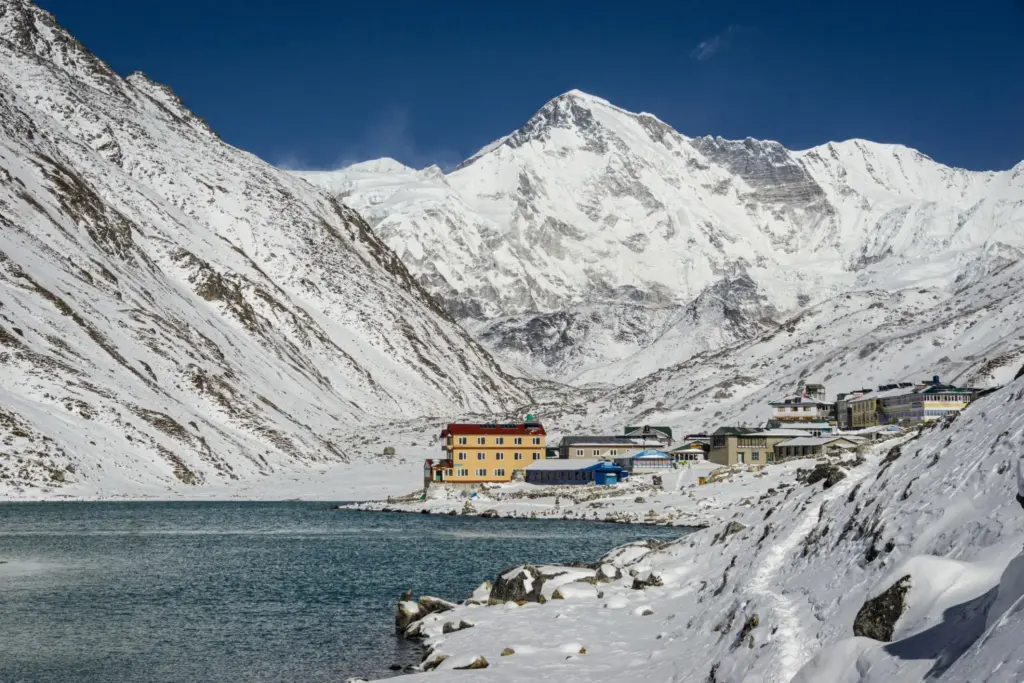
- Gokyo Village: A tiny settlement on the shore of the Third Lake. During peak season, it fills with trekkers; outside those windows, it is nearly empty. The lake itself is considered sacred, bathing or washing in it is prohibited, and trekkers should respect this.
- Cultural Protocol: Remove boots before entering monastery buildings. Ask before photographing local people. Do not point your feet at sacred objects or people. Carry small-denomination Nepalese rupees for donations at shrines and monasteries.
To read more about Sherpa culture and heritage, click here!
Altitude Sickness on the Gokyo Trek: Prevention and Response
Acute Mountain Sickness (AMS) affects a significant percentage of trekkers above 3,000 m. It is not a sign of weakness or poor fitness, it is a physiological response to reduced oxygen availability that can affect anyone. Understanding it before you go is part of being a responsible trekker.
Symptoms: Headache, nausea, loss of appetite, fatigue, disturbed sleep, and dizziness. These symptoms appearing at altitude are always AMS until proven otherwise.
The Rule: Never ascend with AMS symptoms. Mild symptoms at a given altitude = rest at that altitude. Worsening symptoms = descend immediately.
The Three Commandments of Altitude:
- Climb high, sleep low.
- Ascend no more than 300–500 vertical meters per day above 3,000 m (the standard itinerary respects this).
- If in doubt, go down.
Prevention: The structured itinerary with the Namche acclimatization day and the moderate daily elevation gains above 3,000 m is designed specifically to minimize AMS risk. Drink 3–4 liters of water daily. Avoid alcohol in the first several days at altitude. Eat carbohydrate-rich meals. Sleep enough.
Diamox (acetazolamide) is sometimes prescribed prophylactically. Consult your physician before travel, as it requires a prescription in most countries and has contraindications. Your Hi Nepal guide carries a first aid kit and is trained to recognize AMS symptoms. In serious cases, helicopter rescue is available from the Khumbu Valley, but prevention is always the better strategy. For emergency evacuation support, see: https://hinepaltreks.com/helicopter-rescue-flights-nepal
Clinical reference for altitude sickness.
Other Everest Region Treks Worth Considering
The Gokyo Lakes Trek sits in a network of Khumbu routes that can be combined or substituted depending on your time, fitness, and interests.
Everest Base Camp Trek (14 Days): The classic route. If Everest Base Camp itself is the dream, there is no substitute. Read more: https://hinepaltreks.com/everest-base-camp-trek-14-days
Cho La Pass Gokyo Trek (16 Days): Combines Gokyo Lakes with EBC via the 5,420 m Cho La Pass. The definitive Khumbu experience for trekkers with more time. Read more about Cho La Pass Gokyo Lake Trek.
Renjo La Pass Trek (12 Days): A beautiful high-altitude alternative crossing the 5,360 m Renjo La pass into the Gokyo Valley from the west. Less crowded than either the EBC or standard Gokyo routes. Read more about the Renjo La Pass Trek.
Three Passes Trek (19 Days): The ultimate Khumbu loop, crossing Kongma La, Cho La, and Renjo La. Rated one of the world’s great multi-day treks.
Pikey Peak Trek (9 Days): A shorter, lower-altitude alternative in the Solu-Khumbu region is Pikey Peak Trek, offering extraordinary Everest views without the extreme altitude.
Exploring another region entirely? Consider the Manaslu Circuit Trek for a restricted-area wilderness experience, or browse all trekking options across Nepal.
Why Book the Gokyo Lakes Trek with Hi Nepal Treks?
Hi Nepal Travels and Treks Pvt. Ltd. is a government-registered, locally owned trekking company based in Pokhara with over 20 years of experience guiding trekkers through Nepal’s Himalayan regions. The team handles all logistics, permits, domestic flights, transfers, accommodations, guides, and porters, so your focus stays on the mountains.
The company has a 4.9/5 rating on Google (62+ reviews) and a 5/5 rating on TripAdvisor (125+ reviews). Every guide is government-licensed, first-aid trained, and deeply knowledgeable about the Khumbu region. Porter welfare standards follow ethical industry guidelines.
Booking through a local Nepalese agency rather than an international operator keeps more of your trekking spend in Nepal’s mountain communities, exactly where it belongs.
Plan your trip: Book your Gokyo Valley Trek.
Final Word: Should You Do the Gokyo Lakes Trek in 2026?
If you are weighing the Gokyo Lakes Trek against Everest Base Camp, here is the short version: EBC gives you history and the Khumbu Icefall. Gokyo gives you silence, turquoise lakes, Nepal’s largest glacier, and the best panoramic sunrise view in the entire Everest region. You can see Everest from Gokyo Ri. You cannot see the Gokyo Lakes from EBC.
The Gokyo Valley is also less crowded, more wildlife-rich, and marginally less demanding in terms of maximum sleeping altitude, all of which matters at 5,000 meters. For photographers, for nature lovers, for trekkers on their second or third Nepal trip, and frankly for first-timers who want the best views the Khumbu offers, the Gokyo Lakes Trek in 2026 is the answer.
Start planning today at Hi Nepal Travels & Treks, or use the trip planner at https://hinepaltreks.com/trip-planner to get a personalized itinerary and quote from the Hi Nepal Treks team.
Gokyo Lakes Trek 2026: Frequently Asked Questions
-
How high is Gokyo Ri?
Gokyo Ri stands at 5,357 meters (17,575 feet) above sea level.
-
How many lakes are in Gokyo Valley?
There are six Gokyo Lakes. The most visited is the Third Lake (Gokyo Cho / Dudh Pokhari) at 4,790 m, beside which Gokyo village sits.
-
Do I need a permit for the Gokyo Lakes Trek?
Yes. Two permits are required: the Sagarmatha National Park Entry Permit (NPR 3,000) and the Khumbu Pasang Lhamu Rural Municipality Permit (NPR 2,000). No TIMS card is needed for the Khumbu region. Hi Nepal Treks arranges these for you.
-
Is the Gokyo Lakes Trek harder than EBC?
They are comparable in difficulty. The Gokyo route has a slightly lower maximum sleeping altitude (4,800 m vs 5,140 m), which some trekkers find more manageable, but the summit climb on Gokyo Ri is steep. Neither route requires technical climbing.
-
Can I do the Gokyo Lakes Trek without a guide?
Technically, you can, solo trekking in the Khumbu is not legally restricted, as it is in some other areas like Manaslu. However, going without a licensed guide is strongly discouraged for safety, navigation in poor visibility, and AMS response reasons. It also removes income from the Sherpa communities whose knowledge and infrastructure make the trek possible.
-
What is the best season for the Gokyo Lakes Trek in 2026?
Spring (April–May) and Autumn (October–November). Spring 2026 is booking up quickly; contact Hi Nepal Treks early if those are your preferred months.
-
Can I see Everest from Gokyo Ri?
Yes, clearly. From Gokyo Ri you have an unobstructed view of Everest (8,848.86 m) along with Lhotse, Makalu, and Cho Oyu. The full panorama of four 8,000-meter peaks is one of the finest mountain views on earth.
-
How long does the Gokyo Lakes Trek take?
The standard Hi Nepal itinerary runs 13 days from Kathmandu to Kathmandu. It can be extended by combining with the Cho La Pass route to EBC (16 days) or the full Three Passes circuit (19 days).
-
What accommodation is available on the trek?
Teahouses (mountain lodges) throughout the route. Below Namche, facilities are more developed with private rooms and attached bathrooms. Above Machhermo, expect simpler shared facilities. All teahouses serve hot food. Hi Nepal Treks books the best available accommodation on your itinerary.
-
Is it worth combining Gokyo with Everest Base Camp?
If you have 16 days and adequate fitness and acclimatization time, the Cho La Pass Gokyo Trek, combining both valleys, is absolutely worth it. It is the most complete way to experience the Khumbu.