If you are planning a trek to Upper Mustang in 2026, one of your first questions is probably about the cost. And that is fair, this is not a cheap trek. The Upper Mustang trek cost is higher than most other treks in Nepal, and it can be confusing when you see different numbers on different websites.
In this guide, we are going to break down every expense clearly so you know exactly what to expect. No vague ranges, no hidden surprises. Just an honest look at what this trek actually costs in 2026, based on our experience organizing trips to this region at Hi Nepal Treks.
Overview of Upper Mustang Trek Cost in 2026
The total Upper Mustang trek cost in 2026 ranges from approximately USD 1,300 to USD 3,500 per person for a 12 to 17-day itinerary. That is a wide range, and where you land on it depends on your trek style, group size, how you get to Jomsom, and which agency you go with.
A standard trek package with a local agency including permits, a licensed guide, meals, accommodation, and ground transport from Pokhara typically falls between USD 1,500 and USD 2,200 per person. Solo trekkers or those wanting private luxury arrangements will pay toward the higher end.
What matters is understanding where that money goes. So let us break it down piece by piece.
Why Is the Upper Mustang Trek So Expensive Compared to Other Treks?
People are sometimes surprised when they compare the Upper Mustang trekking cost with treks like Annapurna Base Camp or Langtang. Those treks can cost under USD 800 with a guide. So why does Upper Mustang cost two or three times more?
A few reasons. First, Upper Mustang is a government-designated restricted area. Entry requires an expensive special permit that does not apply to open trekking regions. Second, you cannot trek here independently, a licensed guide arranged through a registered trekking agency is mandatory by law. Third, the region is remote. Getting to the trailhead at Jomsom involves either a mountain flight or a long jeep ride from Pokhara. And once you are past Kagbeni, Nepal, everything from food to fuel has to be carried or driven in on rough roads, so teahouse prices are higher than in more accessible areas.
The restricted area permit alone can cost more than some entire treks elsewhere in Nepal. Add mandatory guide fees, remote-area food costs, and transport logistics, and the numbers add up quickly.
Upper Mustang Restricted Area Permit Cost (Updated 2026 Rules)
This is the single biggest permit expense and the one that changed significantly in 2026.
Previously, the Upper Mustang Restricted Area Permit cost a flat USD 500 for 10 days, with an additional USD 50 charged per extra day. Whether you spent 3 days or 10 days in the restricted zone, you paid the same flat fee. That system discouraged shorter itineraries and penalized budget travelers.
Starting in 2025, Nepal’s Department of Immigration switched to a daily rate system. The restricted area permit now costs USD 50 per person per day. You pay only for the actual number of days you spend inside the restricted zone, which begins from Kagbeni onward.
Here is what that means for common itineraries:
- 8 days inside the restricted zone: USD 400
- 10 days inside the restricted zone: USD 500
- 12 days inside the restricted zone: USD 600
- 15 days inside the restricted zone: USD 750
Another major update for 2026: the old rule requiring a minimum group of two foreign trekkers has been officially removed as of March 2026. Solo trekkers can now obtain the restricted area permit on their own, though a licensed guide is still mandatory. This is a welcome change that eliminates the old practice of paying for a “ghost permit” for a second person who did not exist.
The permit can only be obtained through a registered trekking agency. An online application system launched in 2026 allows agencies to start the process before you arrive in Nepal, with processing typically taking 3 to 7 working days.
ACAP Permit & TIMS Card Cost for Upper Mustang Trek
Since Upper Mustang falls within the Annapurna Conservation Area, you also need the ACAP permit. This is the same permit required for any trek in the Annapurna region, including treks to Annapurna Base Camp and the Annapurna Circuit.
- The ACAP permit cost is NPR 3,000 (approximately USD 23 to 30) for foreign nationals. It is valid for the entire duration of your stay within the conservation area, with no daily limit. You can obtain it from the Nepal Tourism Board office in Kathmandu or at the ACAP counter in Pokhara.
- You will also need a TIMS (Trekkers’ Information Management System) card, which costs USD 20. It helps authorities track trekker movements for safety and emergency coordination.
So your total permit costs for a 10-day Upper Mustang trek add up to roughly USD 550, the restricted area permit plus ACAP plus TIMS.
Guide and Porter Cost in Upper Mustang (Mandatory Fees Explained)
Hiring a guide is not optional in Upper Mustang, it is a legal requirement for this restricted area. Checkpoints at Kagbeni and Lo Manthang verify permits and guide documentation before letting you pass.
- Licensed trekking guide: USD 30–50/day. Covers salary, food, accommodation, and insurance. Higher end for experienced English-speaking guides with local cultural knowledge.
- Porter: USD 20–30/day. Includes salary, food, lodging, and insurance. One porter carries bags for two trekkers (up to 20–25 kg). Not mandatory, but highly recommended at this altitude.
- Total staff cost (14-day trek): USD 700–1,120 for one guide and one porter. In a group of four, that drops to roughly USD 175–280 per person.
- Tips: USD 10–15/day for guides and USD 8–10/day for porters. Customary and appreciated, these folks work hard at high altitude.
A good Upper Mustang guide is more than a navigator. They explain the monasteries in Lo Manthang, the meaning behind prayer walls, and help you connect with the Loba people’s way of life.
Trekking Gear & Equipment Cost: Rent vs Buy in Nepal
You do not need to buy everything new. Most essential gear can be rented cheaply in Kathmandu or Pokhara, and some agencies lend items like sleeping bags and down jackets for free.
- Down jacket rental: USD 1–2/day. Essential for cold mornings and evenings above 3,500m.
- Sleeping bag rental: USD 1–2/day. Teahouse blankets are not always warm enough, especially near Lo Manthang.
- Trekking poles rental: USD 1/day. Helpful on the rocky, uneven terrain of Upper Mustang.
- Good trekking boots: USD 80–200 if buying new. This is the one item worth investing in — rent everything else, but wear boots that fit well and are already broken in.
- Daypack (25–35L): USD 30–60 if buying. You will carry this daily while your porter handles the main bag.
- Power bank: USD 15–30. Saves you USD 2–4 per charge on the trail which pays for itself within a week.
- Water purifier or SteriPen: USD 20–40. Reduces bottled water costs and plastic waste.
If you are on a tight budget, renting gear in Thamel (Kathmandu) or Lakeside (Pokhara) keeps this expense under USD 50 for the entire trek. Buying everything new could cost USD 200–400, but most trekkers only need to buy boots and a power bank.
Food and Accommodation Cost in Upper Mustang Teahouses
Accommodation on this trek is in teahouses and lodges run by local families. Standards have improved in recent years, but expect basic twin rooms, shared bathrooms, and limited hot water.
- Teahouse room: USD 5–10/night (twin sharing). Rooms are often cheap or free if you eat all meals there, that is the standard system across Nepal trekking lodges.
- Food: USD 20–30/person/day for three meals. Menus include dal bhat, noodle soups, momos, fried rice, pancakes, and basic pasta. Variety reduces the further north you go past Lo Manthang.
- Combined daily budget: USD 25–40/person/day for food and accommodation together.
One thing to know: everything past Kagbeni costs more than the lower Kali Gandaki Valley or the Annapurna region. Supplies are transported by jeep or mule on rough roads, and that cost gets passed on. A dal bhat that costs NPR 400 in Pokhara might be NPR 700 near Lo Manthang.
Transportation Cost: Kathmandu to Pokhara to Jomsom Breakdown
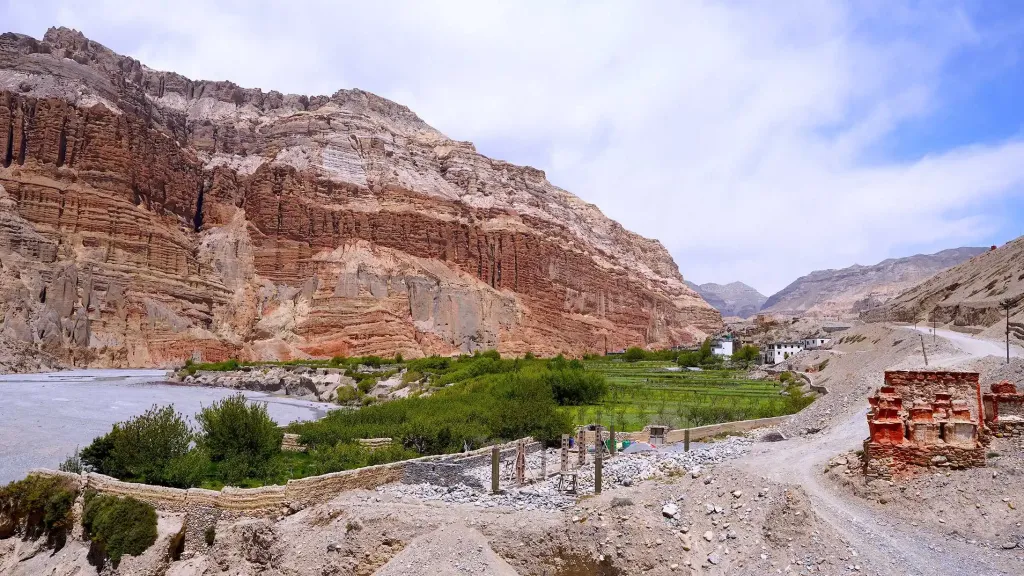
Getting to the Upper Mustang trailhead involves a few legs of travel, and costs vary depending on how you choose to travel.
Kathmandu to Pokhara:
- Tourist bus: USD 10 to 30 (6 to 7 hours)
- Domestic flight: USD 80 to 120 (25 minutes)
- Private jeep: USD 150 to 200
Pokhara to Jomsom:
- Flight: USD 120 to 180 one way (20 minutes, weather-dependent)
- Jeep: USD 30 to 70 one way (8 to 10 hours on rough roads)
Most trekkers either fly one way and take the jeep the other, or jeep both ways to save money. Flights to Jomsom are scenic but notoriously unreliable, wind cancellations are common, especially in the afternoon. If you fly, always keep a buffer day in your schedule.
From Jomsom, you walk to Kagbeni on the first trekking day. That is where the restricted zone and the real Upper Mustang trail begins, following the ancient trade route along the Kali Gandaki Valley toward Lo Manthang.
Upper Mustang Trek Cost Breakdown Table (Real Example 2026)
Here is a practical cost breakdown for a standard 14-day Upper Mustang trek in 2026, assuming two trekkers sharing costs where applicable:
| Expense | Estimated Cost (USD per person) |
|---|---|
| Restricted Area Permit (10 days × $50/day) | $500 |
| ACAP Permit | $25–30 |
| TIMS Card | $20 |
| Licensed Guide (14 days × $35/day, split by 2) | $245 |
| Porter (14 days × $25/day, split by 2) | $175 |
| Accommodation (14 nights × $7/night) | $100 |
| Food (14 days × $25/day) | $350 |
| Kathmandu to Pokhara (bus) | $15–30 |
| Pokhara to Jomsom (jeep one way) | $40–70 |
| Jomsom to Pokhara (flight return) | $120–180 |
| Tips for guide and porter | $100–150 |
| Extras (hot showers, charging, snacks) | $100–200 |
| Estimated Total | $1,790–$1,950 |
This is a mid-range estimate for two trekkers. Solo trekkers will pay more because guide and porter fees are not shared. Groups of four or more will pay less per person. Fees may vary according to seasons and places.
Key Factors That Affect Your Total Upper Mustang Trek Cost
Not every trekker pays the same price for Upper Mustang. Here are the main things that move the number up or down:
- Group size: The single biggest factor. Guide, porter, and jeep costs split across more people. A group of four can save 20–30% per person compared to going solo.
- Trek duration: With the new daily permit rate (USD 50/day), fewer days in the restricted zone means lower permit fees. A 10-day trek saves USD 200 over a 14-day trek in permits alone.
- Transport choice: Flying to Jomsom costs USD 120–180 one way. The jeep costs USD 30–70. Choosing jeep both ways saves USD 150–250 per person.
- Season: Peak season (April–May, September–November) has the highest prices. Shoulder months like late March or late November can bring 10–15% discounts on packages.
- Agency choice: International operators often mark up prices because they outsource to local agencies. Booking directly with a reputable local Nepal trekking agency usually gives the same service at a lower cost.
- Trek style: Budget group treks, standard packages, and private luxury treks all have very different price points, from USD 950 to USD 2,500+.
Budget vs Standard vs Luxury Upper Mustang Trek (Price Comparison)
Not everyone has the same budget, and that is fine. Here is how the three main trekking styles compare for Upper Mustang.
- Budget Trek (USD 1,200–1,500 per person) This works best for groups of four or more trekkers. You take the jeep both ways between Pokhara and Jomsom, share a single guide, eat simple meals, and stay in basic teahouses. You still pay the same permit fees, but you save on transport and staff costs. Expect a 12 to 14-day itinerary with fewer rest or exploration days.
- Standard Trek (USD 1,500–2,200 per person) The most common option. You get a private guide, a porter, comfortable teahouse accommodation, three meals a day, and usually one flight leg to Jomsom. Most agency packages fall in this range and include all permits, meals, and ground transport. This is what most trekkers choose and it gives a good balance of comfort and value.
- Private or Luxury Trek (USD 2,500–3,500+ per person) This includes a private guide, a porter, the best available teahouses, flights both ways to Jomsom (or even a helicopter segment), and extra exploration days around Lo Manthang, Choser Cave, and Dhakmar. Some luxury options include a jeep tour for part of the route. This is ideal for trekkers who want maximum comfort and flexibility.
Here a quick summary glance:
| Trek Style | Estimated Cost (USD per person) |
|---|---|
| Budget group trek | USD 1,200 – 1,500 |
| Standard package | USD 1,500 – 2,200 |
| Private luxury trek | USD 2,500 – 3,500+ |
Hidden & Extra Costs in Upper Mustang Trek You Should Know
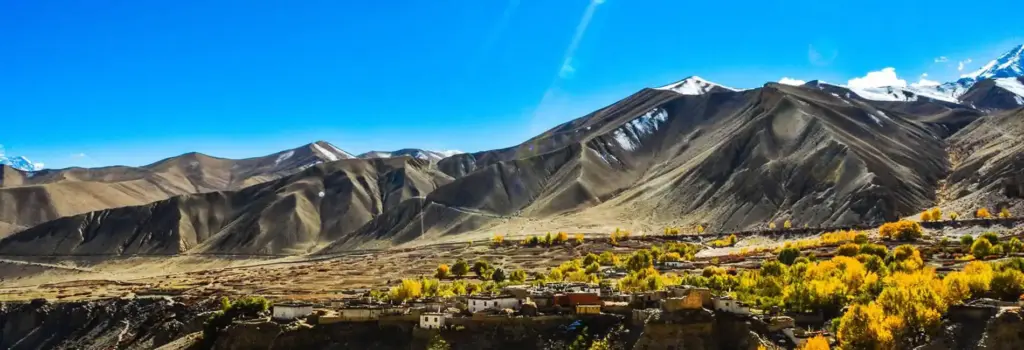
Even on an all-inclusive package, there are expenses that show up on the trail. Budget an extra USD 15 to 25 per day for these:
- Hot showers are not free in most teahouses. Expect to pay NPR 300 to 500 (USD 2 to 4) per shower, and they are not available everywhere beyond Lo Manthang.
- Charging your phone or camera costs NPR 200 to 500 (USD 1.50 to 3.50) per charge. Bring a power bank, it pays for itself in two days.
- Hot drinks add up. A cup of tea or coffee runs NPR 150 to 300 (USD 1 to 2), and you will drink a lot of tea at altitude.
- Wi-Fi is spotty and costs NPR 200 to 400 where available. Do not count on stable connectivity once you pass Kagbeni
- Travel insurance is essential and not usually included in trek packages. A policy covering high altitude trekking and helicopter evacuation costs USD 100 to 200 for a 15 to 20-day trip. Do not skip this, a helicopter evacuation from Upper Mustang without insurance can cost thousands of dollars.
- Monastery donations are customary though voluntary. Tours of the monasteries in Lo Manthang and along the trail are typically free, but small donations are appreciated and go toward preservation.
- Gear rental in Kathmandu or Pokhara runs USD 1 to 2 per item per day for things like down jackets, sleeping bags, and trekking poles.
- Nepal visa on arrival costs USD 30 for 15 days or USD 50 for 30 days.
Smart Tips to Reduce Your Upper Mustang Trek Budget
A few practical ways to keep your costs reasonable without cutting corners on safety or experience.
- Travel in a group. This is the single most effective way to reduce your per-person cost. Permit fees are fixed and individual, but guide fees, porter fees, and jeep costs split across more people. A group of four can save 20 to 30 percent compared to solo travelers.
- Take the jeep instead of flying. The jeep ride from Pokhara to Jomsom saves USD 80 to 130 per person each way compared to the flight. It is longer and rougher, but reliable, and many trekkers actually enjoy the drive through the Kali Gandaki Valley.
- Trek in shoulder season. Late March or late November can bring package discounts of 10 to 15 percent, though weather becomes less predictable. The main season runs from April to May and September to November.
- Book with a local Nepal trekking agency. International operators often mark up prices significantly because they outsource to local agencies anyway. Booking directly with a reputable local company often gives you the same (or better) service at a lower price.
- Bring a power bank and water purifier. These two items will save you daily charging fees and bottled water costs on the trail, and reduce plastic waste too.
- Keep your itinerary realistic. With the new daily permit rate, you only pay for the days you actually spend in the restricted zone. If you can complete your trek in 10 days instead of 14, you save USD 200 in permit fees alone.
What’s Included vs Excluded in Upper Mustang Trek Packages
This is where a lot of confusion happens. Two agencies might quote you very different prices, and it often comes down to what is actually covered. Before comparing numbers, make sure you are comparing the same things.
What most standard packages include:
- Upper Mustang Restricted Area Permit
- ACAP permit and TIMS card
- Licensed trekking guide for the full duration
- Teahouse accommodation (twin sharing) during the trek
- Three meals a day on the trail (breakfast, lunch, dinner)
- Ground transport from Pokhara to Jomsom (usually jeep one way)
- Airport or hotel pickup in Kathmandu or Pokhara
- Necessary permits paperwork and trek arrangements
What most packages do NOT include:
- International flights to and from Nepal
- Nepal visa fee (USD 30 for 15 days or USD 50 for 30 days)
- Hotel stays in Kathmandu and Pokhara
- Travel insurance (essential, must cover high-altitude trekking and helicopter evacuation)
- Personal trekking gear and clothing
- Hot showers, device charging, and Wi-Fi on the trail
- Drinks beyond basic water and meal-included tea
- Snacks, bottled drinks, and alcoholic beverages
- Porter service (included in some packages, extra in others)
- Flight from Pokhara to Jomsom (if you want to fly instead of jeep)
- Tips for guide and porter
- Personal expenses and monastery donations
- Emergency evacuation costs (covered by insurance)
Is the Upper Mustang Trek Worth the Cost in 2026?
This is the question everyone eventually asks. And the honest answer is: yes, but only if you know what you are going for.
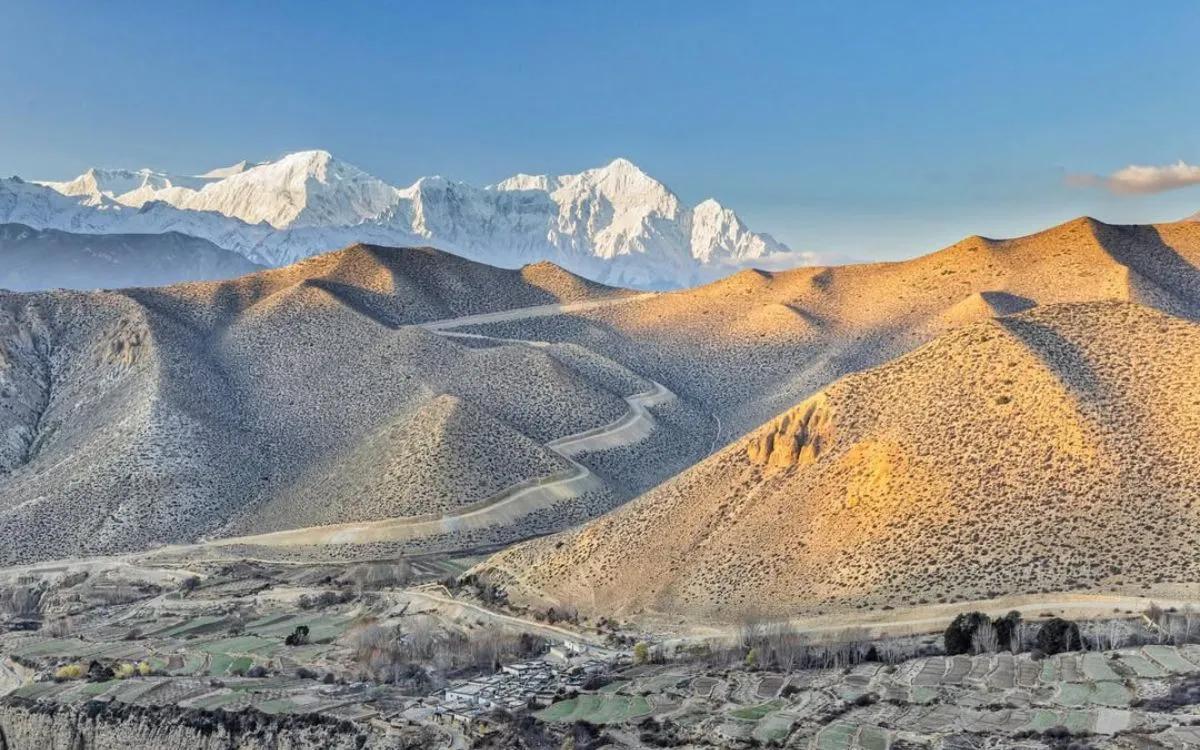
Upper Mustang is not the trek for people chasing mountain views alone. You will see Dhaulagiri, Nilgiri, and the Annapurna range, but the real draw is the landscape and culture beyond Kagbeni. The terrain shifts from green river valleys to a high-altitude desert that looks more like Tibet than Nepal.
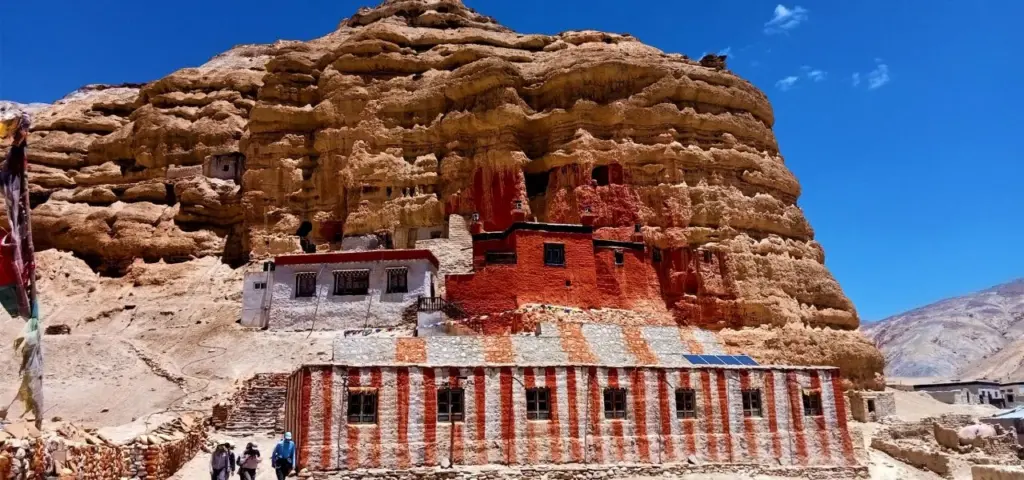
Lo Manthang, the walled capital of the former Kingdom of Lo, is unlike any other place on a Nepal trek. You will walk through 15th-century monasteries, see Buddhist murals being restored by hand, and meet people living a way of life that has barely changed in centuries. The Tiji Festival, if you time your trek right, is one of the most extraordinary cultural events in the Himalayas.
The permit fee keeps visitor numbers low. On most days during your trek, you will see very few other trekkers. That kind of solitude is rare in Nepal and increasingly hard to find anywhere in the world.
If you have done the Everest Base Camp trek or the Annapurna Circuit and want something completely different, something quieter, stranger, and more culturally immersive, Upper Mustang is perfect for you. The Upper Mustang trek cost is higher, but so is the reward.
Conclusion
The Upper Mustang trek cost in 2026 is not small, but it is more transparent and flexible than it has ever been. For a standard 14-day trek with a local agency, most trekkers should budget between USD 1,500 and USD 2,200 per person, including permits, guide, food, accommodation, and ground transport. Add another USD 200 to 400 for extras, tips, and insurance.
If you are looking for help planning your Upper Mustang trek, feel free to reach out to us at Hi Nepal Treks. We have been organizing treks to this region for years, and we are always happy to answer questions and help you plan a trip that fits your budget and interests.
FAQs
-
How much does the Upper Mustang trek cost in total?
The total Upper Mustang trek cost in 2026 ranges from USD 1,300 to USD 3,500 per person depending on your group size, trek style, and duration. A standard 14-day trek with a local agency typically costs between USD 1,500 and USD 2,200 per person, including permits, guide, food, accommodation, and transport from Pokhara.
-
How much is the Upper Mustang Restricted Area Permit in 2026?
The restricted area permit now costs USD 50 per person per day. You pay only for the days you spend inside the restricted zone, which starts from Kagbeni. For a 10-day trek in the restricted area, the permit costs USD 500. This replaced the old flat USD 500 fee for 10 days.
-
Can I trek Upper Mustang solo in 2026?
Yes. As of March 2026, the old two-person minimum rule has been officially removed. Solo trekkers can now obtain the restricted area permit individually. However, you still must hire a licensed trekking guide through a registered agency, independent trekking without a guide is not permitted in this restricted area.
-
What is the ACAP permit cost for Upper Mustang?
The ACAP permit costs NPR 3,000, which is approximately USD 23 to 30 for foreign nationals. You will also need a TIMS card for USD 20. Both are required in addition to the restricted area permit.
-
Is Upper Mustang more expensive than the Annapurna Circuit?
Yes, significantly. The Annapurna Circuit does not require a restricted area permit, and you can trek it independently without a guide if you choose. The Upper Mustang trek cost is higher mainly because of the expensive restricted area permit, mandatory guide requirement, and the remote logistics of getting supplies to teahouses beyond Kagbeni
-
What is the cheapest way to do the Upper Mustang trek?
The most affordable approach is to join a group of four or more trekkers, take the jeep both ways between Pokhara and Jomsom instead of flying, eat simple meals, and trek during shoulder season. A budget group trek can bring the cost down to around USD 1,200 to 1,500 per person.
-
How much should I budget for food and drinks on the Upper Mustang trail?
Plan for roughly USD 20 to 30 per person per day for three meals. Add another USD 5 to 10 per day for tea, coffee, snacks, and bottled water. Food prices increase the further north you go from Kagbeni toward Lo Manthang because of transportation costs in this remote area.
-
What extra costs should I prepare for beyond the trek package?
Common extra expenses include hot showers (USD 2 to 4), device charging (USD 1.50 to 3.50), Wi-Fi, snacks, monastery donations, gear rental, travel insurance (USD 100 to 200), Nepal visa fees, and tips for your guide and porter. Budget an additional USD 15 to 25 per day for these on-trail extras.