
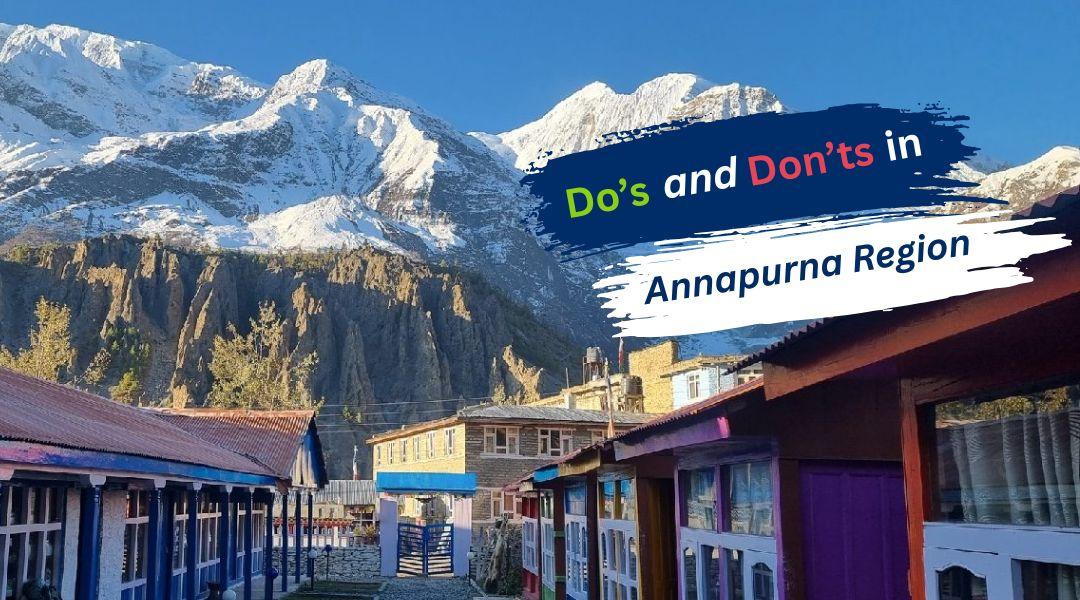
This is a fact that the Annapurna region is one of the places where you will get plenty of surprises while walking on the trail. Beautiful landscapes, stairs, blooming rhododendrons (laliguras), and so many surprises around the next corner.
One day, you might be crossing a suspension bridge, the next walking through a traditional village, and eventually finding yourself surrounded by snow-covered mountains.
But trekking here isn’t just about enjoying the views. There are a few things you should know before and during your journey.
Whether you’re heading to Annapurna Base Camp (4,130 m), crossing Thorong La Pass (5,416 m) on the Annapurna Circuit, or choosing a shorter trek like Poon Hill or Mardi Himal, these do’s and don’ts will help you prepare better and avoid common mistakes along the way.
Before You Trek: Permits, Guides and Preparation
A little preparation before leaving Pokhara can save you from unnecessary trouble on the trail. Permits, travel insurance, cash and packing are some things you shouldn’t leave until the last minute.
Do get your ACAP permit before starting the trek
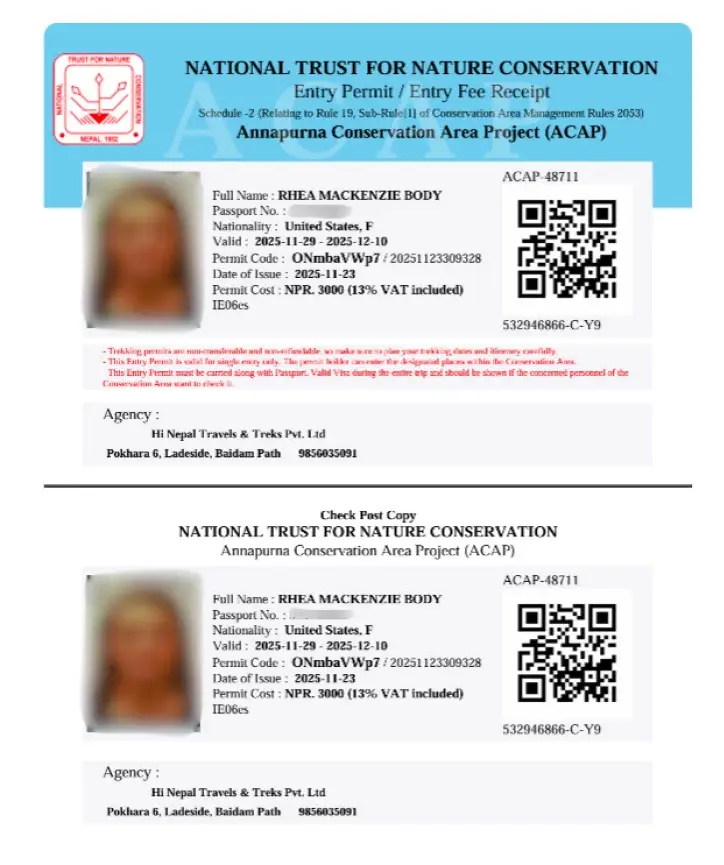
The Annapurna Conservation Area Permit (ACAP) is required for trekkers entering the Annapurna Conservation Area. You can obtain it in Pokhara or Kathmandu before heading towards your starting point.
For 2026, the permit fees are:
- Foreign nationals: NPR 3,000
- SAARC nationals: NPR 1,000
- Children below 10: Free
You can also obtain the permit at designated trail checkpoints, but the fee is double. So, getting it beforehand is generally the better option.
Remember that ACAP is a single-entry permit. If your route takes you outside the conservation area and you later re-enter, you may need another permit.
For your convenience, the Hinepal team will arrange it before you land in Nepal. You just need to provide us with the necessary information. Rest assured!
For detailed permit info, read this: Annapurna Circuit Trek Permit Cost 2026/27: TIMS, ACAP Fees & Complete Guide
Don’t get confused about the TIMS card
If you’ve been researching Annapurna trekking, you might have come across several websites mentioning the TIMS card as a mandatory requirement.
However, the current practice described for Annapurna checkpoints in 2026 is that they check the ACAP permit rather than TIMS.
Since trekking regulations can change, confirm the latest requirements with your trekking agency before departure instead of relying entirely on older online information.
Do trek with a licensed guide

Having a guide isn’t just about finding the right trail or knowing where to stop for lunch.
A local guide can help you understand the region, communicate with lodge owners and recognise potential altitude-related problems.
Nepal introduced a rule in April 2023 requiring foreign trekkers to trek with a licensed guide arranged through a registered trekking agency.
Although enforcement has been inconsistent in parts of the Annapurna region, you shouldn’t assume that independent trekking is permitted.
A knowledgeable guide can also introduce you to alternative trails, including sections of the Natural Annapurna Trekking Trails (NATT), which help avoid some of the dusty road sections on the Annapurna Circuit.
Do get travel insurance that covers high-altitude trekking
Don’t assume your regular travel insurance will cover every activity during your Annapurna trek.
The Annapurna Circuit takes you across Thorong La Pass at 5,416 m, so check whether your policy covers trekking at that elevation. Helicopter evacuation should also be included.
Read the policy carefully before purchasing it. Some standard travel insurance plans exclude high-altitude trekking or have separate conditions for emergency evacuation.
Do choose the right trekking season
Spring and autumn are generally the preferred seasons for trekking in the Annapurna region.
- Spring (March–May): Warmer days, blooming rhododendrons and generally favourable trekking conditions.
- Autumn (late September–November): Clear mountain views and relatively stable weather.
- Monsoon (June–August): Rain, slippery trails, leeches and possible landslides.
- Winter (December–February): Cold temperatures, snowfall and possible closures around high passes.
However, choosing a season isn’t just about the weather. If you’re planning the Annapurna Base Camp trek, pay particular attention to avalanche conditions during late winter and early spring.
If you want to know more about the best time for ABC, click this link for detailed information.
Don’t depend entirely on ATMs
You might find ATMs in places like Manang and Jomsom, but they aren’t always reliable. Sometimes you might have to go through connectivity issues, power cuts or cash shortages can make withdrawals difficult.
Most teahouses also operate on cash payments. Hot showers, Wi-Fi and charging electronic devices may cost extra.
Carry enough Nepali rupees before starting your trek, including some extra money for unexpected expenses.
Don’t overpack
Packing for the Annapurna region trek is important for any trek.
You don’t need to carry your entire wardrobe into the mountains. But you do need clothing and equipment suitable for changing temperatures.
Focus on layering rather than packing bulky clothes. A warm down jacket, thermal layers, waterproof trekking boots, gloves, a headtorch, sunglasses and sunscreen are among the essentials.
A sleeping bag suitable for temperatures around -10°C can also be useful at higher elevations.
One more thing: break in your trekking boots before arriving in Nepal. You don’t want to discover that your new boots cause blisters halfway through the trail.
Altitude and Health: Do’s and Don’ts During Your Annapurna Trek
One thing you shouldn’t underestimate in the Annapurna region is altitude.
Even if you’re physically fit and do regular exercise, you might have to face some difficulty walking at higher elevations, as it’s totally different from your usual hiking or gym routine.
As you gain elevation, the amount of available oxygen decreases. Your body needs time to adjust, and rushing your ascent can increase the risk of altitude sickness.
This is particularly important on the Annapurna Circuit and Annapurna Base Camp routes, where you spend several days above 3,000 m.
Do give your body enough time to acclimatise
Don’t treat trekking as a race to reach the next destination.
Your body needs time to adjust to the changing altitude, especially as you move above 3,000 m.
If you’re trekking the Annapurna Circuit, Manang is an important acclimatisation stop. Many itineraries include an additional day here before continuing towards higher elevations.
On the Annapurna Base Camp route, places like Deurali (around 3,200 m) and Machhapuchhre Base Camp (around 3,700 m) are important points to be aware of.
Plan your itinerary with enough time for gradual ascent and rest days rather than trying to complete the trek in fewer days.
Do follow the climb-high, sleep-low approach
If your itinerary includes an acclimatisation day, use it wisely.
Instead of spending the entire day inside your teahouse, you can take a short hike to a higher elevation and return to your accommodation to sleep at a lower altitude.
The idea is simple: expose your body to a higher elevation during the day while allowing it to rest at a lower elevation overnight.
Do stay hydrated
Walking for several hours, breathing in dry mountain air and adjusting to higher elevations can increase your need for fluids.
Drink water regularly throughout the day instead of waiting until you feel thirsty.
Carry a reusable water bottle and refill it whenever you have access to a safe water source.
Ginger, lemon and garlic soups are also common options in Annapurna teahouses, especially during colder evenings.
Your hydration needs will vary depending on your activity, weather and body, so don’t force yourself to follow a fixed water target without considering your condition.
Don’t ignore early signs of altitude sickness
Altitude sickness doesn’t always begin with severe symptoms.
Sometimes, it starts with a headache, nausea, dizziness, loss of appetite or difficulty sleeping.
You might initially assume that these problems are caused by tiredness after a long walking day. However, if they appear as you gain altitude, take them seriously.
Inform your guide or trekking companions if you experience any unusual symptoms. Don’t continue climbing if you suspect altitude sickness.
More severe symptoms, such as confusion, loss of coordination or breathlessness while resting, can indicate serious altitude-related illness. These require immediate descent and emergency medical attention.
Remember, reaching the next destination isn’t more important than your health.
Don’t drink alcohol or smoke at higher elevations
You might feel like celebrating after a long day of trekking, but higher elevations aren’t the best place for alcohol.
Alcohol can affect sleep, contribute to dehydration and make it harder to recognise how you’re feeling. Smoking can also make breathing more difficult during physical activity.
It’s better to avoid alcohol and smoking while acclimatising, particularly when you’re moving towards higher elevations.
Save the celebratory drink for when you’re back in Pokhara.
Do carry a basic first-aid kit
You don’t need a full medical bag, but having a few essentials can make minor problems easier to manage.
Consider carrying:
- Blister plasters and basic wound dressings
- Pain relief medication
- Oral rehydration salts
- Your regular prescription medicines
- Water purification tablets or drops
- Any personal medication recommended by your doctor
If you’re considering altitude medication such as acetazolamide (Diamox), discuss it with a healthcare professional before your trip. Don’t start medication simply because someone else in your trekking group is taking it.
Teahouse Etiquette: Food, Water and Accommodation
Teahouses are an important part of the Annapurna trekking experience.
They provide a place to sleep, eat, rest and meet other trekkers along the route.
However, staying in a mountain teahouse is a little different from staying in a hotel in Pokhara or Kathmandu.
Facilities become more basic as you gain elevation, and many supplies need to be transported by porters, mules or other local means.
Understanding a few basic things can make your stay more comfortable.
Do try dal bhat and other local meals
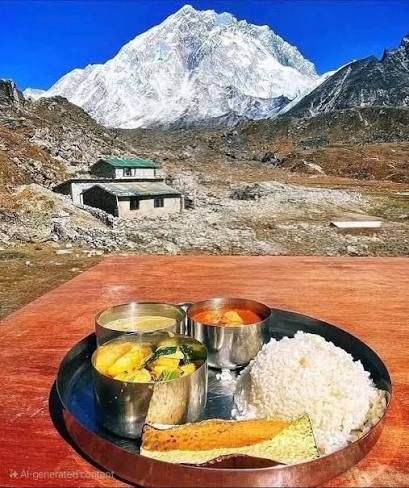
Dal bhat is one of the most common meals you’ll find along the Annapurna trails.
It usually includes rice, lentil soup, vegetable curry and sometimes pickles.
It’s filling, provides energy for long walking days and is a familiar meal for many trekking guides and porters.
You don’t have to eat dal bhat at every meal, of course. Most teahouses offer other options, including noodles, soups, potatoes and breakfast items.
But if you’re unsure what to order after a long day, dal bhat is usually a reliable choice.
Don’t bargain over food prices
You might notice that the same meal costs more in a higher-altitude village than it does in Pokhara.
There’s a reason for that. Food and other supplies become more expensive to transport as you move further into the mountains.
In some places, everything from cooking gas to vegetables needs to be carried up by people or animals.
Many teahouses also follow locally agreed menu pricing.
Instead of bargaining over every meal, check the menu before ordering and budget accordingly.
Remember that paying for these services also supports the local communities that make trekking possible.
Do eat where you stay
Many teahouses offer relatively affordable room rates on the expectation that guests will have their meals there.
This is part of the way many mountain lodges operate. They earn much of their income from food and other services rather than accommodation alone.
If you’re staying at a teahouse, it’s generally good practice to have your dinner and breakfast there instead of using the room and taking your meals elsewhere.
Don’t assume meat is available everywhere
Food options become more limited as you move towards remote and higher-altitude settlements.
On parts of the Annapurna Base Camp route, particularly above Chhomrong, you may find that teahouses don’t serve meat. This is associated with local customs and the area’s cultural and religious significance.
Even where meat is available, refrigeration and transportation can be challenging in remote locations.
If you’re unsure about the freshness of a particular meal, choose freshly prepared vegetarian options instead.
Don’t rely on bottled water
Single-use plastic bottles create unnecessary waste in mountain environments, where collecting and managing rubbish can already be difficult.
Carry a reusable water bottle and refill it at available village water stations or teahouses.
However, don’t assume that clear-looking water is safe to drink. Treat water using suitable purification tablets, drops or a filter before drinking it.
This simple habit helps reduce plastic waste while keeping you safer on the trail.
Do respect shared spaces
Most teahouses have shared dining areas, common spaces and basic facilities. You might be sharing a room or bathroom with other trekkers, especially during busy trekking seasons.
A little consideration goes a long way.
Keep your voice low during sleeping hours, avoid occupying charging sockets longer than necessary and don’t leave your belongings scattered around shared areas.
Hot showers and charging facilities may also be limited or cost extra. Use them responsibly, especially in villages where electricity and hot water depend on solar power or transported fuel.
Cultural Do’s and Don’ts in the Annapurna Region
The Annapurna region isn’t just a trekking destination. It’s also home to communities with different languages, traditions, religions and ways of life.
As you walk through villages, you’ll encounter Gurung, Magar, Thakali and Manangi communities. In places around Manang and beyond, Tibetan Buddhist traditions are particularly visible.
You don’t need to know every local custom before arriving. But understanding a few basic practices can help you interact respectfully with the people and places you visit.
Do walk clockwise around religious structures
You’ll come across stupas, chortens, mani walls and prayer wheels throughout parts of the Annapurna region.
These are important elements of Buddhist religious practice. When passing stupas, chortens and mani walls, walk clockwise so that the structure remains on your right.
Prayer wheels should also be turned clockwise.
You may notice mani walls made of stones carved with Buddhist prayers. Avoid climbing over them, sitting on them or removing any stones. Simply walk around them respectfully.
Do remove your shoes before entering monasteries and homes
If you visit a monastery or are invited into a local home, check whether you should remove your shoes before entering.
This is a common sign of respect in many places.
Also, don’t assume that you can photograph everything inside a monastery. Some religious spaces have restrictions on photography, particularly inside prayer halls.
Ask permission before taking pictures, and follow any instructions given by the people looking after the place.
Do ask before taking photographs of local people
The Annapurna region offers plenty of opportunities for photography, from mountain landscapes to traditional villages and everyday activities.
But remember that people aren’t part of the scenery.
If you want to photograph a local resident, monk, shopkeeper or child, ask first. A friendly smile and a gesture towards your camera are often enough to communicate what you want.
If someone doesn’t want to be photographed, respect their decision.
Do dress appropriately in villages and religious places
Trekking clothes are perfectly normal on the trail, but it’s worth being a little more mindful when visiting villages, homes and religious places.
Avoid unnecessarily revealing clothing when entering monasteries or interacting with local communities. Carrying an extra layer can be useful, particularly when moving between trekking routes and cultural sites.
You don’t need to dress formally. Just be considerate of the local setting.
Don’t hand out money, sweets or pens to children
You might meet children along the trekking route who are curious about visitors. While giving them sweets, money or stationery might seem like a kind gesture, doing so can unintentionally encourage begging.
Sweets can also contribute to dental problems, particularly in villages where access to dental care is limited.
If you’d like to support local children, consider contributing through established schools, community organisations or responsible local initiatives.
Don’t be overly affectionate in public
Public displays of affection are generally less common in traditional rural communities than in many urban tourist destinations.
You don’t need to change your relationship or avoid travelling with your partner. Just be mindful of your surroundings and respect local social expectations.
Responsible Trekking in the Annapurna Conservation Area
The Annapurna Conservation Area covers approximately 7,629 square kilometres, making it Nepal’s largest conservation area.
Its landscapes, wildlife, forests and mountain communities are a big part of what makes the region special.
But trekking tourism also brings challenges, particularly around waste management and pressure on natural resources.
As a visitor, you can help reduce your impact through a few simple habits.
Do carry your rubbish with you
Not every village along the Annapurna trails has proper waste collection facilities. Some remote settlements have limited options for managing plastic and other waste.
Carry a small rubbish bag and keep your wrappers, snack packets, used batteries and other non-biodegradable waste with you until you find an appropriate disposal point.
Don’t leave rubbish beside the trail or assume someone else will collect it.
Don’t light fires in the conservation area
Avoid lighting open fires while trekking or camping in the Annapurna region.
Firewood collection can put additional pressure on local forests, particularly in areas where people already depend on natural resources for daily needs.
Choose established teahouses and accommodation that use appropriate cooking facilities rather than encouraging unnecessary wood burning.
Do stay on marked trails
It’s tempting to take a shortcut when you’re tired or want to reach the next village faster. However, walking outside established routes can contribute to soil erosion and damage surrounding vegetation.
Follow marked trails and any instructions from your guide.
Use designated teahouse toilets wherever possible instead of leaving waste in the surrounding environment.
Don’t disturb wildlife or pick plants
The Annapurna Conservation Area is home to a variety of wildlife and plant species.
You may come across birds, mountain animals and beautiful rhododendron forests along your route. Enjoy observing them, but keep a respectful distance.
Avoid feeding wildlife, chasing animals for photographs or picking flowers and plants.
The best way to enjoy the natural environment is to leave it as you found it.
Do support local communities
Trekking tourism provides an important source of income for many communities in the Annapurna region.
Choosing locally owned teahouses, hiring licensed local guides and working with responsible porters are practical ways to support the people who make your journey possible.
If you’re hiring porters, make sure they have appropriate clothing, equipment and a reasonable load to carry.
You can also budget for tips at the end of your trek as an additional way to appreciate the work of your trekking crew.
Trek the Annapurna the Right Way
The Annapurna region has plenty to offer, whether you’re walking through traditional Gurung villages, enjoying the mountain views from Poon Hill or crossing Thorong La Pass on the Annapurna Circuit.
But knowing the trails is only one part of a good trekking experience. Having the right people to guide you along the way can make a difference, too.
At Hi Nepal Travels & Treks, we’re based in Pokhara and specialise in helping travellers explore the Annapurna region.
Our local team understands the routes, knows the mountain communities and can help you arrange a licensed guide, manage the necessary permits and plan a trek around your available time and preferences.
Whether you’re considering Annapurna Base Camp, the Annapurna Circuit, Poon Hill or Mardi Himal, we’d be happy to help you figure out the right route and prepare for the journey.
Planning your Annapurna trek? Get in touch with Hi Nepal Travels & Treks and let’s start planning your journey from Pokhara.