
Food is one of the things many first-time trekkers wonder about before coming to Nepal. Will you eat dal bhat every day? Are there other options? Can you find vegetarian meals, and what happens when you reach higher villages where suppliers are harder to transport?
On most teahouse treks in Nepal, you don’t need to carry your own meals or cooking equipment. Local lodges prepare food throughout the day, with menus offering a mix of Nepali, Tibetan and familiar Western dishes. However, the choices vary by region, altitude and individual teahouse. A dish listed on the menu may not always be available, particularly at higher elevations.
Here’s what you can realistically expect to eat during a Nepal teahouse trek and how to prepare for meals along the trail.
If you’re still preparing for your journey, our Nepal trek packing list covers the essentials to bring for different trekking routes.
What Food Is Available at Nepal Teahouses?
Teahouses in Nepal serve a combination of traditional Nepali meals, Himalayan dishes and familiar international food. Most have a menu covering breakfast, lunch, dinner and hot drinks, although the selection depends on the size of the lodge and how remote it is.
You commonly find three types of food:
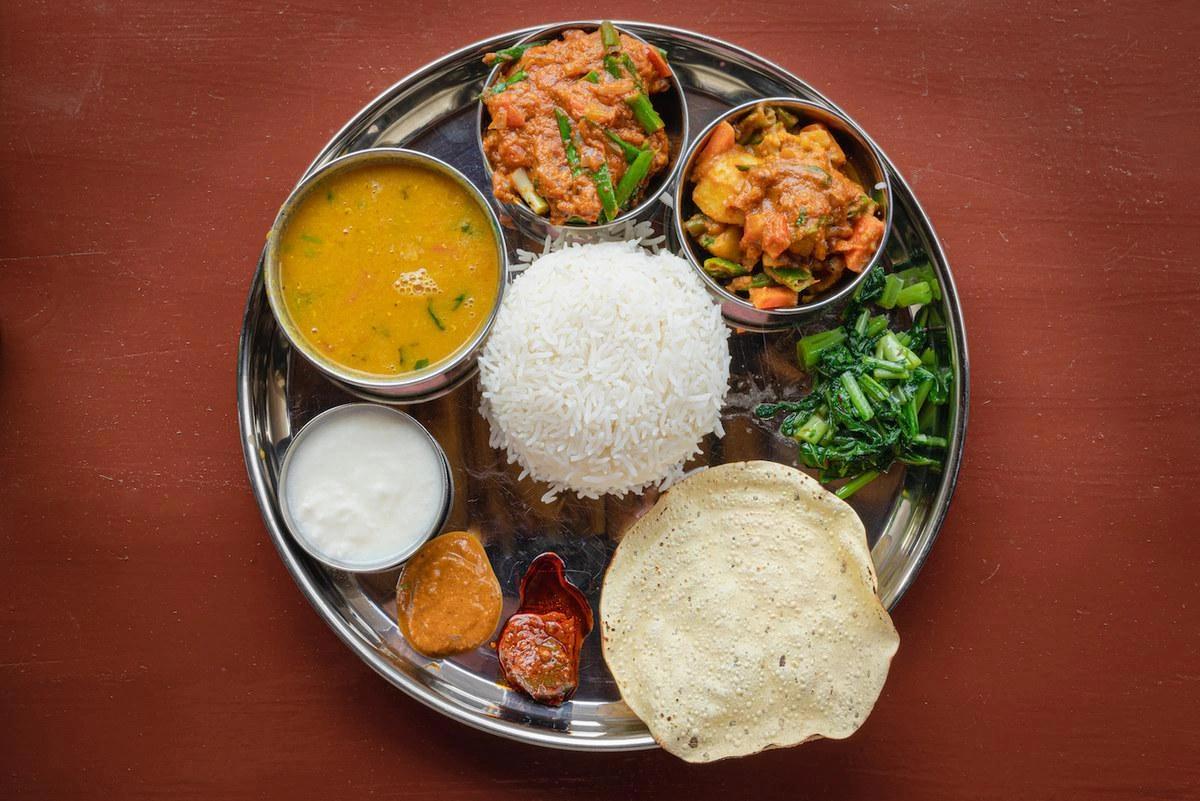
Traditional Nepali meals: Dal bhat is the most common full meal on trekking routes. It usually comes with steamed rice, lentil soup, vegetable curry, and pickle. Some teahouses also serve vegetable curry with rice, potatoes and other simple local dishes.
Tibetan and Himalayan food: These dishes are particularly common in mountain communities. Momos (dumplings), thukpa (noodle soup), Tibetan bread and shakpa (a thick stew with vegetables and dough or noodles) are among the options you may encounter.
Western-style food: Many teahouses also offer pancakes, porridge, pasta, fried rice, noodles, toast, pizza and sandwiches. These options are generally easier to find in larger villages and popular trekking stops.
The exact selection varies between lodges, so don’t expect every teahouse to serve all these dishes.
What Does a Typical Teahouse Menu Look Like?
Menus differ between lodges, but the following table gives you an idea of the food commonly found on Nepal’s popular teahouse trekking routes.
| Meal | Common menu items |
| Breakfast | Porridge, muesli, Tibetan bread, chapati, pancakes, toast and eggs |
| Lunch | Dal bhat, fried rice, chow mein, momos, thukpa and vegetable soup |
| Dinner | Dal bhat, pasta, fried noodles, Sherpa stew, potatoes and soups |
| Drinks | Milk tea, black tea, ginger tea, lemon tea, coffee and hot chocolate |
| Snacks | Biscuits, chocolate, popcorn, instant noodles and packaged snacks |
Some menus also list apple pie, spring rolls, garlic soup and different types of pancakes.
However, a menu listing 20 or more dishes doesn’t mean every item is available. A teahouse may have the ingredients for fried rice and noodles but run out of vegetables or eggs. Another may offer momos on its menu but prepare them only when enough orders come in.
It’s normal to ask the kitchen what is available before ordering, especially at smaller lodges.
What Do Trekkers Eat for Breakfast, Lunch and Dinner?
Your meals generally follow the trekking schedule. Breakfast is served before you leave, lunch is eaten at a teahouse along the trail, and dinner is prepared at the lodge where you spend the night.
Breakfast
Breakfast usually includes filling but relatively simple options. Common choices are:
- Porridge or oatmeal
- Muesli with milk
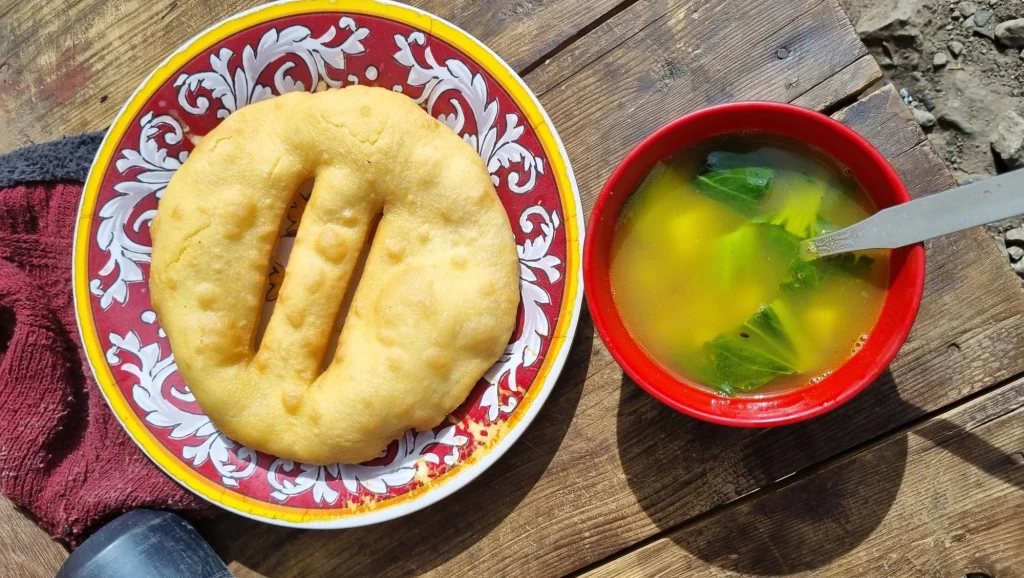
- Tibetan bread with honey or jam
- Pancakes
- Toast with butter or jam
- Boiled, fried or scrambled eggs
- Chapati
Tea or coffee usually comes with breakfast. Ginger tea, milk tea and black tea are common choices.
If you have a long walking day ahead, porridge, eggs or Tibetan bread can provide a filling start. You can also carry a few snacks in case you need something before the lunch stop.
Lunch
Lunch is usually eaten at a teahouse along the trail, often after a few hours of walking. Depending on the route and available lodges, you can order dal bhat, fried rice, chow mein, momos or soup.
On busier routes, such as the Annapurna and Everest regions, there are often several teahouses at popular lunch stops. On quieter or more remote sections, you may have fewer choices, so it’s worth carrying a snack in case your preferred dish isn’t available.
Dinner
Dinner is generally eaten at the teahouse where you stay overnight. Dal bhat, vegetable fried rice, noodles, pasta and soups are common choices.
Many trekkers choose dal bhat because it’s filling and usually comes with rice, lentils and vegetables. Some lodges offer additional servings of rice, dal and curry, although the arrangement can vary.
Snacks between meals
You don’t need to carry a full day’s supply of food, but keeping a few snacks in your daypack is useful. Nuts, chocolate, biscuits, dried fruit and energy bars are easy to carry and eat during short breaks.
Which Nepali and Himalayan Dishes Should You Try?
You don’t have to eat the same meal every day. Teahouse menus offer several local dishes worth trying, particularly if you want to experience the food commonly eaten in Nepal’s mountain communities.
Dal Bhat
Dal bhat is a combination of steamed rice, lentil soup, vegetable curry and pickle. Some teahouses also serve it with papad, seasonal greens or additional vegetable dishes.
It’s a popular choice among the trekkers because it’s filling, contains a mix of carbohydrates and plant-based protein, and is generally freshly prepared. Many lodges offer additional servings of rice and dal.
Momo
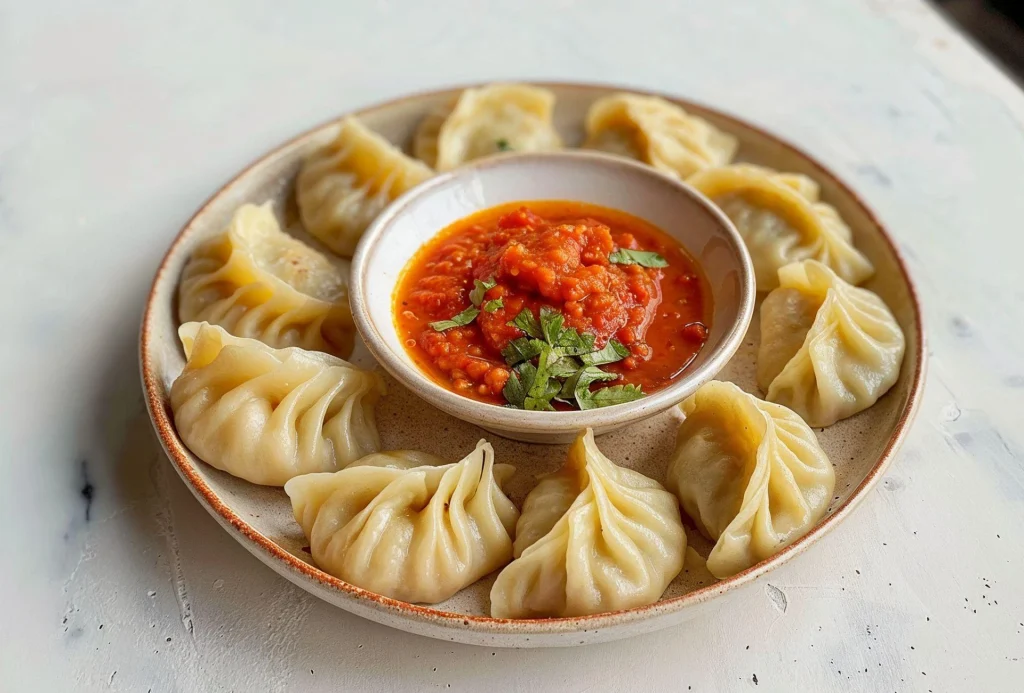
Momos are dumplings usually filled with vegetables, cheese or meat. They can be steamed or fried and are commonly served with a spicy tomato-based dipping sauce.
Vegetable momos are a popular option for trekkers who want something different from rice and lentils.
Thukpa
Thukpa is a warm noodle soup with vegetables and sometimes meat. It is particularly popular in Himalayan communities and is a practical meal when the weather gets cold.
Tibetan bread
Tibetan bread is a thick, fried flatbread commonly served for breakfast. You can eat it with honey, jam or other available accompaniments. It’s a filling option before setting out for the day.
Shakpa
Shakpa is a traditional Himalayan stew made with vegetables and pieces of dough or noodles. Recipes differ between communities and households. It’s a hearty, warming dish that you may find in teahouses in the Everest and other Himalayan regions.
Availability varies, so don’t expect every lodge to serve all these dishes. Trying local food when it’s available is a good way to experience the different food traditions along Nepal’s trekking routes.
How Does Food Availability Change at Higher Elevations?
One of the biggest differences between eating in Kathmandu or Pokhara and eating on a mountain trek is the availability of ingredients.
In lower settlements, teahouses can usually source vegetables, eggs, rice, flour and other supplies more easily. Larger villages such as Namche Bazaar and Manang also have more established shops, bakeries and restaurants, giving trekkers a wider choice.
As you climb higher, the selection becomes more limited. Some ingredients are difficult to transport, fresh vegetables become less common, and kitchens have to work with whatever supplies are available.
For example, you might find pizza, sandwiches, different types of pasta and freshly baked goods in a larger village. At a more remote stop, the practical choices may be dal bhat, noodles, fried rice, potatoes and soup.
This is also why you shouldn’t assume that every dish on a printed menu is available. A lodge may keep the same menu throughout the season, even when some ingredients are difficult to obtain.
Food also becomes more expensive as you gain altitude. Rice, flour, cooking oil, gas and other supplies have to be transported by porters, mules or yaks. The farther a teahouse is from a road or supply centre, the more it can cost to prepare and serve a meal.
If you’re trekking towards higher settlements on the Annapurna Circuit, for example, you may notice a difference between the food choices and prices in lower villages, Manang and Thorong Phedi.
You can also check our Annapurna Circuit Trek cost guide for a breakdown of accommodation, meals, permits, transportation and other trekking expenses.
Can You Find Vegetarian, Vegan and Gluten-Free Food on Nepal Treks?
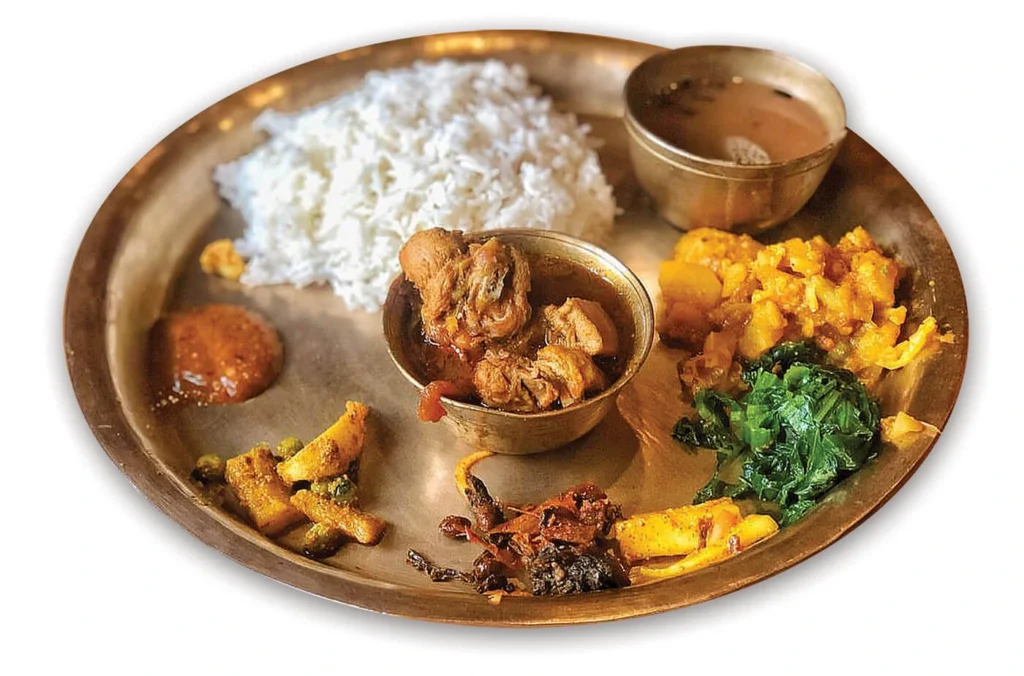
Yes. Most popular trekking routes in Nepal have vegetarian options, and people with other dietary requirements can also find suitable meals with some planning. However, availability and preparation methods vary between teahouses.
Vegetarian food
Vegetarians generally have plenty of choices. Dal bhat, vegetable momos, fried rice, noodles, soups, potatoes and pancakes are common options.
You can also ask for vegetable curry or a meal without meat. If you eat eggs and dairy, breakfast options are usually easier to manage.
Vegan food
Vegan trekkers need to pay closer attention to ingredients. Some dishes that appear vegetarian may contain butter, ghee, milk or cheese.
Dal bhat can often be prepared without ghee, while vegetable rice, potatoes and vegetable soups may also be suitable. However, ask the kitchen to prepare your food without dairy products or other animal-derived ingredients.
Don’t assume that vegetable soup or noodles are vegan, as some kitchens use butter, stock or other ingredients in their preparation.
Gluten-free food
Gluten-free options can be more difficult to find because many common trekking foods contain wheat. Tibetan bread, chapati, pancakes, pasta, noodles and momos may all contain gluten.
Rice, plain potatoes, eggs and some vegetable dishes are possible alternatives. However, check how the food is prepared and whether sauces or seasonings contain gluten.
Food allergies
If you have a food allergy, tell your trekking guide and agency before the trek. Explain which ingredients you need to avoid and ask the teahouse staff about the ingredients and cooking methods before ordering.
Mountain teahouse kitchens are often small, with shared cooking surfaces, utensils and preparation areas. Cross-contamination can happen, and a lodge may not be able to guarantee an allergen-free meal.
For serious allergies, carry appropriate emergency medication and discuss the limitations with your trekking operator before departure.
Is Teahouse Food Safe to Eat in Nepal?
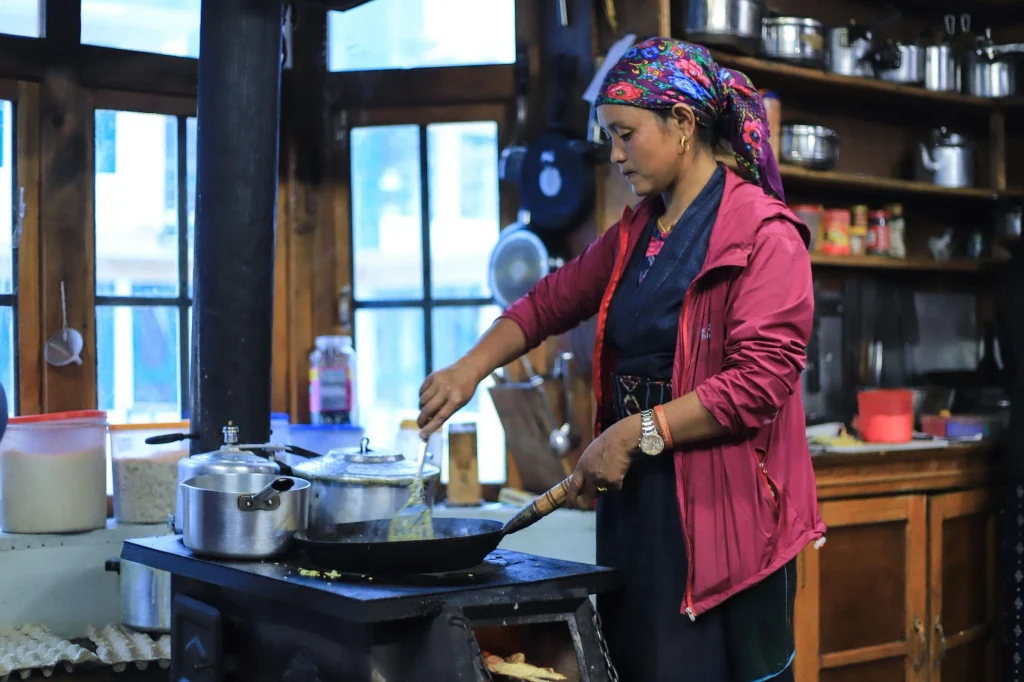
Most trekkers eat at local teahouses throughout their journey without major problems, but food hygiene can vary between lodges. Choosing freshly prepared food and paying attention to how it is handled can help reduce the risk of stomach problems.
A few practical precautions are worth following:
- Choose freshly cooked meals: Hot food prepared after you order is generally a better choice than food that has been sitting out for several hours.
- Be careful with meat: Refrigeration may be limited in remote settlements. Ask your guide about local conditions and choose freshly cooked meat from a busy, reputable lodge. Many trekkers prefer vegetarian meals at higher elevations.
- Be cautious with raw food: Avoid unwashed salads and fruit you cannot peel yourself. Wash your hands before eating.
- Check food handling: Look for reasonably clean preparation areas, clean utensils and food served hot.
- Be careful with leftovers: Avoid food that has been left uncovered or stored without proper refrigeration.
Drinking water also deserves attention. Tap water and untreated stream water should not be assumed safe, even when they look clear. Choose boiled water, properly treated refill water or sealed bottled water.
The US Centers for Disease Control and Prevention (CDC) advises travellers in Nepal to avoid untreated tap water and follow food and water precautions to reduce the risk of intestinal infections.
What Snacks and Drinks Should You Carry?
Teahouses provide meals and drinks along most established trekking routes, so you don’t need to carry large amounts of food. However, a few snacks can be useful between meal stops or when you need extra energy.
Useful snacks to pack include:
- Nuts and trail mix
- Dried fruits such as raisins, dates and apricots
- Energy bars
- Chocolate
- Biscuits
- Peanut butter sachets
- Electrolyte sachets, if needed
Choose snacks that you enjoy and can eat easily while walking. If you have dietary restrictions, bring a few familiar options from home because specific products may be difficult to find in mountain villages.
Not sure what else to carry? Check our Annapurna Circuit packing list for clothing, trekking equipment, snacks and other essentials.
Drinks available at teahouses
Most teahouses serve hot drinks throughout the day. Common choices include:
- Milk tea
- Black tea
- Ginger tea
- Lemon tea
- Ginger-lemon-honey tea
- Instant coffee
- Hot chocolate
You can also buy boiled drinking water or ask the lodge about treated water refills. Carry a reusable water bottle and suitable purification tablets or a filter if you plan to treat water yourself.
Avoid drinking untreated water directly from taps, streams or other natural sources.
What Should You Eat When Trekking at High Altitude?
Eating regularly becomes important as you gain altitude. Some trekkers notice that their appetite decreases, especially after several days of walking or when they reach higher elevations.
Even if you don’t feel particularly hungry, try to maintain regular meals and eat enough to support your daily activity.
A few practical tips can help:
- Don’t skip breakfast: Have something filling before starting the day’s walk, even if it’s a smaller meal.
- Choose warm meals: Soup, porridge, dal bhat and noodle dishes are useful options when temperatures drop.
- Eat smaller portions if needed: If a large meal feels difficult, eat smaller amounts more frequently.
- Keep snacks accessible: Nuts, chocolate and dried fruit are easy to eat during breaks.
- Drink enough water: Continue drinking regularly throughout the day rather than waiting until you feel thirsty.
Garlic soup is popular in some Himalayan teahouses, and you’ll often hear trekkers recommend it at higher elevations. However, it is not a proven treatment for altitude sickness. Don’t rely on any food or drink to prevent or treat altitude-related illness.
If you develop symptoms of altitude sickness, follow your guide’s advice and seek appropriate medical attention rather than trying to manage the problem through food.
FAQs
Is dal bhat available on every Nepal trek?
Dal bhat is widely available on popular teahouse trekking routes in Nepal, including the Annapurna, Everest and Langtang regions. However, availability can vary at individual lodges and on less-developed routes.
Is food included in Nepal trekking packages?
It depends on the trekking package. Some packages include breakfast, lunch and dinner, while others include accommodation and breakfast only. Check the inclusions before booking so you know which meals you need to pay for separately.
Can I get vegetarian food in mountain teahouses?
Yes. Vegetarian meals are widely available. Dal bhat, vegetable momos, fried rice, noodles, potatoes and soups are common choices. Options may become more limited at higher elevations.
Is meat safe to eat while trekking in Nepal?
Meat is available at some teahouses, but refrigeration and storage facilities can be limited in remote mountain villages. Choose freshly cooked meat from a reputable lodge, and consider vegetarian meals at higher elevations.
Are there Western food options on Nepal treks?
Yes. Many teahouses serve pancakes, porridge, pasta, pizza, fried rice, sandwiches and noodles. The selection is generally wider in larger villages and becomes more limited at higher elevations.
Do teahouses provide drinking water?
Most established teahouses sell drinking water, including boiled water and sometimes treated refills. However, availability varies by location. Carry a reusable bottle and a suitable water treatment option.
Does food become more expensive at higher elevations?
Yes. Food generally costs more as you climb because ingredients, cooking fuel and other supplies have to be transported to remote villages. Prices also vary by lodge, season and trekking region.