
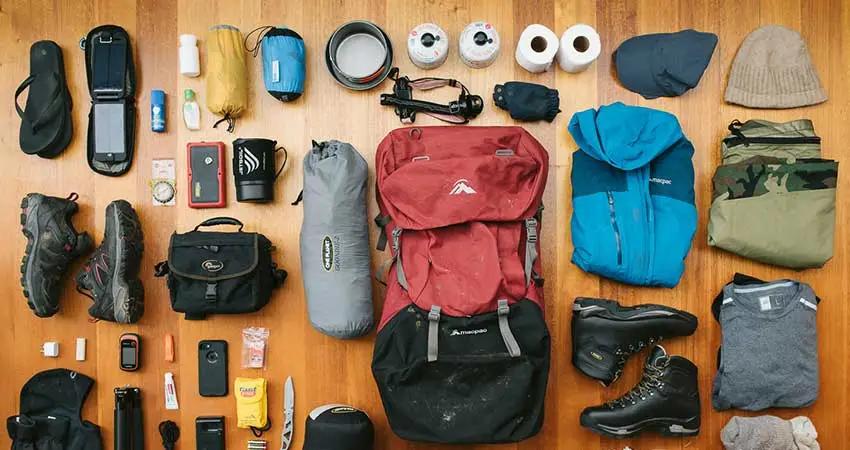
So, you have finally booked that dream Nepal trek, congratulations! Whether you are heading to Everest Base Camp, tracing the golden rhododendron forests on the Annapurna Circuit, or tackling the remote Manaslu Circuit, what you pack can make or break the entire adventure.
Trekking in Nepal in 2026 demands smart, lightweight, weather-proof packing. You will face scorching valley heat one morning and sub-zero ridge winds the next. Forget something critical and you could find yourself in a remote teahouse paying five times the price for a spare headlamp, or worse, cutting your trek short due to a preventable altitude-related issue.
This expert-crafted Nepal Trek Packing List 2026 covers everything: clothing layers, trekking gear, permits, medications, electronics, and proven money-saving tips, all backed by over 20 years of Himalayan guiding experience from our team at Hi Nepal Travels & Treks.
Why Your Packing List Matters More Than You Think?
Nepal’s trekking trails span elevations from sub-tropical jungles at 800 m to glacial passes above 5,400 m. There are no online deliveries at Namche Bazaar. Forget a quality rain cover and you are in serious trouble when the afternoon monsoon rolls in over the Khumbu Valley.
The right gear does more than keep you comfortable, it keeps you safe. Altitude sickness, hypothermia, and dehydration are the most common reasons trekkers are evacuated from Himalayan trails, and all three are largely preventable with proper preparation.
Nepal Trekking Seasons 2026 – How Season Affects Your Kit
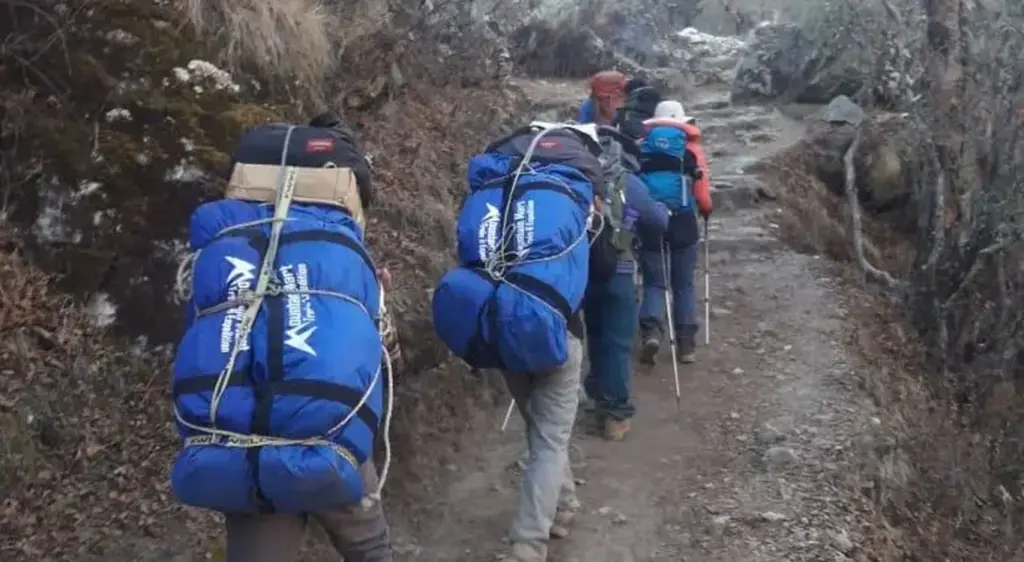
Your season determines your entire kit strategy. Pack for the conditions you will face, not just the trail name.
| Season | Months | Packing Focus |
|---|---|---|
| Spring (Prime) | March – May | Light layers, full rain gear, SPF 50+ |
| Summer / Monsoon | June – August | Heavy waterproofs, gaiters, leech socks |
| Autumn (Prime) | September – November | Layering system, windproof jacket |
| Winter | December – February | Expedition sleeping bag, heavy down jacket |
Spring (March–May) and autumn (September–November) are the twin prime windows for Nepal trekking in 2026. Stable skies, clear mountain views, and moderate temperatures make these the most popular seasons. Winter trekkers should treat kit requirements as expedition-level — temperatures at Everest Base Camp can drop to -20°C overnight.
Browse our full range of Nepal Trekking Packages to find a departure that aligns with your 2026 travel window.
The Complete Clothing Packing Checklist
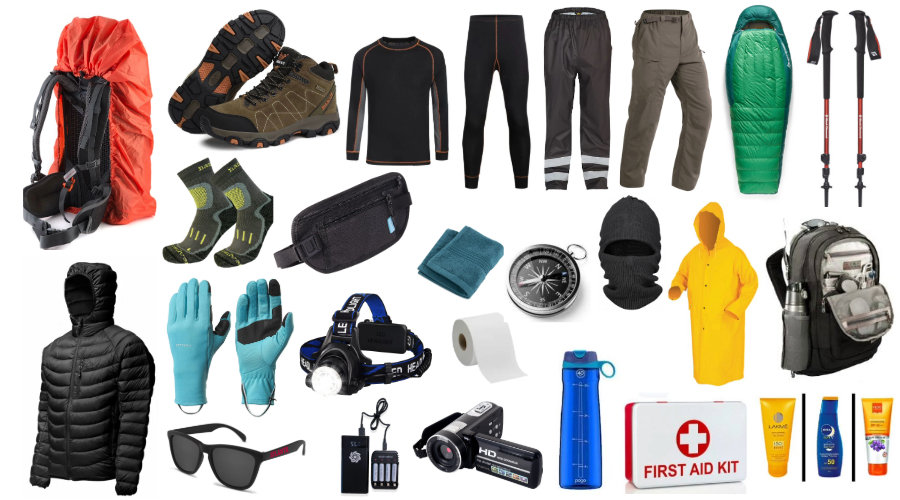
Clothing is the most critical component of your Nepal trek packing list. The golden rule is the three-layer system: base layer (moisture management), mid-layer (insulation), and outer layer (wind and waterproof protection). Never use cotton, wet cotton is dangerously cold and extremely slow to dry.
Base Layers
- Moisture-wicking trekking shirts — 3x (merino wool or synthetic; cotton is strictly off the list)
- Long-sleeve thermal base top — 2x (merino wool excels: odour-resistant and warm even when damp)
- Trekking trousers / zip-off pants — 2x (zip-off versions are ideal for variable valley-to-ridge temperatures)
- Lightweight shorts — 1x (for lower elevation days and teahouse downtime)
- Trekking base-layer leggings — 1x (merino or synthetic)
- Trekking underwear — 4–5x (merino or synthetic quick-dry)
- Warm trekking socks — 4x (merino wool; Darn Tough and Smartwool are consistently top-rated)
- Thin liner socks — 2x (worn under thick socks to prevent blisters)
Insulation & Mid-Layers
- Fleece jacket — 1x (250-weight fleece recommended for high-altitude nights)
- Down or synthetic insulated jacket — 1x (critical above 3,500 m; goose down is lightest but loses warmth when wet)
- Warm fleece or thermal trousers — 1x (for cold camp evenings and early-morning summit starts)
Outer / Shell Layers
- Waterproof hardshell jacket with hood — 1x (Gore-Tex or equivalent; non-negotiable for monsoon season or high-pass crossings)
- Waterproof hardshell trousers — 1x
Head, Hands & Feet
- Warm beanie hat — 1x (wool or fleece)
- Sun hat / wide-brim hat — 1x (UV radiation increases ~4% for every 300 m of altitude)
- Lightweight balaclava — 1x (essential for passes above 5,000 m)
- Neck gaiter / buff — 1x
- Lightweight gloves — 1x pair
- Warm insulated gloves or mittens — 1x pair (for high camps and sub-zero morning starts)
- Waterproof trekking boots — 1 pair (ankle support essential; break them in for 3–4 weeks before travel)
- Camp sandals or Crocs — 1 pair (essential foot recovery after long summit days)
- Gaiters — 1 pair (highly recommended for monsoon routes and snowy high passes)
Critical Boot Rule: NEVER break in new trekking boots on the Himalayan trail. Blisters are the most common complaint on all Nepal treks and are 100% preventable. Walk in your boots for at least 3–4 weeks before departure.
Trekking Gear & Equipment
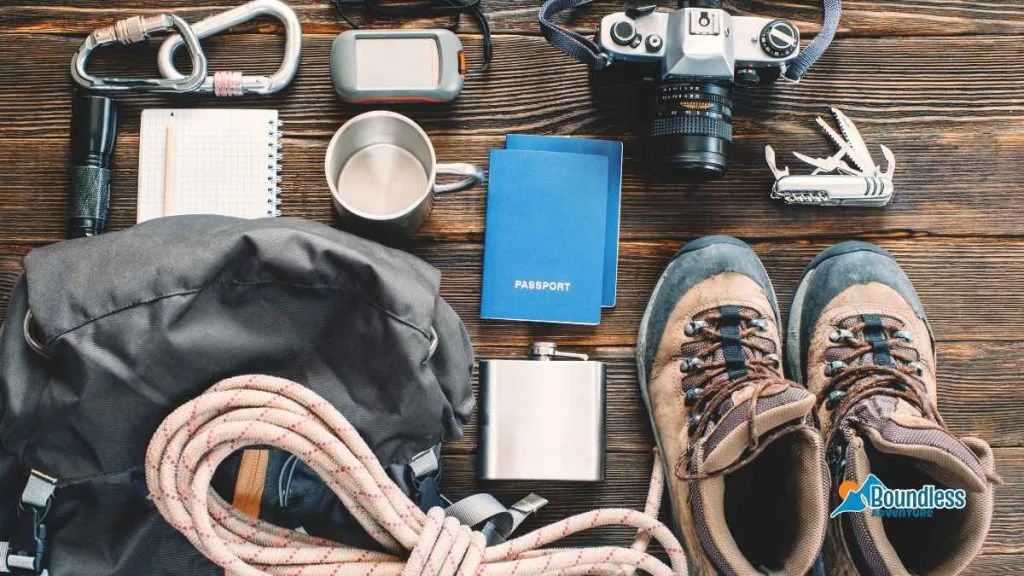
Backpacks
- Day pack — 25–35 L (what you carry each day; your porter carries your main duffel)
- Main duffel bag — 60–80 L (soft-sided only — hard cases cannot be loaded on pack animals or porters)
- Rain cover for day pack — 1x (verify inclusion; aftermarket covers fit most packs perfectly)
Trekking Poles
Trekking poles are non-optional above 4,000 m. Research shows they reduce knee-joint loading by up to 25% on steep descents, provide critical balance on slippery moraine, and help regulate breathing pace on long climbs. Choose lightweight collapsible aluminium or carbon-fibre models with anti-shock tips.
Headlamp & Navigation
- Headlamp — 1x minimum (300+ lumens; Black Diamond Spot and Petzl Actik are trail-proven)
- Spare batteries or USB-rechargeable model — pair with a fully charged power bank
- Offline trail maps — download Maps.me or Gaia GPS with Nepal trail overlays before departure
Other Essential Gear
- Trekking watch with altimeter and barometer — altitude tracking aids AMS prevention
- Lightweight dry bags — 2–3x (protect electronics and documents inside your pack on wet days)
- Carabiner clips — 2x (gear attachment, clothesline rigging, emergency fixes)
- Duct tape — small roll (repairs boots, poles, backpacks, and treats blisters in emergencies)
- Lightweight multi-tool or pocket knife — 1x
- Padlocks — 2x (for teahouse rooms and main duffel luggage)
Sleeping Bag & Shelter Guide
Most Nepal teahouse treks provide blankets, but always carry your own sleeping bag for hygiene and warmth security. The guide below applies to spring and autumn 2026 trekking:
| Trek | Max Altitude | Sleeping Bag Rating |
|---|---|---|
| Ghorepani Poon Hill | 3,210 m | -5°C comfort |
| Mardi Himal Trek | 4,500 m | -10°C comfort |
| Annapurna Base Camp | 4,130 m | -10°C comfort |
| Annapurna Circuit | 5,416 m (Thorong La) | -15°C comfort |
| Manaslu Circuit | 5,160 m (Larkya La) | -15°C comfort |
| Everest Base Camp | 5,364 m | -20°C comfort |
- Sleeping bag liner — 1x (adds 5-8 deg C warmth and maintains bag hygiene; great lightweight option for summer treks)
- Inflatable camping pillow — 1x (optional but a genuine comfort upgrade on multi-week routes)
- Compression sack — always compress your sleeping bag to maximise pack space
Documents, Permits & Money
Missing permits result in checkpoint turnarounds. Getting this section right is non-negotiable.
Travel Documents
- Passport — valid for at least 6 months beyond your return date
- Nepal visa — available on arrival at Kathmandu’s Tribhuvan International Airport or via the Nepal e-Visa portal
- Travel insurance documents — printed and digital copies; mountain rescue helicopter coverage is essential
- 2x spare passport-size photos — permit offices frequently request these
- Emergency contact card — printed and stored separately from your passport
Nepal Trekking Permits 2026
Permit requirements that updated in 2024-2025 remain in effect for 2026. Your registered trekking agency arranges all permits, but here is a quick reference:
- TIMS Card (Trekkers’ Information Management System) — required for most standard trails; issued in Kathmandu or Pokhara
- Annapurna Conservation Area Permit (ACAP) — required for Annapurna, Mardi Himal, and Poon Hill treks
- Sagarmatha National Park Permit — required for the Everest Base Camp
- Manaslu Restricted Area Permit — must be arranged through a TAAN registered agency; cannot be self-arranged
- Upper Mustang Restricted Area Permit — NPR 50,000 (~USD 375) for 10 days; updated $50 permit option available from 2026
Our team at Hi Nepal Travels & Treks handles all permit coordination as part of every booked package. Use our Trip Planner to receive a full permit breakdown for your chosen trail.
Money & Budget on the Trail
- Currency: Nepalese Rupee (NPR) — approximately 1 USD = 135 NPR in 2026
- ATMs: Available in Lukla, Namche Bazaar, Pokhara, and Kathmandu; unreliable on remote routes
- Carry minimum USD 500–800 cash for a 2-week trek (permits, tips, meals, emergencies)
- Credit cards are rarely accepted beyond Kathmandu and Pokhara city centres
- Divide your cash — keep emergency funds in a different location from your main wallet at all times
Health, First Aid & Altitude Sickness Kit
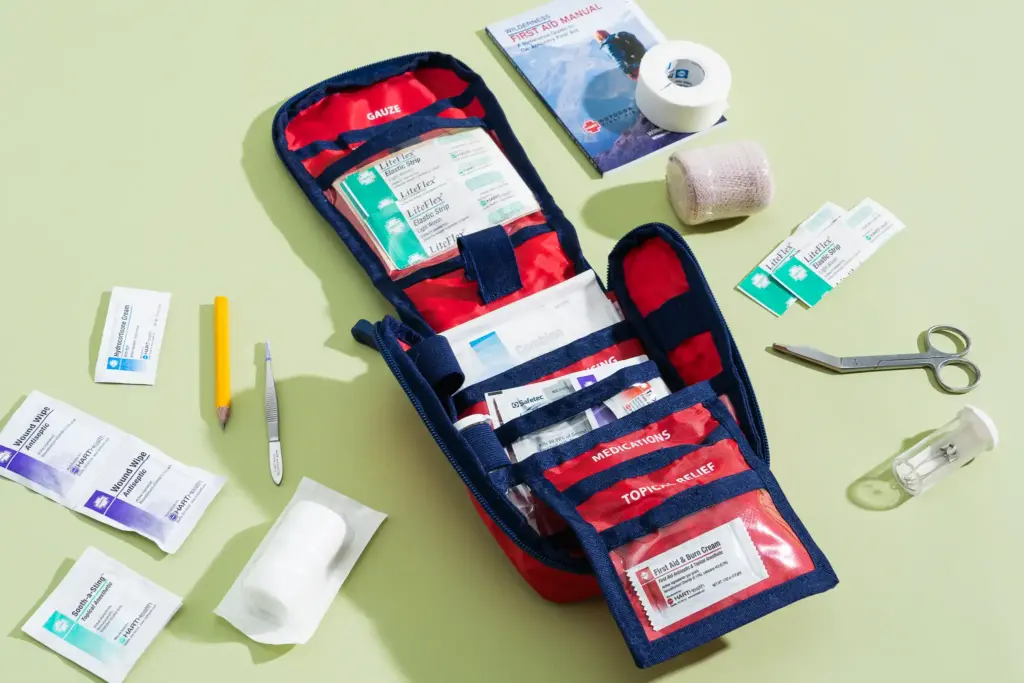
This section is the most underestimated by first-time Himalayan trekkers. Health preparedness is the single greatest factor separating a transformative trek from an emergency evacuation.
Altitude Sickness Prevention Kit
Acute Mountain Sickness (AMS) affects approximately 50% of trekkers at Everest Base Camp altitude. It is caused by ascending too rapidly, not by fitness level. Preparation is the solution:
- Diamox (Acetazolamide) 250 mg — discuss with your doctor before departure as preventative and treatment; not suitable for everyone
- Pulse oximeter — small finger-clip device measuring blood-oxygen saturation; a reading below 85% at altitude is a medical warning
- Ibuprofen or Paracetamol — for altitude-related headaches and fever management
- Dexamethasone — emergency AMS escalation medication; carry only on medical advice; your guide manages deployment
Golden Rule: The most important altitude sickness tool is not medication — it is the rule ‘Climb high, sleep low.’ Never increase sleeping altitude by more than 500 m per day above 3,500 m. Every Hi Nepal Treks itinerary is specifically designed around this principle with built-in acclimatisation days.
First Aid Kit Essentials
- Blister treatment — Compeed hydrocolloid patches or moleskin (non-negotiable; purchase before leaving home)
- Wound care — antiseptic wipes, betadine solution, antibiotic cream such as Neosporin
- Bandages — assorted sizes plus elastic bandage for ankle sprain management
- Oral Rehydration Salts (ORS) — critical for altitude and diarrhoea recovery; carry 10+ sachets minimum
- Water purification — SteriPen UV purifier or iodine tablets; never drink untreated stream water
- Loperamide (Imodium) — traveller’s diarrhoea management; essential in teahouse environments
- Antihistamines — Cetirizine (non-drowsy) for allergic reactions
- Sunscreen — SPF 50+ minimum; UV intensity increases significantly with altitude
- Lip balm with SPF — high-altitude lips crack and bleed rapidly without consistent protection
- Eye drops — dust and high-UV exposure dry eyes significantly on exposed ridges and passes
- Medical tape and scissors
- Digital thermometer
For serious mountain emergencies, Hi Nepal Treks provides helicopter rescue flight coordination. Confirm your travel insurance explicitly covers helicopter evacuation from altitude, costs can reach USD 3,000–6,000 without coverage.
Electronics & Communication
- Smartphone — downloaded offline maps, emergency contacts, camera; store in a dry bag inside your pack
- Power bank — 20,000 mAh minimum (teahouses charge NPR 200–400 per device; power cuts common above Namche Bazaar)
- Universal travel adapter — Nepal uses Type C and Type D sockets
- Camera or action camera — GoPro is ideal for trail footage; protect from dust with a hard case
- Spare memory cards — 2x 128 GB minimum
- Noise-cancelling earphones — long teahouse evenings and acclimatisation rest days are far more enjoyable with them
- Satellite communicator — Garmin inReach Mini recommended for Manaslu Circuit, Kanchenjunga, and all remote routes
- Local SIM card — NTC or Ncell; purchase at Kathmandu or Pokhara airport for affordable data and calls
Charging AlertAbove Namche Bazaar on the Everest trail and above Chomrong on the Annapurna route, reliable electricity becomes scarce. Pre-charge all devices in Kathmandu or Pokhara the evening before you set out, and ensure your power bank is fully charged.
Food, Water & Hygiene
Trail Snacks
Nepal’s teahouses serve three meals per day. However, high-energy snacks are essential for long summit-push mornings when teahouses are hours apart:
- Energy bars — Clif Bars or locally available Tibetan bread with peanut butter
- Nuts and dried fruit mix — excellent calorie-to-weight ratio for high-altitude snacking
- Dark chocolate — rapid energy source and a genuine morale booster above 5,000 m
- Instant oatmeal sachets — ideal for very cold early starts on high passes
- Electrolyte drink tablets — Nuun or High5; rehydration at altitude is critically important and often overlooked
Water Safety
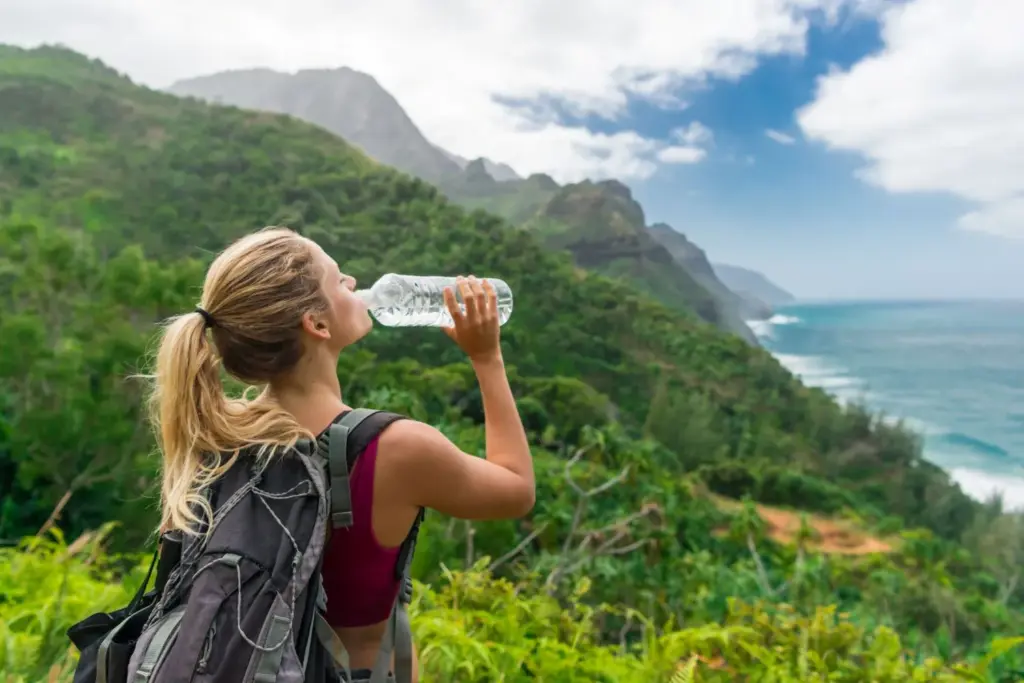
Never drink untreated water on any Nepal trail. Even clear-looking mountain streams can carry Giardia and other serious waterborne pathogens:
- Reusable 1 L water bottle — Nalgene or Hydrapak (BPA-free and trail-durable)
- Collapsible water bottle — 0.5 L extra for long ridge days without water sources
- SteriPen UV purifier or Sawyer Squeeze filter — primary purification; iodine tablets as backup
- Insulated water bottle — prevents water from freezing at altitude during winter and early spring
Hygiene & Toiletries
- Biodegradable soap and shampoo (leave-no-trace principle applies throughout all Nepal trekking areas)
- Hand sanitiser — 2x 100 ml bottles; use before every meal and after every toilet stop on the trail
- Wet wipes / baby wipes — 2 packs minimum (your shower substitute on remote routes without hot water)
- Microfibre towel — quick-drying, ultralight, and compact
- Toilet paper — carry your own supply; teahouses charge per sheet above Namche Bazaar
- Feminine hygiene products — bring a complete supply as these are not reliably available above major trail hubs
Trail-Specific Packing Guides
Everest Base Camp Trek Packing List 2026
The Everest Base Camp Trek (14 days) reaches 5,364 m and is the coldest standard teahouse trek in Nepal. Kit requirements are near-expedition standard.
- Sleeping bag rated to -20 deg C comfort (non-negotiable for the Khumbu region)
- Expedition-weight down jacket — essential from Namche Bazaar onwards
- Heavyweight insulated gloves and balaclava
- Pulse oximeter — monitor blood oxygen daily above Dingboche (4,410 m)
- Diamox prescription — discuss with your GP at least 4 weeks before departure
- Trekking poles with snow baskets
- Gaiters — for snowy sections above Lobuche and on the Kala Patthar (5,644 m) ascent
Annapurna Base Camp Trek Packing List 2026
The Annapurna Base Camp Trek (10–12 days) peaks at 4,130 m in a spectacular glacial amphitheatre surrounded by 8,000 m giants.
- Sleeping bag rated to -10 deg C comfort
- Waterproof jacket and trousers — rain on lower forested sections is frequent year-round
- Gaiters — for the Machapuchare Base Camp snow section
- Merino base layers — 2x minimum
- Camp sandals for warm Chhomrong village evenings
Annapurna Circuit Trek Packing List 2026
The iconic Annapurna Circuit Trek (19 days) crosses Thorong La Pass at 5,416 m. Kit requirements parallel EBC-level.
- All EBC-level cold-weather kit applies above Manang
- Zip-off trousers — essential; sub-tropical valleys one day, high-alpine snow the next
- Extra cash for Manang acclimatisation day activities and Muktinath temple visits
Manaslu Circuit Trek Packing List 2026
The Manaslu Circuit Trek (14 days) is Nepal’s most remote teahouse circuit, crossing Larkya La Pass (5,160 m). Satellite communication is essential here.
- Garmin inReach satellite communicator — strongly recommended for all trekkers on this route
- Full cold-weather kit equivalent to EBC requirements
- Extra trail snacks — teahouse food quality and selection drops significantly above Samdo
Ghorepani Poon Hill & Mardi Himal Packing List
For shorter, lower-altitude trails like Ghorepani Poon Hill and Mardi Himal Trek, your kit is significantly lighter and more flexible:
- Sleeping bag to -5 to -10 deg C is sufficient
- Light down jacket is adequate; no expedition-weight gear required
- Day pack only for Poon Hill — porter not required on this popular short route, Rain jacket — afternoon showers are common year-round in the Annapurna foothills
What NOT to Pack for Nepal Trekking?
Overpacking is one of the most common and costly mistakes on Himalayan trails. Every unnecessary kilogram compounds with every step at altitude. Leave these at home:
- Cotton clothing of any kind — wet cotton causes rapid heat loss and takes hours to dry; genuinely dangerous at altitude
- Hard-shell suitcases or wheeled luggage — impossible to load on porters or pack animals on Himalayan trails
- Expensive jewellery or valuables — leave in your hotel safe in Kathmandu or Pokhara
- Full-size toiletry bottles — always decant into 100 ml travel-size containers
- Hardback books — download Kindle versions; every gram compounds at high altitude
- Drone without CAAN permits — strict no-fly zones exist throughout Nepal’s National Park areas
- More than two pairs of footwear — trekking boots and camp sandals is the optimum combination
- Laptop — a lightweight tablet is sufficient unless you are a digital nomad with specific work requirements
Expert Packing Tips from Our Himalayan Guides
- Weigh your pack before departure. Day pack target: 7–10 kg. If over 10 kg, something must be removed.
- Organise by section using colour-coded stuff sacks or dry bags — one for clothing, one for medical, one for electronics. You will locate items in seconds on the trail.
- Rent what you can in Kathmandu or Pokhara. Sleeping bags (NPR 300–500/day), trekking poles (NPR 200/day), and down jackets are available in Thamel and Lakeside — far cheaper than flying bulky gear internationally.
- Test all electronics the evening before departure. Power bank fully charged, headlamp with fresh batteries, camera memory cards cleared and formatted.
- Label everything with your full name and emergency contact number in case of loss on the trail.
- Keep your passport, permits, and emergency cash in a waterproof neck wallet worn under your base layer at all times. This is the single most important security measure on any Nepal trek.
Ready to turn this packing list into a real adventure? Use our free Nepal Trip Planner or Book your Nepal trek now – we handle permits, certified guides, porters, accommodation, and airport transfers so you focus entirely on the mountains.
Ready to Pack? Let Hi Nepal Treks Handle the Rest
Your Nepal Trek Packing List 2026 is complete. Every item you need for a safe, comfortable, and truly extraordinary Himalayan adventure is right here. Now the only step left is to book the trek itself.
At Hi Nepal Travels & Treks, our certified Pokhara-based guides, with over 20 years of hands-on Himalayan experience, manage every detail: permits, certified TAAN-registered guides, experienced porters, teahouse accommodation, airport transfers, and emergency protocols. Whether this is your first Poon Hill dawn or your long-awaited Everest Base Camp moment, we have a trail and a team ready for you.
Frequently Asked Questions
-
How heavy should my pack be for a Nepal trek?
Your day pack (carried by you each day on the trail) should target 7–10 kg. Your main duffel (carried by a porter) can be up to 20 kg. Hiring a porter not only protects your knees and energy reserves, it directly supports local Himalayan livelihoods and is one of the most meaningful contributions you can make as a visitor.
-
Can I buy trekking gear in Nepal?
Absolutely. Kathmandu’s Thamel district and Pokhara’s Lakeside area are two of the world’s most concentrated trekking gear markets. Quality replica and genuine branded gear is available at most shops. Renting sleeping bags and poles here is significantly cheaper than checking bulky equipment on international flights.
-
Do I need a sleeping bag for teahouse treks?
Yes, always carry your own sleeping bag. Teahouses do provide blankets, but sleeping bags guarantee hygiene, warmth consistency, and comfort, especially above 4,000 m where blanket provision and thickness can be unpredictable.
-
Is a porter compulsory in Nepal?
No, but strongly recommended for treks above 4,000 m. A porter carries your main duffel (up to 20 kg) for approximately USD 20–25 per day including their accommodation and meals. This keeps you significantly lighter, faster, and substantially reduces the risk of knee and ankle injuries on steep ascents and descents.
-
What are the best trekking boots for Nepal?
Waterproof, mid-to-high ankle-support boots are the ideal choice. Trail-proven models include the Salomon X Ultra 4, Scarpa Zodiac Plus GTX, and La Sportiva Ultra Raptor II. Most critically, wear your chosen boots for at least 3–4 weeks before arriving in Nepal. Blisters from unbroken-in boots are the number-one cause of early trek turnarounds.
-
Can I rent trekking gear from Hi Nepal Treks?
Yes. Hi Nepal Travels & Treks can arrange sleeping bag and trekking pole rental for all booked clients. Enquire via our booking page when confirming your trek itinerary.
-
Is travel insurance mandatory for Nepal trekking?
Travel insurance covering trekking above 5,000 m and helicopter evacuation is absolutely essential, not optional. Without it, a single high-altitude helicopter rescue can cost USD 3,000–6,000 entirely out of pocket. Policies from World Nomads, True Traveller, and IMG Global are widely used and recommended among Himalayan trekkers.
-
Where can I find adventure activities in Nepal besides trekking?
Nepal offers world-class adventure activities alongside trekking. Explore paragliding, bungee jumping, rafting, and zipline options via our Nepal Adventure Activities page.