
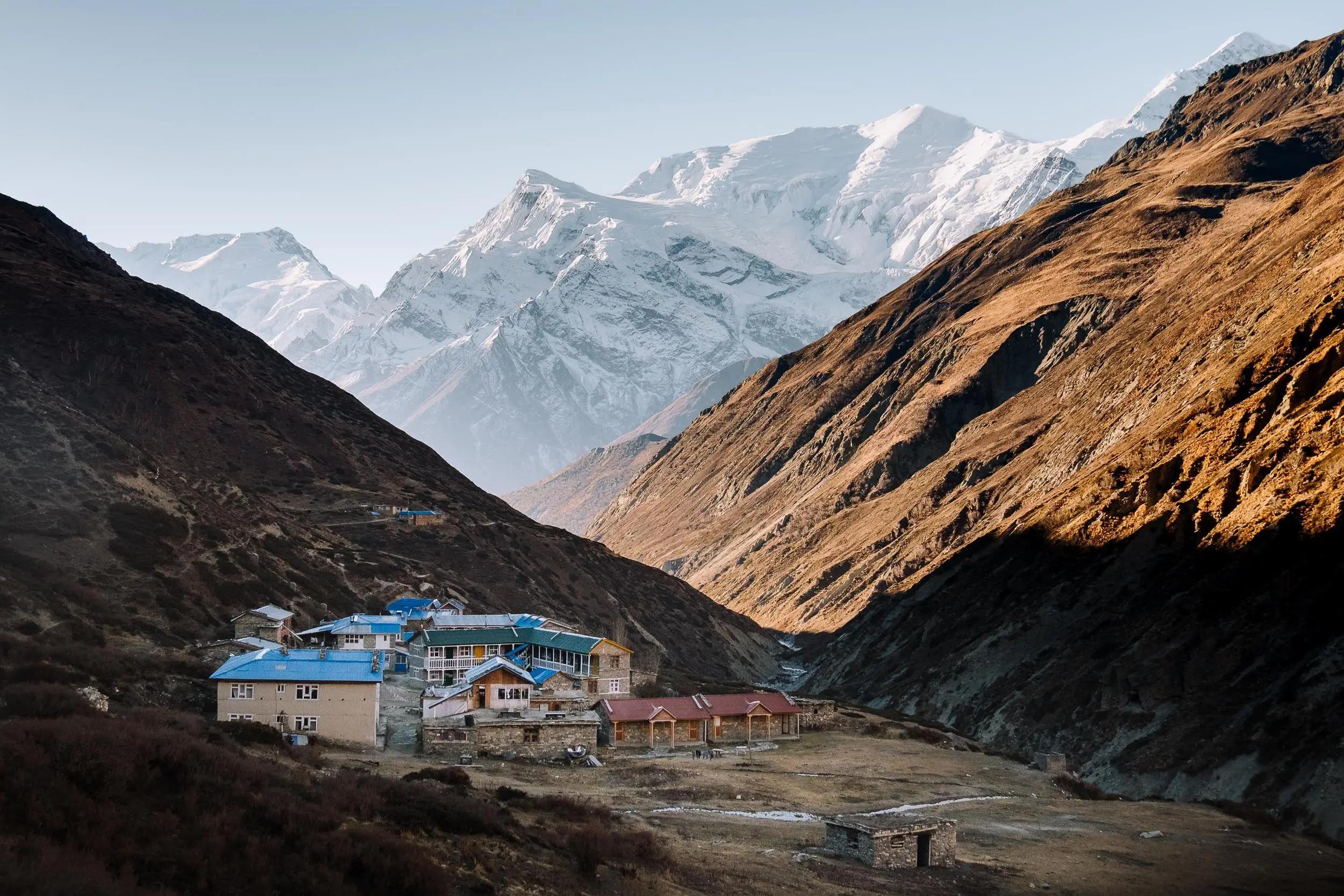
Annapurna Circuit teahouses are family-run lodges that give you a bed, a hot meal and a warm dining room each night, and that is about all they promise. Annapurna Circuit teahouse accommodation varies considerably along the route, with more comfortable facilities in larger villages and simpler rooms at higher elevations.
A lodge in Chame or Manang can have an attached bathroom, a hot shower and a bakery nearby. The lodge at Thorong Phedi has thin walls, cold rooms and shared toilets.
This guide covers rooms, bathrooms, food, power, Wi-Fi and cost, and how each changes with altitude, so you can pack for the real thing instead of a mountain hotel.
What Is a Teahouse Like on the Annapurna Circuit?
A teahouse is a small lodge run by a local family in a village on the trail. You get a simple room, and you eat in a shared dining room with other trekkers. The family usually cooks the meals and lives in the lodge too.
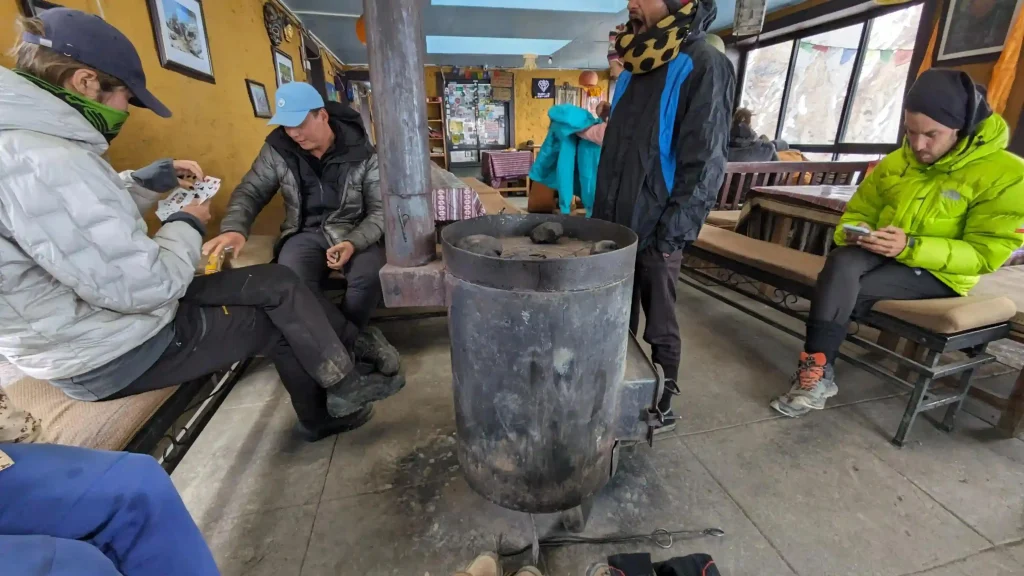
The dining room is the centre of the building. It usually has long tables and a stove in the middle, and it is often the only heated room. Bedrooms are not heated, and the walls between them are often thin plywood.
Teahouses differ from hotels in a few practical ways. Bathrooms are often shared, there is almost no storage, and room rates are low because lodges earn most of their income from food. That is why most expect you to eat dinner and breakfast where you sleep, and many charge more for the room if you don’t.
If you’re planning the route, our Annapurna Circuit Trek guide covers the itinerary, route and important details to know before setting out.
What Are the Rooms and Sleeping Arrangements Like?
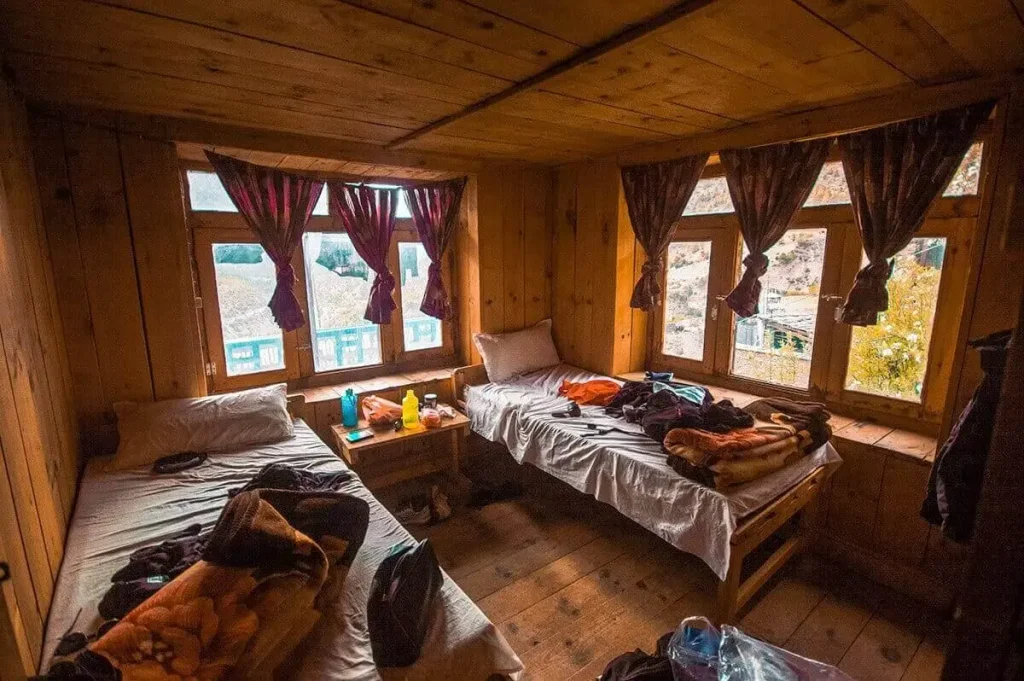
Most rooms are twin rooms with two single wooden beds, a thin mattress, a pillow and blankets. The blankets are rarely enough on cold nights, so most trekkers carry their own sleeping bag.
Private rooms are possible but not guaranteed. In lower villages, when a lodge isn’t full, you can often get a room to yourself, and couples can usually share a twin room. Higher up and in busy periods, you may be asked to share. Dormitory-style rooms are common at High Camp and can be used at Thorong Phedi in peak season.
There is no heating in bedrooms. Above Manang, a room can feel almost as cold as outside. A sleeping bag rated around -10°C is a practical choice for many Annapurna Circuit itineraries, although the warmth you need depends on the season, weather and altitude. Winter trekkers may need a warmer option.
Choosing the right sleeping equipment is particularly important at higher elevations. Our Annapurna Circuit Trek packing list covers other essentials to bring for the journey..
Wear warm layers to bed, keep your phone and batteries inside your sleeping bag, and bring earplugs for the thin walls.
Are Bathrooms and Hot Showers Available?
Bathroom facilities vary along the Annapurna Circuit. Larger villages tend to offer more comfortable options, while higher-altitude teahouses usually have simpler shared facilities.
- Attached bathrooms: Available in some lower villages and larger stops such as Chame and Manang.
- Shared toilets: More common throughout the circuit, particularly at higher elevations.
- Western toilets: More frequently found in lower villages.
- Squat toilets: More common at higher elevations.
Bring your own toilet paper and hand sanitiser, as many higher-altitude lodges do not provide them. It is also worth carrying a small pack of tissues in your daypack.
Hot showers are available at many teahouses for an additional USD 2–5, usually heated by solar power or gas. However, the water may be lukewarm, provided in a bucket or unavailable on cloudy days, particularly at higher elevations. You may not want to shower every day, so wet wipes and a clean base layer can be useful between stops.
Ask about the shower price before using it, and bring flip-flops for shared shower areas. If you use wet wipes, pack them out rather than flushing them down the toilet.
What Food Is Served at Annapurna Circuit Teahouses?
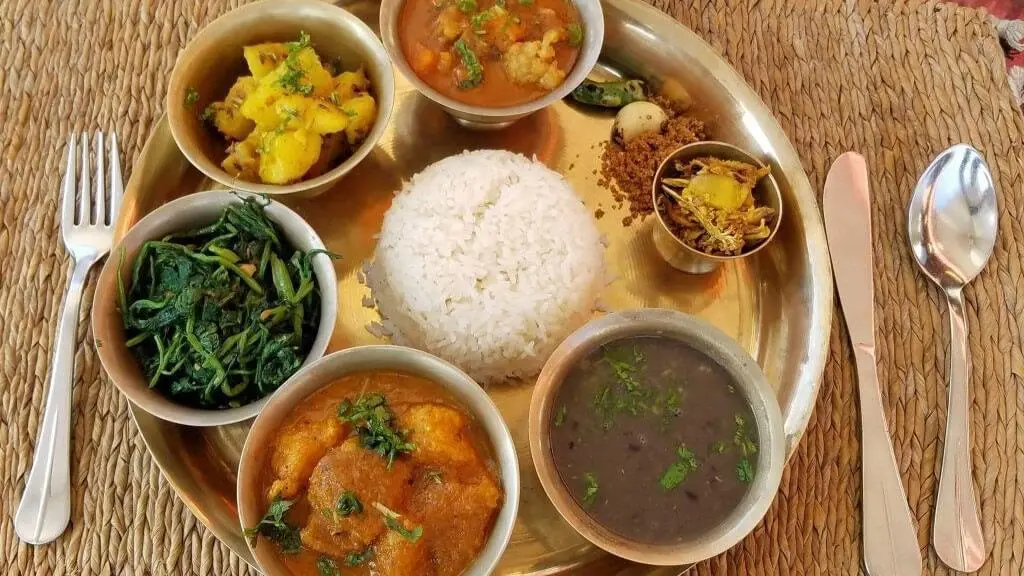
Teahouse menus offer a mix of traditional Nepali meals and familiar international dishes. The options vary by lodge, but you will commonly find:
- Dal bhat: Rice, lentil soup and vegetable curry. It is a popular dinner choice, and many lodges offer refills.
- Momos: Steamed or fried dumplings, usually filled with vegetables.
- Noodles and fried rice: Simple, filling meals available at most stops.
- Pasta and soups: Common options, particularly for trekkers looking for something different from dal bhat.
- Breakfast: Usually includes porridge, eggs, chapati, pancakes or Tibetan bread.
- Local treats: Manang has bakeries, while Marpha is known for its apple pie and apple-based products.
Vegetarian meals are common throughout the route, and food choices can become more limited at higher elevations. Meat dishes may not be available everywhere, particularly at remote teahouses.
Vegan trekkers can usually find suitable meals but should ask about ingredients in advance, as eggs and dairy appear in many dishes.
Bottled water is sold everywhere and costs more as you climb. Many lodges sell boiled water, which is cheaper, and you can treat water yourself.
Prices rise with altitude because food, gas and supplies are carried up by porters, mules or yaks. Everyone eats in the shared dining room, so order dinner when you arrive, and it is usually ready by the time the room fills up.
Do Teahouses Have Electricity, Wi-Fi and Charging Facilities?
Most teahouses along the Annapurna Circuit have electricity, but availability and reliability vary between villages and lodges. Here is what you can generally expect.
- Electricity: Available in most main villages, although power can be less reliable at higher elevations.
- Device charging: Usually costs extra, around USD 1–3 per device. Some lodges only allow charging in the dining room.
- Wi-Fi: Often available through paid vouchers, typically costing USD 2–5. Connections can be slow, especially at higher elevations.
- Mobile networks: NTC and Ncell work in many villages, but coverage becomes less reliable as you climb. Thorong Phedi and High Camp may have little or no signal.
Carry a power bank for sections where electricity is less reliable. Manag is a good place to recharge your phone, camera, and other devices before continuing towards Yak Kharka and Thorong Phedi.
Wi-Fi is generally suitable for basic messaging, but don’t rely on it for video calls or a stable internet connection. Download offline maps and save important contact details before leaving areas with better network coverage.
How Does Teahouse Accommodation Change Along the Annapurna Circuit?
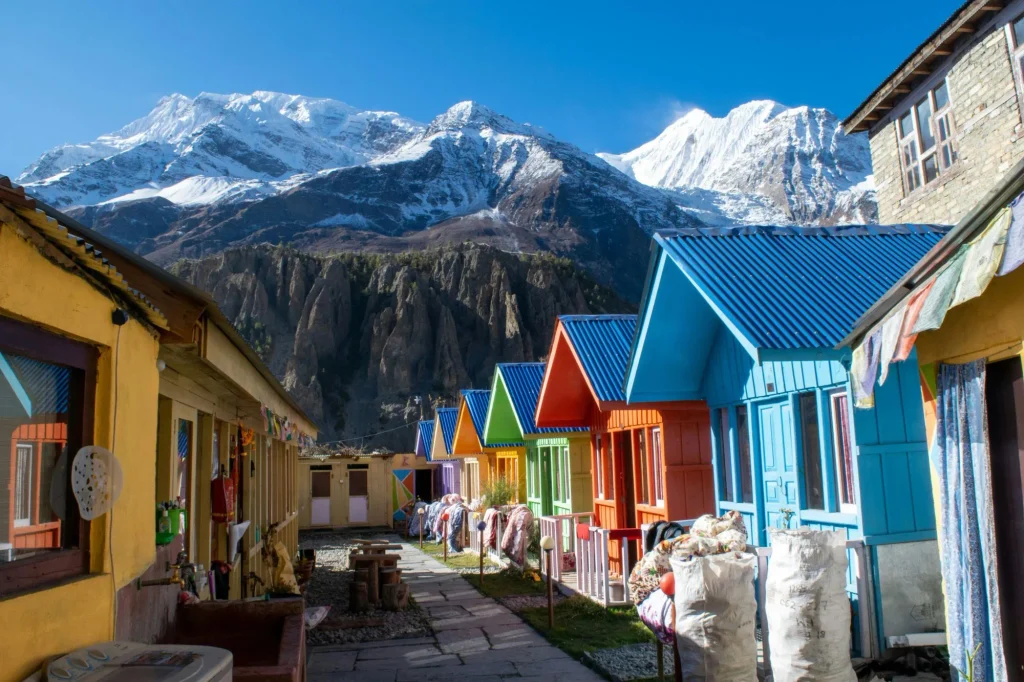
Comfort drops as you climb and improves again after the pass. This table compares three points on the route.
| Lower villages (Besisahar to Chame, about 760–2,700 m) | Manang (3,540 m) | Thorong Phedi (about 4,500 m) | |
| Rooms | More choice; some lodges have larger rooms and attached bathrooms | Widest range on the circuit, from basic to well-equipped | Basic twin or dorm-style rooms; can fill up in busy periods |
| Bathrooms | Western toilets; some attached | Western toilets common; some attached rooms | Shared; some toilets outside |
| Hot showers | Usually available | Available at many lodges | Limited; may be lukewarm or unavailable |
| Warmth | Dining room stove; bedrooms unheated, milder nights | Dining room stove; bedrooms unheated, cold nights | Bedrooms unheated and very cold |
| Power and Wi-Fi | Widely available | Best on the circuit above Chame | Limited power, charging fees, little or no signal |
| Food | Wide menus | Bakeries and bigger menus | Dal bhat and noodles; fewer choices, highest prices |
Lower villages. Chame is a larger village with a good choice of lodges, hot showers and some attached bathrooms. Upper Pisang (about 3,300 m) is quieter, with simpler lodges and mostly shared bathrooms.
Manang and surrounding settlements. Ngawal has fewer lodges than Manang but quiet nights. Manang has the most choice, and most trekkers spend an acclimatisation day here, so it is a good place to rest, wash and charge devices.
Yak Kharka to Thorong Phedi. Yak Kharka (about 4,050 m) has small lodges, shared bathrooms and limited menus, and gets cold once the sun goes down. Thorong Phedi is the most basic night of the trek. High Camp, roughly 350 m higher, is smaller and more basic. Both are crowded before the Thorong La crossing.
Descending towards Muktinath and Jomsom. Muktinath (about 3,800 m) feels more comfortable again, with hot showers, private bathrooms and wider menus, since lodges serve both pilgrims and trekkers. Marpha has clean, cosy lodges. Jomsom (about 2,720 m) has hotels with more reliable Wi-Fi. Tatopani, further down the Kali Gandaki, is known for its hot springs.
How Much Does Teahouse Accommodation Cost?
Teahouse prices vary depending on the location, season and facilities available. As you gain altitude, accommodation and food generally become more expensive because supplies are transported from lower villages. As a rough guide, you can expect to pay:
- Rooms: Around USD 3–6 per night in lower villages, increasing to USD 10–15 or more around Manang and Thorong Phedi. Some lodges offer cheaper or even complimentary rooms when you have dinner and breakfast there.
- Meals: Dal bhat typically costs around USD 4–8 in lower villages and can reach USD 10–12 at Thorong Phedi. Tea and coffee generally cost USD 1–2.
- Hot showers: Around USD 2–5 per shower, depending on the lodge and heating facilities.
- Charging and Wi-Fi: Device charging usually costs USD 1–3, while Wi-Fi access can cost around USD 2–5.
Prices also depend on the season, how busy the lodge is abd what facilities it offers. An attached bathroom, for example may cost more. Pay in Nepali rupees. Lodges generally don’t take cards, and ATMs are unreliable beyond larger towns like Manang and Jomsom, so carry enough cash.
For a broader breakdown of transportation, accommodation, meals, permits and other expenses, see our Annapurna Circuit Trek cost guide.
Do You Need to Book Teahouses in Advance?
Most trekkers walk in and find a room. Most lodges can’t be booked online, though some larger ones take phone bookings.
Spring and autumn are the busiest seasons. In those months, arrive in the early afternoon, especially in smaller villages. Thorong Phedi and High Camp can fill up, so ask your lodge owner or guide to call ahead the night before. In winter and monsoon, rooms are easy to find, but some higher lodges close.
Guided groups don’t need to organise this, because the operator arranges rooms. Independent trekkers should stay flexible, since pace and weather can change where you stop. If you’ve reserved a room and can’t make it, call the owner.
If you’re still deciding when to travel, our guide to the best time to trek the Annapurna Circuit explains the seasonal differences in weather and trekking conditions.
What Should You Bring for a Comfortable Teahouse Stay?
- Sleeping bag and liner: the liner adds warmth and keeps the bag clean.
- Toiletries: a quick-dry towel, toilet paper, hand sanitiser and wet wipes.
- Headlamp: for night trips to the toilet and early starts.
- Power bank: for power cuts and limited sockets.
- Earplugs and an eye mask: for thin walls and early risers.
- Flip-flops: for shared showers.
- Warm layers: dining rooms stay cold until the stove is lit.
- Cash in small rupee notes: it makes paying easier.
What Is It Like Spending an Evening in an Annapurna Circuit Teahouse?
You usually arrive in the middle of the afternoon. You pick a room, drop your pack and order dinner and breakfast together. Then you change into dry layers, because the room will be colder than the dining hall.
After dinner, trekkers often stay around the stove, chatting with others, sharing trail updates and checking the weather for the following day. You meet other trekkers there and swap information about trail conditions and the weather. Your guide will often brief you on the next day.
Leave a bit of time to settle your bill and pack your bag before bed, especially before an early start. Pay the evening before pass day, lay out your clothes, and go to bed early. Expect some noise from other rooms and early starters. By about 9 p.m. most people are in bed.
FAQs
Are Annapurna Circuit teahouses clean?
They are generally tidy but basic, and cleanliness varies by lodge. Lower villages tend to have cleaner facilities. A sleeping bag liner and hand sanitiser help, and a clean kitchen is a good sign for the food.
Do teahouses provide blankets?
Yes, usually. They are often not warm enough above Manang, so bring a sleeping bag.
Can couples get private rooms?
Usually, when the lodge has space. Rooms are twin-bedded, so you get two single beds. In peak season at busy lodges, and in dorm-style rooms at High Camp, rooms may be limited.
Are toilets shared on the Annapurna Circuit?
Mostly. Some lodges in lower villages, Chame and Manang have attached bathrooms, but above Manang toilets are usually shared and often squat style.
Can I charge my phone at teahouses?
Yes, for a small fee, usually in the dining room. Power cuts are common above Manang, so carry a power bank.
Do teahouses accept credit cards?
Generally no. Carry Nepali rupees, because ATMs are unreliable beyond larger towns.
Can I stay in a teahouse without booking in advance?
In most villages, yes. In peak season, arrive early, and ask your guide or lodge owner to call ahead for Thorong Phedi or High Camp.