
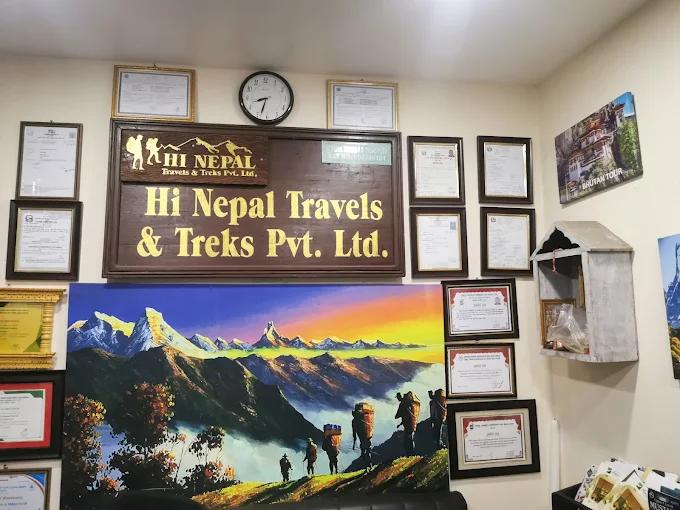
Hi Nepal Travels & Treks is a government-registered, Nepal Tourism Board-licensed trekking agency based in Lakeside, Pokhara, with over 20 years of experience guiding trekkers on the Annapurna Circuit. Every recommendation in this guide comes from firsthand experience on the route, not a desk in a foreign country.
Why the Annapurna Circuit Is One of the World’s Greatest Treks?
The Annapurna Circuit Trek has been consistently voted the best long-distance trek on Earth, and it has earned that title through sheer variety. In a single journey, you cross subtropical forests at 800 meters, alpine meadows at 3,500 meters, a Tibetan-influenced high-altitude desert above 4,000 meters, and stand atop Thorong La Pass at 5,416 meters, higher than Everest Base Camp, with the entire Annapurna and Dhaulagiri ranges laid out before you.
This is not a narrow trail through one mountain. It is a complete circumambulation of the Annapurna Massif, crossing two river valleys, passing through Gurung, Manangi, and Thakali villages, visiting the revered pilgrimage site of Muktinath Temple, and following the world’s deepest gorge, the Kali Gandaki, back down to Pokhara.
The circuit covers roughly 160–230 km of trekking over 14–18 days. There is no other trail in Nepal, and arguably the world, that packs this much geological, cultural, and spiritual diversity into a single route you can complete without technical mountaineering skills.
How to Choose the Best Annapurna Circuit Trek Agency in Nepal?
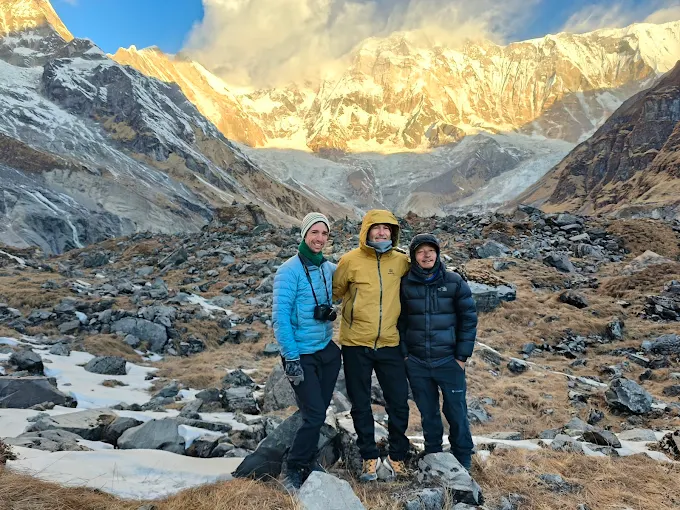
Nepal has hundreds of registered trekking agencies and thousands more unregistered operators. Knowing how to distinguish a trustworthy, professional Annapurna Circuit trek agency from a cut-price operation could make the difference between the adventure of your life and a dangerous, poorly supported experience at altitude.
Here are six things to verify before you book with any agency:
1. Government Registration and Nepal Tourism Board Licence
Every legitimate trekking agency in Nepal must be registered with the Nepal Tourism Board (NTB) and hold a current trekking licence. Ask for the registration number and verify it directly at the NTB. Unregistered operators have no legal accountability and no obligation to look after you when things go wrong at 4,500 metres.
2. Certified, Experienced Guides
Your guide should hold a Nepal Government Trekking Guide Licence, have completed Wilderness First Aid or equivalent training, and have personally trekked the Annapurna Circuit multiple times across different seasons. Ask the agency directly, a reputable one will be proud to share this information and introduce you to your guide by name before departure.
3. Transparent, Itemised Pricing
Vague “all-inclusive” quotes that seem suspiciously cheap almost always hide costs, for permits, porter wages, return transport, accommodation upgrades at altitude, and emergency insurance. A trustworthy agency provides a full itemised breakdown before you pay a deposit, with clear notation of what is and is not included.
4. Verified Reviews Across Independent Platforms
Check Google Reviews, TripAdvisor, and Trustpilot, not only testimonials on the agency’s own website. Look for consistent praise of guides by name, specific detail about how safety was handled, and honest accounts of how the agency responded when problems arose. Recent reviews matter more than volume.
5. Genuine Local Knowledge and Presence
The best Annapurna Circuit trek agencies are from Nepal, not foreign operators reselling treks at marked-up prices. A Pokhara-based agency has relationships with teahouse owners along the route, current knowledge of trail conditions, and the ability to respond quickly to emergencies with local resources. When you call at midnight from Manang, you want someone who answers.
6. Emergency Protocols and Helicopter Evacuation Capability
Ask specifically: what is the procedure if a trekker develops severe altitude sickness above Manang and needs emergency helicopter evacuation? The answer should include 24/7 guide contact, an established relationship with helicopter operators in Kathmandu, and clear guidance on the travel insurance coverage required. Any Annapurna Circuit Trek agency that cannot answer this question clearly is not ready to keep you safe.
Why Hi Nepal Travels & Treks Is Your Best Choice?
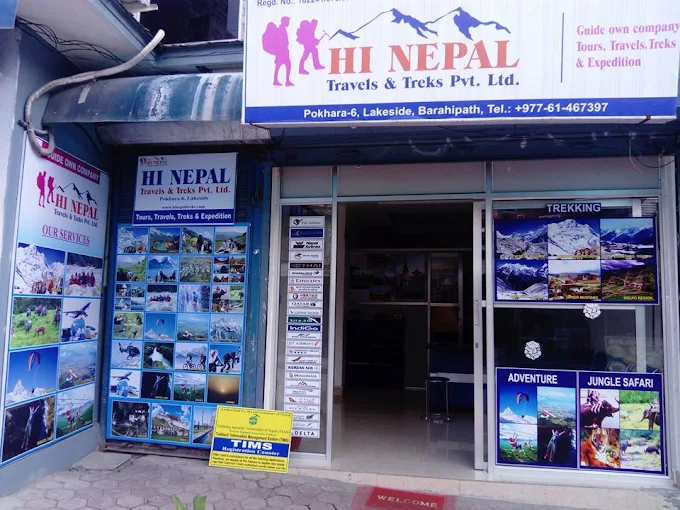
Hi Nepal Travels & Treks Pvt. Ltd. is not a call-centre operation selling Nepal treks from abroad. We are a trekking company from Pokhara, Nepal’s adventure capital and the gateway to the Annapurna region. Our founders trekked these routes before they guided them. Our guides grew up in the villages you will pass through.
What sets Hi Nepal apart:
- 20+ years of operational history: one of the most established agencies in Pokhara
- Nepal Tourism Board certified: fully licensed and legally compliant
- All guides hold Nepal Government Trekking Licences and Wilderness First Aid certification
- Complete permit handling: we process your ACAP and TIMS as part of every package
- Fully customisable itineraries: fixed departures for solo travellers, private treks for groups and families
- No hidden charges: every cost itemised before you book
- Ethical employment: guides and porters paid fair wages above NTB minimum standards
- Sustainable trekking practices: we support the Annapurna Conservation Area and prohibit single-use plastics
- 4.9/5 rating from 250+ verified international trekkers across Google and TripAdvisor
When you book the Annapurna Circuit with Hi Nepal, you are not purchasing a commodity product. You are placing your safety and experience in the hands of people who have crossed Thorong La Pass in every season, who know which teahouses take acclimatization seriously, and who will make the right call, including turning back, when your wellbeing depends on it.
14-Day Annapurna Circuit Trek Itinerary
The following itinerary has been refined over hundreds of completed circuits. It balances proper acclimatization, essential for safely crossing Thorong La at 5,416 m, with enough flexibility for side trips, cultural exploration, and genuine enjoyment. This is not the fastest route; it is the right route.
All treks begin and end in Pokhara. You can also read our dedicated guide to the Annapurna Circuit Trek from Pokhara for full details on transfers and logistics.
Day 1 — Pokhara to Besisahar (Drive, ~4 hours | 760 m)
Private jeep transfer from Pokhara to Besisahar, the official starting point of the Annapurna Circuit. Permit checkpoint on arrival. Overnight in Besisahar. This day is used for final gear checks, permit verification, and a route briefing with your guide.
Day 2 — Besisahar to Jagat (Drive + 4–5 hours trek | 1,300 m)
The Marsyangdi River valley opens up dramatically. First suspension bridges. A short jeep section reduces road-walking and preserves energy for the genuine trail ahead. Villages become increasingly traditional as you move north.
Day 3 — Jagat to Dharapani (5–6 hours | 1,860 m)
The trail enters Manang District. Dharapani marks the junction with the Manaslu Circuit trail. Subtropical forests begin to thin as altitude increases. First views of snow-capped peaks.
Day 4 — Dharapani to Chame (5–6 hours | 2,670 m)
Chame is the administrative headquarters of Manang District. Hot springs are available nearby, strongly recommended for sore legs. The Annapurna II massif (7,937 m) becomes dramatically visible from here.
Day 5 — Chame to Upper Pisang (5–6 hours | 3,300 m)
The trail passes the famous curved rock face of Paungda Danda. Upper Pisang (above the main village) offers superior acclimatisation altitude and extraordinary views of Annapurna II and Pisang Peak (6,091 m). Choose Upper Pisang without hesitation.
Day 6 — Upper Pisang to Manang (5–6 hours | 3,519 m)
We take the high route via Ghyaru (3,670 m) and Ngawal (3,660 m), longer and harder than the valley route but offering sweeping ridge-top views of the entire Annapurna range that most trekkers list as the finest panoramas of the circuit.
Day 7 — Acclimatisation Day in Manang (Half-day hike | 3,519 m)
This rest day is not optional. Proper acclimatization here is the primary determinant of success on Thorong La. Options include a hike to Ice Lake (4,600 m) for extraordinary high-altitude views, a visit to Milarepa Cave, or a walk around Gangapurna Lake. The ACAP office in Manang also holds free daily safety briefings on altitude sickness, we attend these with all clients.
Day 8 — Manang to Yak Kharka (3–4 hours | 4,018 m)
A deliberately short day. Altitude gain is more important than distance at this stage. Yak herder territory begins. The landscape becomes stark, mineral, and beautiful. Rest well; tomorrow matters.
Day 9 — Yak Kharka to Thorong Phedi (3–4 hours | 4,450 m)
Another short, essential day. Thorong Phedi is the last stop before the pass. Early dinner, early bedtime. Your guide will wake you well before dawn. Hydrate aggressively throughout the day.
Day 10 — Thorong La Pass Crossing to Muktinath (7–9 hours | Summit: 5,416 m)
Departure at approximately 04:00 AM. The ascent from 4,450 m to 5,416 m takes 4–5 hours in cold, often windy conditions. The pass itself offers one of the most extraordinary views in the Himalaya, the entire Annapurna range behind you, the Mustang plateau ahead.
The descent to Muktinath (3,800 m) takes a further 2–3 hours. Muktinath Temple is sacred to both Hindus and Buddhists; your guide will share its significance. This is the day the circuit is built around.
Day 11 — Muktinath to Jomsom (5–6 hours | 2,720 m)
The trail descends through the dramatic Kali Gandaki Gorge, the world’s deepest river gorge between Dhaulagiri and Annapurna. A detour to Kagbeni, a medieval, fortress-like village at the edge of restricted Upper Mustang, is highly recommended. The village of Marpha is famous throughout Nepal for its apple brandy and orchards.
Day 12 — Jomsom to Tatopani (Jeep + optional trek | 1,190 m)
Road transport is available from Jomsom to Tatopani, most trekkers take the jeep as the road section is not scenic. Tatopani’s hot spring pools are legendary. Soak in them at length; your legs have earned it.
Day 13 — Tatopani to Ghorepani (6–7 hours | 2,874 m)
A long but rewarding climb through dense rhododendron forests, spectacular in full bloom during March and April. Ghorepani sits at the base of Poon Hill. Optional early morning ascent to Poon Hill (3,210 m) for a sunrise panorama of Dhaulagiri, Annapurna South, Machhapuchhre and Nilgiri (recommended as a side trip; add one morning to your schedule).
Day 14 — Ghorepani to Ghandruk to Nayapul to Pokhara (5–6 hours trek + drive)
The final trekking day descends through the Gurung village of Ghandruk, home to the Gurung Museum and extraordinary views of Annapurna South and Machhapuchhre (Fishtail). Jeep from Nayapul back to Pokhara. Celebration dinner on Lakeside that evening, you have circumnavigated the Annapurna Massif.
Annapurna Circuit Trek Cost: Full Honest Breakdown
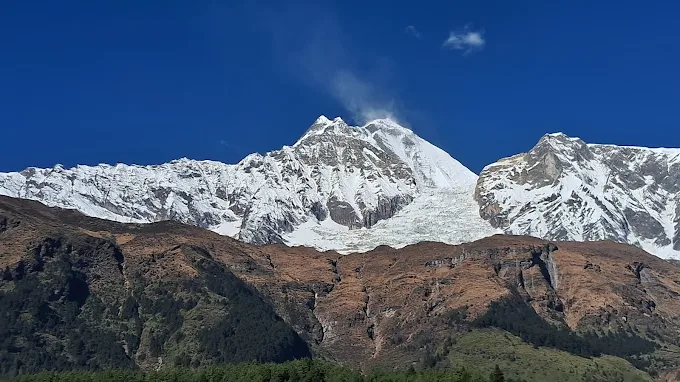
The cost of an Annapurna Circuit Trek in Nepal varies significantly depending on the level of support, the agency’s quality, and what is genuinely included in the package. Below is a complete, honest breakdown of what a guided trek with Hi Nepal Travels & Treks costs, and what drives the difference between agencies.
Hi Nepal’s Fully Guided Package — From USD 1,500 per person
Included in every package:
- Certified English-speaking trekking guide (NTB-licensed, first-aid trained)
- Porter service (1 porter per 2 trekkers; max 20 kg; fairly paid above NTB minimums)
- ACAP permit (NPR 3,000 per person)
- TIMS card (NPR 2,000 per person)
- Teahouse accommodation throughout the trek (twin/double rooms)
- Three meals per day on trek (breakfast, lunch, dinner)
- One night hotel in Pokhara pre-trek and post-trek (3-star, twin sharing)
- Private jeep transfers (Pokhara–Besisahar and return)
- Farewell dinner in Pokhara
- 24/7 guide emergency support, including helicopter evacuation coordination
Not included (budget these separately):
- International airfare to/from Nepal
- Nepal visa (~USD 50, obtainable on arrival at Kathmandu airport)
- Travel insurance (mandatory; must cover helicopter evacuation to 6,000+ m)
- Personal trekking gear (rental available in Pokhara and Kathmandu)
- Personal expenses on trek: hot showers (~USD 2–3), bottled/boiled water, snacks, cold drinks (~USD 8–15/day extra)
- Tips for guide and porter (culturally expected and genuinely appreciated; USD 100–150 total is generous for a 14-day trek)
Total Budget Estimates
| Budget Category | Estimated Total | What It Covers |
|---|---|---|
| Agency package only | From USD 1,500 | Full guided trek as listed above |
| Mid-range total (in Nepal) | USD 2,000–2,500 | Package + Nepal visa + insurance + personal extras |
| Full trip from home | USD 3,000–4,500 | Everything including international return flights |
Required Permits for the Annapurna Circuit Trek

Two official permits are mandatory for every trekker entering the Annapurna region. Neither can be obtained on the trail, both must be secured before departure. Hi Nepal Travels & Treks processes both permits as part of every package.
ACAP Permit — NPR 3,000 (~USD 22)
The Annapurna Conservation Area Project permit is required for all trekkers entering the Annapurna Conservation Area. It is issued by Nepal Tourism Board offices in Pokhara or Kathmandu. This permit directly funds conservation and community development within the ACAP zone.
TIMS Card — NPR 2,000 (~USD 15)
The Trekkers’ Information Management System card is required for all foreign nationals trekking any official Nepal route. It serves as a safety tracking mechanism and is verified at multiple checkpoints along the circuit.
What you need to provide (Hi Nepal collects these from you):
- Valid passport (minimum 6 months remaining validity)
- Two passport-sized photographs
Keep both permits accessible in your daypack, checkpoint officers verify them multiple times along the route. Attempting to trek without valid permits results in on-the-spot fines and, in some cases, removal from the trail.
Note: Permit fees are set annually by the Nepal Tourism Board. Figures above reflect rates as of March 2026. Confirm current rates with Hi Nepal at time of booking.
Best Season for the Annapurna Circuit Trek
Autumn (September–November) — Best Overall, Ideal for First-Timers
Post-monsoon clarity makes autumn the most popular and arguably finest season for the Annapurna Circuit. October is the single best month: stable weather, crystal-clear mountain views, well-supplied teahouses, and perfect temperatures at altitude. The trails are busiest this time of year, but the teahouse infrastructure handles the volume well. Our top recommendation for any first-time trekker.
Spring (March–May) — Rhododendron Season, Excellent Views
Rhododendron forests along the route explode with colour from late March through April, one of the most spectacular floral displays in the Himalaya. Mountain views are nearly as clear as autumn. March can bring late-season snow on Thorong La; April and May are generally excellent. Slightly more variable weather than autumn.
Winter (December–February) — Possible for Experienced Trekkers Only
Very cold above 3,500 m, with temperatures on Thorong La dropping to -20°C or below. The pass can be temporarily closed after heavy snowfall. Teahouses are quieter and cheaper. Only recommended for experienced high-altitude trekkers with full cold-weather equipment and strong fitness.
Monsoon (June–August) — Generally Not Recommended for the Full Circuit
Heavy rainfall affects the lower sections of the route, with leeches, reduced visibility, and slippery trails. The Mustang section (post-pass) lies in a rain shadow and remains relatively dry, experienced trekkers sometimes do a partial circuit in monsoon season. The full circuit is not recommended for most trekkers during this period.
Annapurna Circuit Trek Packing List
Weight management is critical on a 14-day high-altitude trek. Your porter carries a maximum of 20 kg, and every gram counts across 160+ kilometres at altitude. The following list reflects what our guides consistently recommend after hundreds of completed circuits.
Clothing and Layers
- Down jacket (600+ fill power, packable)
- Waterproof shell jacket and trousers
- Mid-layer fleece or softshell
- 3–4 moisture-wicking base layer tops
- 2 pairs thermal long underwear
- 2–3 pairs trekking trousers or leggings
- Warm hat and sun hat
- Balaclava (essential for Thorong La crossing)
- Gloves and inner liner gloves
- 3–4 pairs merino wool trekking socks
- Lightweight camp sandals or flip-flops
- Well broken-in, waterproof trekking boots (do not attempt this in new boots)
Equipment and Gear
- 40–50 L trekking daypack
- Duffel bag for porter (Hi Nepal provides this)
- Sleeping bag rated to -10°C / 14°F
- Trekking poles (strongly recommended for descents)
- Headlamp and spare batteries
- Sunscreen SPF 50+ and UV-protective lip balm
- Sunglasses with UV400 protection (the pass reflection is intense)
- 2 × 1-litre water bottles and water purification tablets
- Personal first-aid kit
- Diamox (acetazolamide) for altitude sickness prevention, consult your doctor before the trek
- Portable power bank for USB charging (limited charging points above Manang)
Documents and Admin
- Passport (valid 6+ months)
- 2 passport-sized photographs (for permits)
- Travel insurance documents (printed and digital copy)
- Emergency contact card
- USD cash (ATMs are unavailable on the trek; carry sufficient cash from Pokhara)
What Not to Bring
- Jeans or cotton clothing (no drying facilities; cotton kills in cold and wet)
- More than 5 days of clothing (laundry service available in Manang and Jomsom)
- Laptop computer
- Excessive toiletries, decant into small containers
- Valuable jewellery
- Single-use plastic bottles (banned in the ACAP conservation area)
Local tip from Hi Nepal: Quality trekking gear, sleeping bags, down jackets, poles, boots, can be rented in Pokhara (Lakeside) and Kathmandu (Thamel) at very reasonable prices. If you are travelling light or only plan one Nepal trek, renting is sensible. Hi Nepal can recommend trusted rental shops and help you assess what to rent versus buy.
Ready to Trek the Annapurna Circuit?
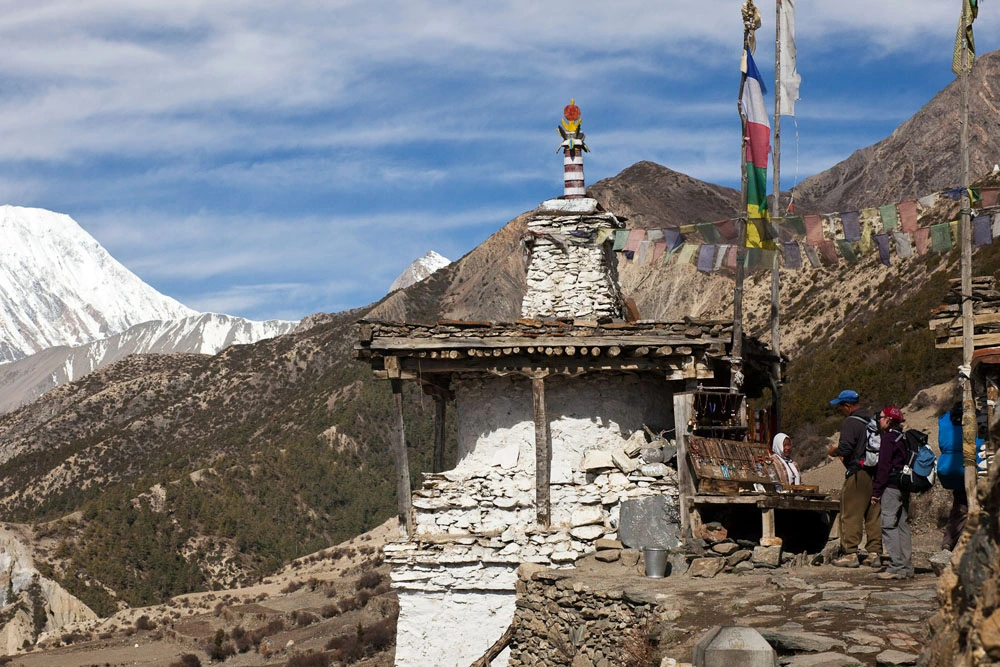
The Annapurna Circuit is not a walk in a park. It is a 14-to-18-day expedition into the high Himalaya, through one of the most extraordinary landscapes on Earth, crossing a 5,416-metre pass in pre-dawn darkness. Done well, with the right pacing, a guide you can trust absolutely, and an Annapurna Circuit Trek agency that knows every step of the route, it becomes one of the most profound experiences of a lifetime.
At Hi Nepal Travels & Treks, we have been doing this for over 20 years. We are based in Pokhara, at the foot of the Annapurna range. Our guides know these mountains intimately. Our pricing is transparent. And when you stand on Thorong La at dawn, watching the sun illuminate the Annapurna Massif, your guide will know exactly how long to let you stand there, before the wind drives you down to Muktinath and warmth.
View our Annapurna Circuit Trek packages → Request a free, no-obligation quote →
Frequently Asked Questions
-
Do I need a guide for the Annapurna Circuit Trek?
A licensed guide is not legally mandatory for the Annapurna Circuit, unlike certain restricted areas of Nepal. However, trekking with an experienced, certified guide dramatically increases safety, enriches cultural understanding, and removes the entire logistical burden of permits, accommodation and meals. At altitude, having a first-aid trained guide who knows the terrain and can coordinate emergency helicopter evacuation is not a luxury, it is the most sensible investment you will make. Hi Nepal provides certified, English-speaking guides on all packages.
-
Is the Annapurna Circuit suitable for beginners?
The circuit is rated moderate to challenging. It is not a technical mountaineering route, there are no ropes, crampons or glacier crossings required. But it covers significant daily distances at high altitude over many consecutive days. Good cardiovascular fitness, the ability to walk 6–8 hours a day, and a willingness to pace yourself are more important than prior trekking experience. Age matters far less than fitness and attitude. Our guides regularly lead first-time trekkers on this route and adjust pace accordingly.
-
What is the difference between the Annapurna Circuit Trek and the Annapurna Base Camp Trek?
The Annapurna Circuit (14–18 days) circumnavigates the entire Annapurna Massif, crossing Thorong La at 5,416 m. It is longer, harder, higher, and extraordinarily diverse, crossing subtropical valleys, high-altitude desert, and two cultural worlds. The Annapurna Base Camp Trek (12–14 days) is a focused trek into the inner Annapurna Sanctuary, reaching 4,130 m at the base of Annapurna I, visually dramatic in a concentrated, theatrical way. The Circuit is the greater adventure; ABC is more accessible and quicker. Hi Nepal offers both. We are happy to advise which suits your time and fitness.
-
What travel insurance do I need for the Annapurna Circuit Trek?
Travel insurance is mandatory for all Hi Nepal treks. Your policy must cover: medical evacuation to a minimum of 6,000 meters altitude, emergency helicopter rescue from altitude, and medical hospitalization costs. Standard holiday insurance is not sufficient. Policies from World Nomads, True Traveller, and Battleface are frequently used by our clients and meet these requirements. Hi Nepal advises on policy minimums but does not sell insurance directly.
-
How physically demanding is the Thorong La Pass crossing?
The crossing is the most demanding day of the circuit. You depart around 04:00 AM from Thorong Phedi (4,450 m), ascend 966 vertical meters to the pass at 5,416 m, then descend approximately 1,600 m to Muktinath, all in 7–9 hours. The ascent is physically demanding but not technically difficult: there is a clear, well-used trail with no rock-climbing or fixed ropes involved. The primary challenge is altitude. Proper acclimatisation in the preceding days, especially the Manang rest day, is the most important preparation. Our guides monitor every trekker for AMS symptoms throughout.
-
Can I customize the itinerary with Hi Nepal?
Yes, completely. Hi Nepal offers fully customizable private treks alongside fixed-departure group packages. Common customizations include adding the Tilicho Lake side trip (+2 days) and adding the Poon Hill sunrise (+1 day). Extending the Manang acclimatization to two days, starting or ending in Kathmandu, incorporating a Kathmandu cultural tour, and adding Nepal adventure activities, paragliding over Pokhara, white-water rafting on the Seti River, or bungee jumping, before or after the trek. Contact Hi Nepal to build an itinerary around your exact schedule and goals.
-
How do I book the Annapurna Circuit Trek with Hi Nepal?
Visit hinepaltreks.com/annapurna-circuit-trek to view current packages, departure dates, and pricing. You can submit a free enquiry directly from the page, and our team will respond within 24 hours with a personalized itinerary and detailed quote. We accept bookings from anywhere in the world and can arrange everything from the moment you land in Nepal.