
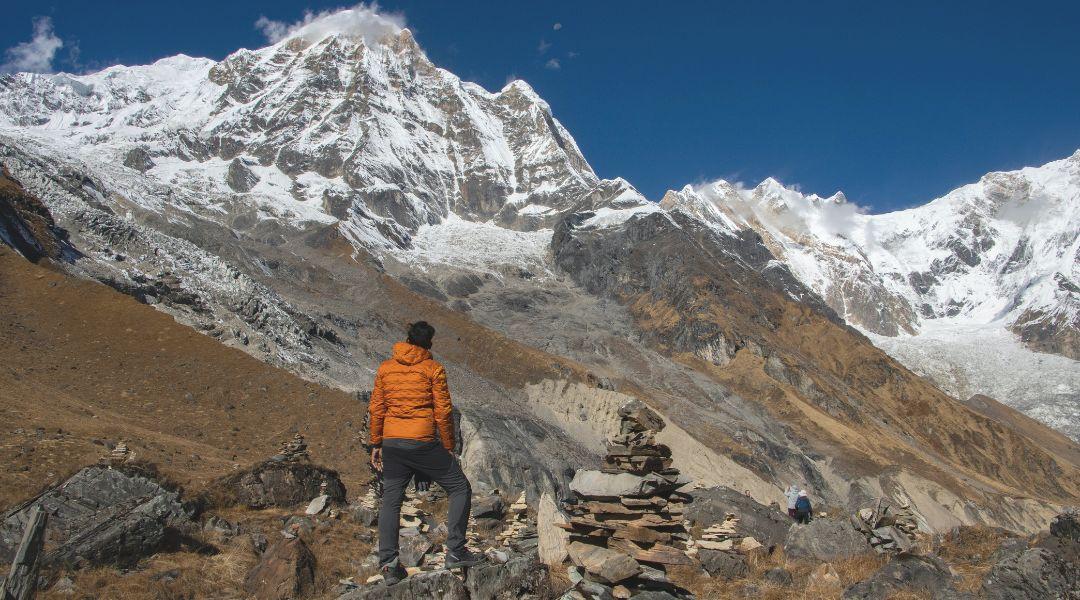
You’ve probably seen those pictures of the Annapurna Circuit, the trail disappearing into a dense rhododendron forest, with mountains waiting somewhere beyond the trees.
You picture yourself somewhere between Chame and Manang, walking at your own pace, stopping whenever you want, with nothing to follow but the trail ahead and the mountain beside you.
Before you book anything, there’s one question that decides how that trip actually looks: can you legally do a solo Annapurna circuit trek in 2026, or does “solo” now mean something different than it used to?
The short answer is that the trail is open to solo travelers, but not to fully independent trekking. Here’s exactly what that means, what documents you’ll need, and how to plan a trip that still feels like yours even with a guide walking beside you.
Current Rules for Solo Trekkers in the Annapurna Region
The Annapurna Circuit sits on Nepal Tourism Board’s restricted-to-independent-trekking list, which means a licensed guide and an agency-issued permit are mandatory for every foreign trekker, solo or not.
This has been the case since 2023 and enforcement at checkpoints from Besisahar through to Muktinath has only gotten tighter through 2026.
Here’s where a lot of first-time researchers get confused: “solo trek” and “solo traveler” are not the same thing.
A solo traveler is someone flying in alone, without friends or a pre-formed group. A fully independent, unguided solo trek, walking the route without a licensed guide or agency registration, is what’s no longer permitted.
But as a solo traveler, you can absolutely travel to Nepal alone and walk the Annapurna Circuit Trek. What you can’t do is skip the guide requirement because you’re confident in your navigation skills.
NTB’s current guidance places the Annapurna Circuit alongside other major routes requiring a licensed guide and registration through an approved agency like Hi Nepal before you’re issued trekking documents.
This isn’t a suggestion buried in fine print, it’s checked at multiple posts along the trail, including Chame, Manang, and the approach to Muktinath.
How Can Solo Travelers Still Experience the Annapurna Circuit?
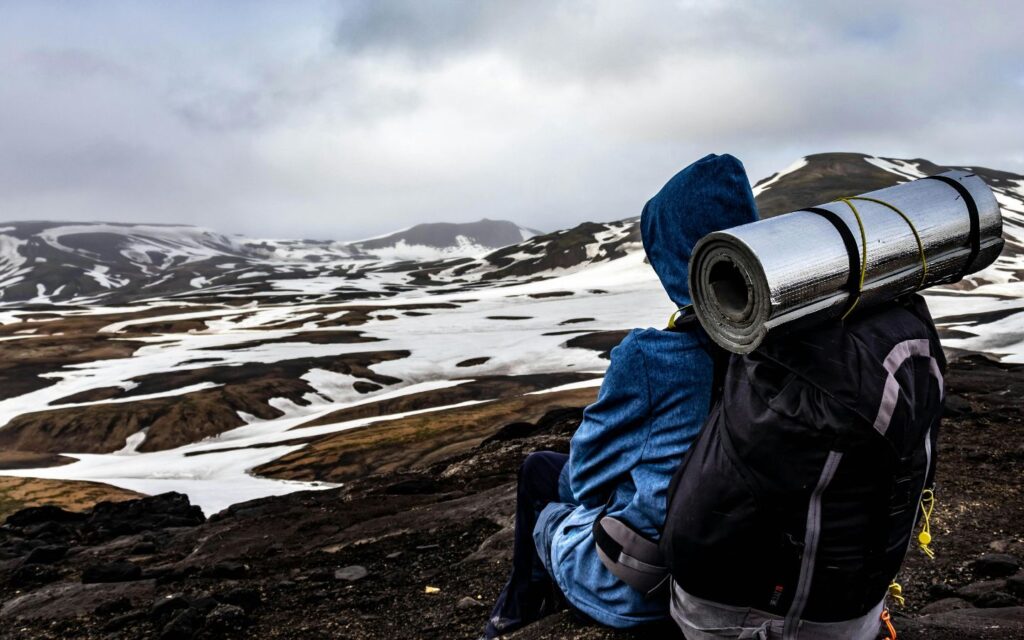
You have more flexibility here than most people assume. The rule affects how you organize the trip, not whether you can go alone.
Option 1: Hire a Private Licensed Guide
This is the closest thing to the old-style independent trek. You book one guide through a registered trekking agency, set your own daily pace, choose your own rest days, and walk the route essentially as a party of two. You lose nothing of the solitude on the trail itself, since a good guide knows when to hang back and let you have your quiet moments with the mountains.
Option 2: Book a Custom Solo Itinerary Through an Agency
Rather than joining a fixed departure, you can ask an agency to build a private, guide-accompanied itinerary around your dates and fitness level. This suits people who want the guide requirement met without adjusting their schedule to match a group.
Option 3: Join a Small Group Trek
Good for first-time trekkers, solo travelers who’d rather have company on long trail days, and anyone watching their budget, since guide and logistics costs get split across several people rather than carried by one. You’ll still get plenty of solo time on the trail; groups rarely walk shoulder to shoulder for eight hours a day.
Option 4: Choose Another Trek?
Be careful with this one. Don’t switch routes just because a different trail sounds easier or seems to have looser rules on paper. If independent trekking without a guide is genuinely your priority, check the current regulation for whatever route you’re considering rather than assuming any Nepal trek still allows fully unrestricted solo trekking. Regulations shift by region and by year, and a route that was guide-optional last season may not be this one.
What Permits and Documents Do You Need for the Annapurna Circuit?
You need two mandatory documents to trek the Annapurna Circuit in 2026: an agency-issued TIMS card and the Annapurna Conservation Area Permit (ACAP), plus your passport and trek-specific paperwork. Both permits are checked at trail checkpoints and neither can be skipped by solo travelers.
TIMS Card
The TIMS (Trekkers’ Information Management System) card logs your route, your dates, and your guide’s license details with the Nepal Tourism Board, so if something goes wrong on the trail, rescue teams know roughly where to look. As of 2026, TIMS for the Annapurna Circuit is issued only through a registered trekking agency, tied to your guide’s credentials. The Blue TIMS card fee runs around NPR 2,000 (roughly $15 USD) per trekker. Your agency handles the paperwork, you’ll just need your passport details and a couple of photos ready.
Annapurna Conservation Area Permit (ACAP)
The ACAP funds conservation work and trail maintenance across the region and is required for every trekker entering the Annapurna Conservation Area, no exceptions for experience level or trek length. It currently costs NPR 3,000 (about $22 to $25 USD) for foreign nationals and NPR 1,000 for SAARC nationals. Children under 10 are exempt. Get it in Kathmandu or Pokhara before you reach Besisahar, since permits bought at trailhead checkpoints typically cost more.
Passport and Trek Documents
Beyond the two permits, carry:
- Your original passport, plus digital and printed copies
- Travel insurance details, specifically your policy number and the emergency contact line
- A written list of emergency contacts back home
- Printed or saved copies of your TIMS and ACAP permit numbers, in case a checkpoint’s internet connection is down and they need to verify manually
Keep all of this in a dry bag or waterproof pouch. Villages past Manang lose power and connectivity often enough that you don’t want to be digging through a phone with 3% battery at a checkpoint.
How to Make a Solo Annapurna Circuit Trek Safer
Even though a fully independent trek isn’t the compliant option right now, there’s a real difference between trekking with a guide passively and trekking with a guide actively, using every safety advantage available to you.
Choose a Licensed Guide
Confirm your guide’s license number directly and check that they’re registered with a recognized agency rather than hired informally on arrival. A licensed guide knows current trail conditions, altitude protocols, and exactly which checkpoints will ask for what.
Don’t Rush the Itinerary
The most common mistake we see solo trekkers make is compressing the schedule to save a few days. Give the route the time it needs, particularly through the Manang to Thorong La stretch.
Plan Acclimatization Properly
Above 3,000 meters, your sleeping elevation shouldn’t climb more than 300 to 500 meters per day. Build in a rest day at Manang before continuing toward the pass. This single decision prevents more early trek-enders than any gear choice you’ll make.
Check Weather Before Crossing Thorong La
Thorong La Pass sits at 5,416 meters, and conditions there can shift fast. Ask your guide and teahouse owners in Thorong Phedi or High Camp about the forecast the night before, and never push through in a whiteout because you’re on a schedule.
Carry Offline Maps and Backup Navigation
Even with a guide, download offline maps of the route before you leave Pokhara. Phone signal thins out badly past Chame, and a backup is worth the five minutes it takes to set up.
Have Travel Insurance With Helicopter Evacuation Coverage
Nepal Tourism Board recommends comprehensive travel insurance for trekking emergencies, and at Annapurna Circuit altitudes this isn’t optional in any practical sense. Confirm your policy covers high-altitude helicopter evacuation up to at least 6,000 meters and medical treatment for altitude-related illness. Standard travel insurance bought for a city trip typically won’t cover this.
Know the Symptoms of Altitude Sickness
Headache, nausea, and disturbed sleep above 3,000 meters are your body’s early warnings, not something to push through. If you want the fuller picture on prevention and response, our guide on high-altitude trekking preparation covers it in more depth than we can fit here.
Can You Do the Annapurna Circuit Without a Porter?
Yes. A porter is optional on the Annapurna Circuit; a licensed guide is the only mandatory hire. A porter typically carries 10 to 15 kilograms of your gear, usually split between two trekkers when traveling in a small group, leaving you with just a light day pack.
Carrying your own full backpack can make sense if you’re already trained for multi-day loads and want to keep costs down, since a porter adds roughly $20 to $25 USD per day to your budget.
That said, a porter earns their fee fast once you’re above 4,000 meters, where every extra kilogram on your back makes altitude harder to manage. Many solo trekkers who skip a porter on the lower, forested sections end up hiring one locally once the trail steepens toward Manang.
Can You Do the Annapurna Circuit as a Solo Female Traveler?
Yes, and it’s a well-traveled route for solo women, both Nepali guides and international trekkers report it as one of the more approachable treks in the country for this. A few practical points worth planning around:
Traveling independently to Nepal is straightforward; Kathmandu and Pokhara both have well-established tourist infrastructure, and most trekking agencies are used to arranging solo bookings for women.
Trekking with a licensed guide is required regardless of gender, and many agencies can match you with a female guide on request if that’s your preference.
Accommodation along the route is teahouse-based, with private rooms available at nearly every stop; lock your door and keep valuables with you overnight as a habit, not a fear response.
Communication is easiest with a local SIM, Ncell coverage is generally strong through the Annapurna region, so you can check in with people back home most evenings.
Emergency planning means sharing your daily itinerary with someone outside the trek and confirming your guide has a working means of contacting rescue services.
Personal safety on the trail itself is rarely an issue given how populated the teahouse route is during main trekking seasons; more of it comes down to standard travel sense than anything specific to the trek. For a deeper dive into route-specific advice, see our full piece on solo female trekking in Nepal.
Solo Annapurna Circuit Trek Cost in 2026
There’s no single fixed number for a solo trek, since guide, food, and accommodation costs shift depending on how you book. Here’s the honest breakdown:
| Cost Item | What It Covers | Typical Range (USD) |
| Licensed guide | Mandatory trail guide, permit registration | $25–$35/day |
| TIMS card | Trekking registration, agency-issued | ~$15 (NPR 2,000) |
| ACAP permit | Annapurna Conservation Area entry | ~$22–25 (NPR 3,000) |
| Accommodation | Teahouse rooms along the route | $5–$15/night |
| Food | Meals during the trek | $20–$30/day |
| Transport | Kathmandu/Pokhara to trailhead and back | $15–$60 depending on mode |
| Insurance | High-altitude and evacuation coverage | Varies by provider, budget separately |
| Porter | Optional | $20–$25/day |
| Emergency reserve | Recommended buffer | $100+ |
Transport and lodge pricing shift with season and fuel costs, so treat these as planning ranges rather than fixed quotes, and confirm current rates with your agency before booking.
Private solo trekking generally costs more per person than joining a small group, simply because guide and vehicle costs aren’t split across multiple trekkers.
If budget is the deciding factor, Option 3 above, a small group, is usually the more economical route into the same trail. For a fuller cost breakdown across trip lengths, our dedicated Annapurna Circuit trek cost guide walks through it route segment by segment.
Frequently Asked Questions
Can I still trek the Annapurna Circuit alone in 2026?
Yes, as a solo traveler with a licensed guide. Fully unguided independent trekking is not permitted on this route.
Do I need a guide for a solo Annapurna trek?
Yes. A licensed guide, booked through a registered agency, is mandatory regardless of your trekking experience.
Is the Annapurna Circuit safe for solo trekkers?
It’s a well-established, teahouse-supported route with checkpoints along the way, and guide accompaniment adds a meaningful safety layer, particularly around Thorong La Pass.
What’s the difference between a solo traveler and a solo trek?
A solo traveler is someone traveling without companions; a solo trek in the old sense meant walking fully unguided. Nepal’s current rules allow the former, not the latter.
Can I hire a freelance guide instead of going through an agency?
Guides need to be licensed and their credentials tied to your TIMS card, so working through a registered agency is the practical path even if the guide themselves is independent.
Is TIMS mandatory for the Annapurna Circuit?
Yes, TIMS is required and issued through your trekking agency alongside your guide’s registration.
Do I need a porter as a solo trekker?
No, a porter is optional. Only the guide requirement is mandatory.
How much does a solo Annapurna Circuit trek cost?
Budget roughly $70 to $120 USD per day covering guide, food, and accommodation, before permits and transport.
Can solo female travelers do this trek safely?
Yes, it’s one of the more approachable routes in Nepal for solo women, with teahouse accommodation and an established trail community.
What permits do I need?
The ACAP permit and a TIMS card, both mandatory, plus your passport and insurance documents.
When is the best time to trek solo?
Spring (March to May) and autumn (September to November) offer the most stable weather for crossing Thorong La Pass.
Can I switch to a different trek if I want to go fully unguided?
Check current regulations for any route before assuming it’s guide-optional; requirements change and most major regions now require a licensed guide.
What happens if I’m caught without a guide at a checkpoint?
You risk being turned back, fined, or told to arrange a guide on the spot before continuing.
Is the TIMS card different for solo trekkers?
Yes, solo trekkers are issued the Blue TIMS card, tied to their guide’s agency registration.
Do I need travel insurance specifically for high altitude?
Yes, standard travel insurance usually doesn’t cover helicopter evacuation above certain altitudes, so confirm this before you go.
Ready to Trek the Annapurna Circuit?
If you’re set on doing this as a solo traveler, we can match you with a licensed guide and build an itinerary around your dates rather than a fixed group schedule. Get in touch with our team and we’ll walk you through routes, permits, and honest cost estimates before you commit to anything.