
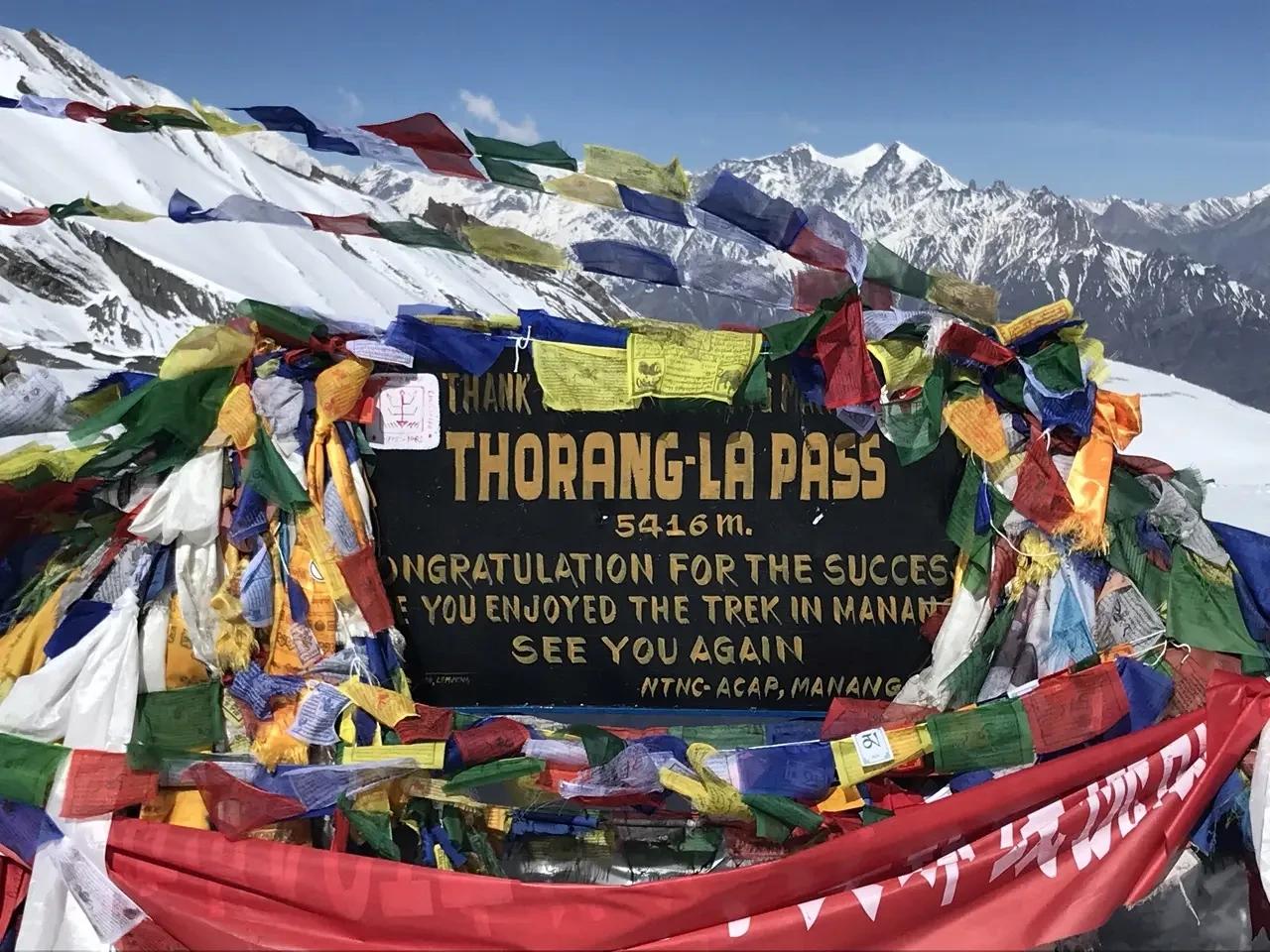
Thorong La Pass is challenging, but it is not a technical climb.
At 5,416 meters (17,769 feet), Thorong La is the highest point of the Annapurna Circuit. The main challenge is not climbing equipment or technical terrain. It is the combination of high altitude, a long summit day, cold conditions, steep sections, and the demanding descent toward Muktinath.
You do not need mountaineering experience to cross Thorong La. However, you do need reasonable trekking fitness, proper acclimatization, an early start, and enough time to adapt to the increasing altitude.
For most reasonably fit trekkers who follow a sensible itinerary, the pass is achievable. The key is not walking fast; it is managing the altitude and keeping enough energy for the entire crossing.
Thorong La Pass Difficulty at a Glance
| Factor | Difficulty |
|---|---|
| Overall difficulty | Challenging |
| Maximum altitude | 5,416 m / 17,769 ft |
| Technical climbing | Not normally required |
| Altitude challenge | Very high |
| Physical fitness | Good trekking fitness recommended |
| Summit day | Long and demanding |
| Terrain | Steep and uneven in sections |
| Weather exposure | High |
| Main concern | Altitude and weather |
The important distinction is that Thorong La is physically demanding without being a technical mountain climb.
Why Is Thorong La Pass Difficult?
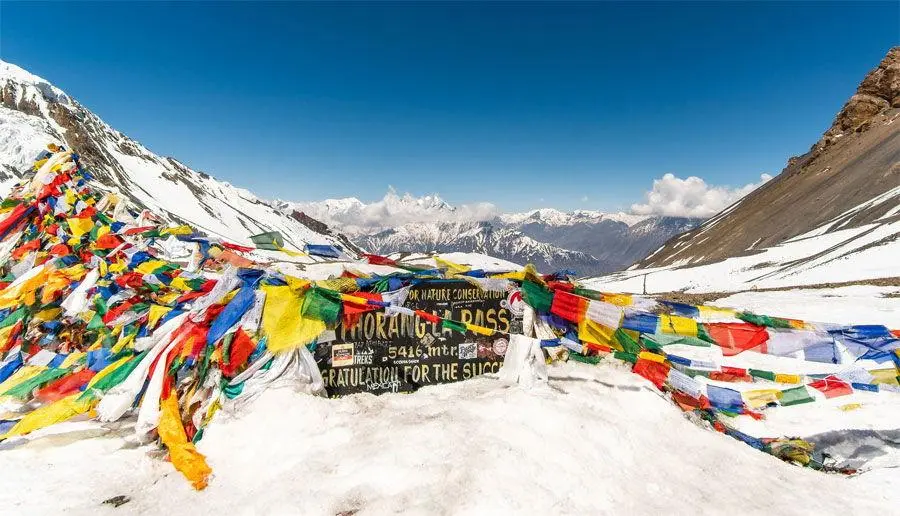
Several factors make the crossing challenging. None of them alone necessarily makes the pass impossible, but they become significant when combined.
1. The altitude is the biggest challenge
Thorong La reaches 5,416 meters, considerably higher than most people normally live and exercise.
As you gain altitude, atmospheric pressure decreases and each breath provides less available oxygen to your body. You may notice that your walking pace becomes slower, your breathing becomes heavier, and even a short uphill section requires more effort.
This is why someone who is very fit at sea level can still struggle at Thorong La.
Fitness helps you handle the physical effort, but it does not eliminate the effects of altitude.
That is why acclimatization is one of the most important parts of the Annapurna Circuit.
2. The summit day is long
Crossing Thorong La is not simply a short walk to a viewpoint.
Trekkers normally start very early from Thorong Phedi or High Camp, climb toward the pass, spend a short time at the summit, and then descend toward Muktinath.
Depending on your starting point, pace, weather, and trail conditions, the entire day can take many hours.
The combination of altitude and duration is what makes the day tiring.
3. The descent is harder than it looks
Reaching the prayer flags at Thorong La can feel like the hardest part is over.
It isn’t.
The descent toward Muktinath involves a substantial loss of elevation, and tired legs can make the downhill sections surprisingly demanding. Your knees and quadriceps take considerable strain, particularly if you are carrying a heavy backpack.
This is one reason trekking poles are useful on summit day.
4. Weather can change quickly
Conditions around high mountain passes can change rapidly.
Cold temperatures, strong winds, snow and reduced visibility can make the crossing considerably more difficult than it would be in stable weather.
A clear morning does not guarantee that conditions will remain unchanged throughout the day.
This is one reason trekkers normally start early and should check current conditions before attempting the pass.
Is Thorong La Pass Harder Than Everest Base Camp?
There is no universal answer because the two treks challenge you differently.
Everest Base Camp reaches a similar elevation, but the experience involves a longer gradual approach to the base camp.
Thorong La, on the other hand, requires you to cross a 5,416-meter pass in a single trekking day.
For this reason, many trekkers find the Thorong La crossing particularly demanding even if they have already completed long-distance hikes.
The simplest comparison is:
| Thorong La Pass | Everest Base Camp | |
|---|---|---|
| Main challenge | High-altitude pass crossing | Sustained high-altitude trekking |
| Highest point | 5,416 m | Around 5,364 m |
| Technical climbing | Not normally required | Not normally required |
| Difficult section | Summit crossing and descent | Overall trek and altitude |
| Experience required | Good preparation and acclimatization | Good preparation and acclimatization |
So, Thorong La can feel harder on the actual summit day, while Everest Base Camp is a longer high-altitude trekking experience.
Can Beginners Cross Thorong La Pass?
Yes, but “beginner” does not mean unprepared.
You do not need previous mountaineering experience or technical climbing skills. However, someone who has never done a multi-day trek should prepare seriously before attempting the Annapurna Circuit.
A beginner is more likely to manage the crossing if they can:
- Walk for several hours on consecutive days
- Handle sustained uphill walking
- Maintain a slow and steady pace
- Carry a small daypack comfortably
- Follow an acclimatization schedule
- Recognize and report altitude-related symptoms
- Stay patient when progress becomes slow
Previous trekking experience is helpful, but altitude acclimatization and physical preparation matter more than simply having a long list of previous treks.
If you are completely new to high-altitude trekking, choosing an itinerary that allows adequate acclimatization is particularly important.
How Fit Do You Need to Be for Thorong La?

You do not need to be an athlete.
What you need is trekking endurance.
The most useful forms of preparation are:
Cardiovascular endurance
Walking uphill, hiking, cycling, stair climbing and incline treadmill sessions can help improve your ability to sustain effort.
Leg strength
Squats, lunges and step-ups can prepare your legs for both the climb and the long descent.
Uphill and downhill training
Don’t train only on flat roads. Thorong La involves elevation gain and a substantial descent, so your preparation should include both.
Walking for several hours
Try to build up your ability to stay active for extended periods. Your body needs to become comfortable with prolonged walking rather than short bursts of intense exercise.
Ideally, begin preparing 8–12 weeks before the trek, particularly if you are not already active.
How Important Is Acclimatization Before Thorong La?
Extremely important.
The body needs time to adapt as you gain elevation. You should not treat Thorong La as a challenge that can be overcome simply through fitness.
The Annapurna Circuit naturally provides a gradual increase in altitude, and Manang is an important acclimatization point before the higher sections of the route.
A sensible itinerary should allow your body time to adjust rather than rushing through the lower and middle sections of the circuit.
Before crossing Thorong La:
- Follow a gradual ascent
- Take planned acclimatization time
- Walk at a comfortable pace
- Stay hydrated
- Eat regularly
- Avoid alcohol during the high-altitude section
- Tell your guide or trekking partner if you feel unwell
Most importantly, do not continue ascending if symptoms of altitude illness are becoming worse.
Severe headache, repeated vomiting, confusion, loss of coordination, or difficulty breathing at rest should be treated as warning signs requiring immediate attention and descent.
What Does Crossing Thorong La Actually Feel Like?

The experience changes throughout the day.
Early morning
You will normally leave before sunrise, when the temperature is extremely cold. The first part of the climb can feel slow because your body is still waking up and the altitude is already significant.
During the ascent
The trail gradually becomes more demanding. You may find yourself taking shorter steps and more frequent breaks.
This is normal.
The goal is not to reach the pass as quickly as possible. A steady pace that you can maintain for hours is much more useful.
Near the pass
The final section can feel mentally demanding. The altitude is high, the air is cold, and the surrounding terrain can make the summit appear farther away than expected.
Then the prayer flags and Thorong La sign eventually come into view.
At the summit
You will have reached 5,416 meters.
Most trekkers stop briefly to take photographs, enjoy the views and appreciate the achievement before beginning the descent.
Don’t stay unnecessarily long if conditions are cold or windy.
The descent
The trail drops toward Muktinath, and the change in landscape becomes dramatic as you move from the Manang side toward the drier Mustang region.
The descent may feel easier on your breathing, but your legs can become increasingly tired.
How Long Does It Take to Cross Thorong La?
The exact duration depends on where you start, your pace, weather and trail conditions.
A typical summit day can take around 7–10 hours or more when the ascent, pass crossing and descent are considered together.
A simplified day might look like:
Early morning: Leave Thorong Phedi or High Camp
↓
Morning: Climb toward Thorong La
↓
Morning: Reach the 5,416 m pass
↓
Late morning: Begin descent
↓
Afternoon: Continue toward Muktinath
The important point is that crossing Thorong La is an entire trekking day, not simply a short climb to the highest point.
Thorong Phedi or High Camp: Which Makes the Crossing Easier?
Where you spend the night before crossing can affect the difficulty of your summit day.
| Thorong Phedi | High Camp | |
|---|---|---|
| Altitude | Lower | Higher |
| Summit-day distance | Longer | Shorter |
| Sleep at altitude | Generally easier | More difficult |
| Time spent at very high altitude | Lower | Higher |
| Main advantage | Better night’s sleep and lower sleeping altitude | Shorter summit morning |
High Camp reduces the distance you need to walk before reaching Thorong La, but it also means sleeping at a higher elevation.
For many trekkers, Thorong Phedi is the more conservative option, while High Camp can be considered depending on itinerary, conditions, accommodation availability and how well you are acclimatizing.
This decision should not be based only on wanting a shorter summit day.
What Is the Best Time to Cross Thorong La?
The main trekking seasons are generally spring and autumn, when conditions are more favorable.
Spring: March–May
Spring brings generally favorable trekking conditions, warmer temperatures than winter and clearer conditions during many periods.
Autumn: September–November
Autumn is traditionally one of the most popular periods for trekking in the Annapurna region, with generally stable weather and good mountain visibility.
For a detailed seasonal breakdown, see our guide to the best time to trek the Annapurna Circuit.
Winter and monsoon
Winter can bring heavy snow and difficult pass conditions, while the monsoon period can create wet trails, landslides and difficult conditions on parts of the Annapurna Circuit.
The actual condition of Thorong La should always be checked before attempting the crossing.
What Should You Pack for Thorong La Summit Day?
You do not need to carry your entire trekking kit with you during the crossing. Keep your summit-day daypack practical.
Clothing
- Warm down or insulated jacket
- Thermal base layers
- Fleece or warm mid-layer
- Windproof and waterproof outer layer
- Warm gloves
- Hat or beanie
- Warm trekking socks
- Neck gaiter or buff
Trekking equipment
- Trekking poles
- Headlamp
- Sunglasses
- Sunscreen
- Water bottle or hydration system
- Small daypack
Personal essentials
- Snacks
- Basic first-aid supplies
- Personal medication
- Rehydration supplies
- Passport and necessary documents
If you take medication for altitude-related concerns, discuss it with a qualified medical professional before your trek rather than self-prescribing.
7 Mistakes That Can Make Thorong La Much Harder
1. Rushing the itinerary
Trying to save a day by reducing acclimatization can create a much bigger problem later.
2. Walking too quickly
A fast start can leave you exhausted before reaching the highest section.
3. Ignoring altitude symptoms
Don’t assume a headache or nausea will automatically disappear if you keep walking.
4. Starting too late
An early start provides more time to complete the crossing and reduces your exposure to later-day weather changes.
5. Underestimating the descent
Reaching the pass is only part of the summit day.
6. Carrying too much
A heavy backpack adds unnecessary strain during a long high-altitude day.
7. Treating the pass like a competition
There is no prize for reaching Thorong La first.
Slow and steady is the better strategy.
Is Thorong La Pass Worth the Difficulty?
For many trekkers, yes.
The crossing brings together several experiences that make the Annapurna Circuit distinctive: high-altitude trekking, changing landscapes, mountain villages and the dramatic transition from Manang toward Mustang.
The reward is not only standing at 5,416 meters.
You experience the landscape changing from the greener valleys on the eastern side of the circuit to the dry, high-altitude terrain around Mustang. After crossing the pass, the descent eventually brings you toward Muktinath, an important pilgrimage destination.
The difficulty is real, but that is also part of what makes the crossing memorable.
Final Verdict: How Difficult Is Thorong La Pass?
Thorong La Pass is challenging, primarily because of altitude rather than technical climbing.
You don’t need ropes, climbing equipment or advanced mountaineering skills. But you do need to take the altitude seriously.
The biggest factors are:
- 5,416 m elevation
- A long summit day
- Steep uphill and downhill sections
- Cold and changing weather
- Risk of altitude illness
- Physical fatigue
If you are reasonably fit, properly acclimatized and prepared for a long day, Thorong La is an achievable goal for many trekkers.
The best approach is simple: prepare well, ascend gradually, start early, walk at a sustainable pace and never ignore serious altitude symptoms.
If you’re planning the full crossing, see our Annapurna Circuit Trek guide for the complete route, itinerary and preparation details.
FAQs
How difficult is Thorong La Pass?
Thorong La Pass is challenging, mainly because of its 5,416 m altitude, long summit day and steep descent. It is not normally a technical climb, so mountaineering skills are not required.
Can beginners cross Thorong La Pass?
Yes. Beginners with reasonable fitness can cross Thorong La if they prepare properly and follow an itinerary with adequate acclimatization. Previous high-altitude trekking experience is helpful but not essential.
Is Thorong La harder than Everest Base Camp?
They present different challenges. Thorong La can feel harder on the summit day because you cross a 5,416 m pass and descend toward Muktinath in the same day. Everest Base Camp involves a longer gradual high-altitude trekking experience.
How high is Thorong La Pass?
Thorong La Pass is 5,416 meters (17,769 feet) above sea level and is the highest point of the Annapurna Circuit.
How long does it take to cross Thorong La?
The complete crossing from the eastern side toward Muktinath commonly takes around 7–10 hours or more, depending on your starting point, pace, weather and trail conditions.
Do you need technical climbing experience?
No. Thorong La is a trekking pass rather than a technical mountaineering route. However, high-altitude trekking experience, good preparation and proper acclimatization are valuable.
What is the biggest danger at Thorong La?
The biggest concerns are altitude illness and rapidly changing mountain weather. Proper acclimatization, conservative pacing and responding appropriately to symptoms are essential.