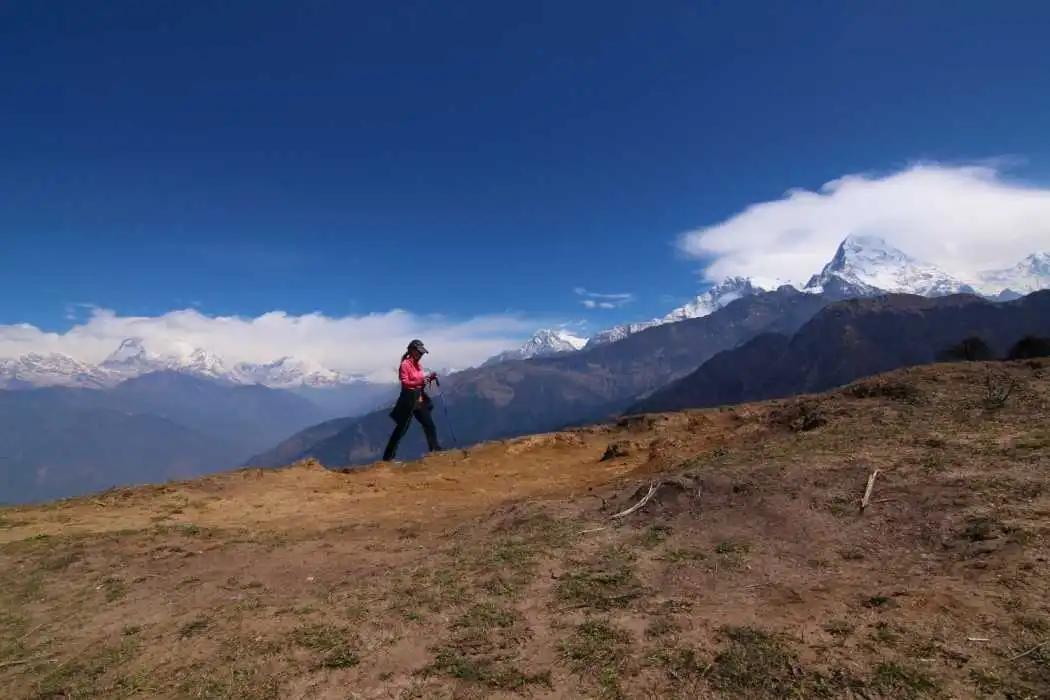
Few questions create more confusion among travelers heading to the Himalaya than this one: “Can I still trek alone in Nepal?” The Solo Trekking in Nepal 2026: Where You Can & Can’t Go (New Rules)
Can you trek alone in Nepal in 2026? Yes, but solo trekking and independent trekking are not the same thing.
You can travel as a solo client, have your own itinerary and trek without joining a group. However, many of Nepal’s major trekking routes require foreign trekkers to travel with a licensed guide.
The rules also differ for restricted areas such as Manaslu, Upper Mustang, Tsum Valley and Dolpo. Recent changes have made it possible for a single traveller to obtain permits for some restricted areas, but the guide and agency requirements still apply.
Here’s what solo trekkers need to know before planning a trip to Nepal in 2026.
Solo Trekking vs. Independent Trekking: The Crucial Distinction
Solo trekking means travelling as a single trekker rather than as part of a group. You can have your own itinerary, choose your travel dates and trek with a guide assigned specifically to you.
Independent trekking means trekking without a guide or agency.
This distinction matters because Nepal has restricted independent trekking on many major trekking routes. A solo traveller can still trek these routes, but they generally need to arrange a licensed guide through a registered trekking agency.
So, saying that “solo trekking is banned in Nepal” is misleading.
The restriction is primarily about travelling independently without the required guide, not about travelling as a single person.
The “No-Go” Independent Zones
Foreign trekkers cannot simply arrive in Nepal and independently walk every major trekking route without a guide.
Routes commonly subject to the mandatory-guide requirement include:
- Everest Base Camp
- Annapurna Circuit
- Annapurna Base Camp
- Langtang Valley
- Ghorepani Poon Hill
- Mardi Himal
- Other designated trekking routes where the guide requirement applies
The exact permit and guide requirements can vary according to the route, protected area and current regulations, so check the rules before starting your trek.
For example, if you’re considering the two most popular Himalayan regions, you can compare the Annapurna vs. Everest Base Camp experience before deciding.
The practical takeaway is simple: you can travel alone, but that does not necessarily mean you can trek without a guide.
The 2026 Restricted Area Breakthrough
Restricted trekking areas have traditionally had an additional barrier for solo travellers: some permits required a minimum of two trekkers.
The current 2026 rules have opened the possibility for a single traveller to obtain a restricted-area permit with the required licensed guide and agency arrangements for applicable routes.
This is particularly relevant to destinations such as:
The important distinction is that this does not mean these areas have become open to independent solo trekking.
You can travel as one trekker, but the restricted-area permit still needs to be arranged through the appropriate registered agency, and the applicable guide requirement remains.
For someone who doesn’t want to find another traveller just to meet a minimum group requirement, this makes planning a solo trip considerably easier.
How E-TIMS Works for Solo Trekkers
The Electronic Trekkers’ Information Management System (E-TIMS) is part of Nepal’s trekker registration system.
For routes where E-TIMS is required, solo trekkers need to complete the registration through the appropriate registered trekking agency.
The process generally involves providing information such as:
- Passport details
- Trekking route
- Travel dates
- Emergency contact information
- Guide and agency details
Depending on your destination, you may also need additional permits.
For example, a trek in the Annapurna region can require an Annapurna Conservation Area Permit (ACAP), while Everest routes involve the relevant national park and local entry requirements. Restricted areas require their specific permits as well.
Mandatory Insurance and Heli-Evacuation
Travel insurance is particularly important for high-altitude trekking.
Before leaving, check that your policy covers:
- The maximum altitude of your trek
- Trekking or hiking at that altitude
- Emergency medical treatment
- Helicopter evacuation
- Trip cancellation or interruption, where relevant
Don’t assume that a standard travel insurance policy automatically covers high-altitude trekking. Check the actual terms and altitude limit before purchasing.
Solo Trekking Cost Comparison: Restricted vs. Open Routes
Travelling alone does not automatically mean paying for an entire group.
Your total cost depends on the route, guide, permits, accommodation, transportation and number of trekking days.
| Route | Guide Required? | Can You Trek as a Solo Client? |
|---|---|---|
| Everest Base Camp | Yes | Yes |
| Annapurna Circuit | Yes | Yes |
| Annapurna Base Camp | Yes | Yes |
| Langtang Valley | Yes | Yes |
| Manaslu Circuit | Yes | Yes, with applicable restricted-area permit |
| Upper Mustang | Yes | Yes, with applicable restricted-area permit |
| Tsum Valley | Yes | Yes, with applicable restricted-area permit |
| Dolpo | Yes | Yes, with applicable restricted-area permit |
The biggest cost difference usually comes from the route itself.
Restricted areas can involve additional permit fees and more expensive logistics. Open trekking routes may have fewer permit requirements, but a solo traveller still needs to account for the cost of a private guide rather than splitting that cost among a larger group.
Why Solo Trekking with a Guide Is Better Than It Sounds
For travellers who originally wanted to trek alone, hiring a guide can feel like losing some of the freedom of independent travel.
In practice, you can still have a private itinerary and travel at your own pace.
A guide can take care of practical details such as:
- Route navigation
- Accommodation arrangements
- Local communication
- Permit and checkpoint requirements
- Weather and trail information
- Altitude monitoring
- Emergency coordination
You also have someone familiar with the local area if your plans change.
The key is to communicate your expectations before the trek. If you prefer slower mornings, additional rest days or a particular walking pace, discuss those details with your agency and guide before departure.
A Quick Pre-Departure Checklist for Solo Trekkers
Before travelling to Nepal for a solo trek, check these points:
- Confirm the route requirements: Find out whether your trek requires a guide, E-TIMS or special permits.
- Book your guide: Use a registered trekking agency for routes where a guide is mandatory.
- Check your insurance: Make sure high-altitude trekking and helicopter evacuation are covered.
- Prepare your documents: Keep your passport, insurance information and permit details accessible.
- Check the altitude: Understand the highest point of your trek and plan enough time for acclimatization.
- Pack appropriately: Your equipment should match the season, altitude and length of the trek.
The Bottom Line for 2026
Solo trekking in Nepal is still possible in 2026, but solo does not mean unguided.
On many popular trekking routes, foreign travellers need to trek with a licensed guide. In restricted areas, additional permits and agency arrangements apply.
The important change for solo travellers is that applicable restricted-area rules now allow a single traveller to obtain a permit with the required guide and agency support, removing the need to find another trekker simply to meet the previous minimum-group requirement.
So if you want the independence of travelling alone, you don’t necessarily have to give that up. You just need to plan around Nepal’s current trekking regulations.
Plan Your Solo Adventure with Hi Nepal Treks
If you’re planning a solo trek in Nepal, Hi Nepal Treks can arrange the guide, permits, E-TIMS registration and other logistics required for your route.
Tell the agency your preferred destination, dates and trekking style, and confirm the current permit and guide requirements before booking.
Frequently Asked Questions
Can I trek solo in Nepal in 2026?
Yes. You can travel as a solo trekker, but many major trekking routes require foreign trekkers to be accompanied by a licensed guide. Solo trekking and independent, unguided trekking are different.
Is independent trekking without a guide banned in Nepal?
Independent trekking without a guide is restricted on many major trekking routes. The exact requirements depend on the route and current regulations, so check the rules for your specific trek before travelling.
Can a solo traveler trek the Manaslu Circuit in 2026?
Yes, a solo traveller can plan the Manaslu Circuit with the required restricted-area permit, licensed guide and registered trekking agency arrangements.
Do solo trekkers need an E-TIMS card in Nepal?
E-TIMS requirements depend on the trekking route and current regulations. Where E-TIMS is required, solo trekkers must arrange the registration through the appropriate registered agency.
Is travel insurance mandatory for solo trekking in Nepal?
You should have travel insurance that specifically covers your trekking altitude and emergency helicopter evacuation. Check the policy terms carefully before your trek.
Can I trek to Everest Base Camp without a guide?
Foreign trekkers should not plan to trek to Everest Base Camp independently without a licensed guide. The current rules require a guide on the route.
Which restricted areas can solo trekkers visit in Nepal?
Applicable 2026 rules allow solo clients to arrange trips to restricted areas such as Manaslu, Upper Mustang, Tsum Valley and Dolpo with the required permits, guide and agency support.
How much does solo trekking in Nepal cost?
There is no single price for solo trekking. The total depends on your route, number of days, guide, permits, accommodation, transportation and other trip expenses. Restricted-area treks generally involve additional permit costs.
Is solo trekking in Nepal safe?
A guided solo trek gives you the independence of travelling as a single client while still having local support for navigation, altitude concerns, logistics and emergencies.
How do I book a solo trekking package in Nepal?
Contact a registered trekking agency with your preferred destination, dates and approximate trek duration. The agency can confirm the current requirements and arrange your guide, permits, accommodation and transportation.