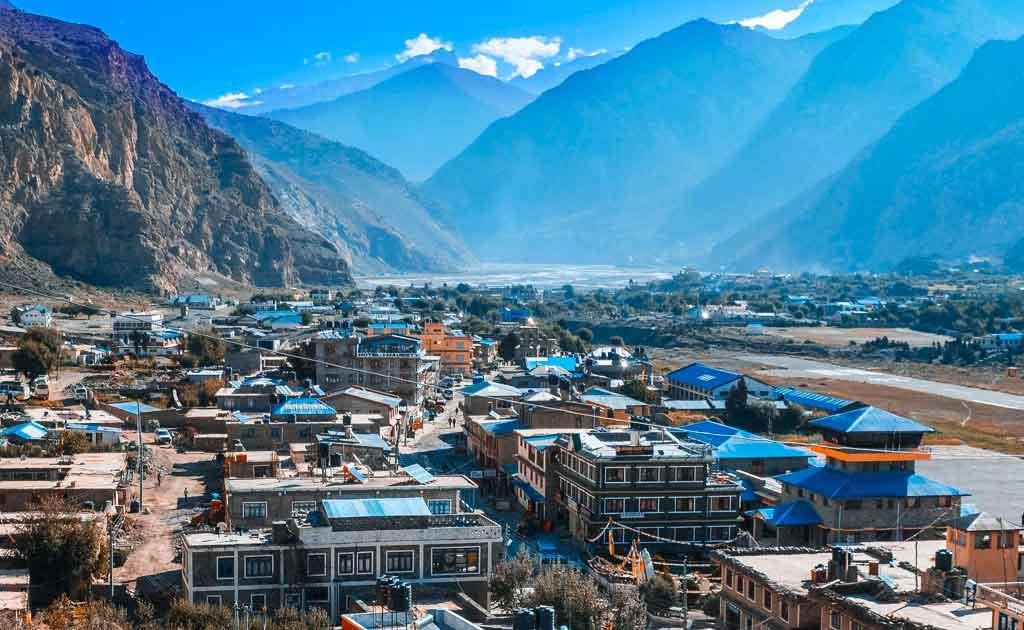
Jomsom is one of those Himalayan towns that can seem like a simple stop on a trekking map, until you understand where it sits.
Located in the Kali Gandaki Valley of Mustang, Jomsom connects several of Nepal’s most distinctive travel experiences. Trekkers completing the Annapurna Circuit pass through the area after crossing Thorong La, while travelers heading toward Upper Mustang use Jomsom as a major transport and logistical base.
The town also provides access to nearby places such as Marpha, Tukuche, Kagbeni and Muktinath, making it much more than an overnight stop.
For travelers planning a Mustang adventure, Jomsom is particularly important because it provides the transition between the greener lower Kali Gandaki Valley and the dry, high-altitude landscapes farther north.
This Jomsom travel guide explains where Jomsom is, how to reach it, its role in the Annapurna Circuit and Upper Mustang, what you can do here, the best time to visit, permits, transportation, accommodation, altitude considerations, and practical tips for planning your journey.
Planning tip: Jomsom works best as a connecting point rather than a destination you rush through. Depending on your itinerary, spending a night here can make the journey to Upper Mustang, Muktinath or the Annapurna region considerably more comfortable.
Quick Facts About Jomsom
| Information | Details |
|---|---|
| Location | Mustang District, Gandaki Province, Nepal |
| Elevation | Approximately 2,720 m (8,924 ft) |
| River Valley | Kali Gandaki |
| Nearest major tourism hub | Pokhara |
| Airport | Jomsom Airport |
| Main access | Air and road |
| Major routes | Annapurna Circuit, Jomsom–Muktinath, Upper Mustang |
| Nearby attractions | Marpha, Tukuche, Kagbeni, Muktinath |
| Landscape | Himalayan valley, dry mountains and Trans-Himalayan terrain |
| Protected area | Annapurna Conservation Area |
The Nepal Tourism Board identifies Jomsom as an important access point for Mustang and notes that Jomsom has an airport serving travelers heading into the Mustang region.
Where Is Jomsom, Nepal?
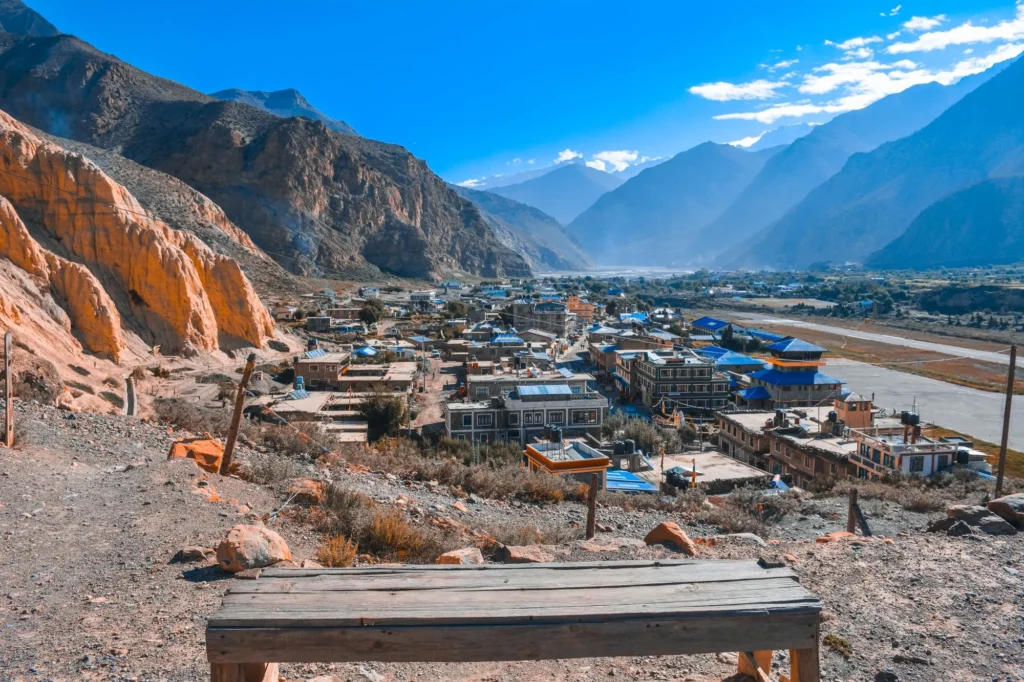
Jomsom is located in Mustang District in north-central Nepal, along the Kali Gandaki River.
Geographically, it sits in a fascinating transition zone. To the south are the greener valleys and villages associated with the lower Annapurna region. Moving north, the environment becomes increasingly dry and rugged as the Kali Gandaki corridor approaches the rain-shadow landscapes of Mustang.
This location explains why Jomsom is so important for trekking and overland travel.
From Jomsom, travelers can:
- Continue toward Kagbeni and Upper Mustang
- Travel toward Muktinath
- Explore the traditional villages of Marpha and Tukuche
- Continue along routes associated with the Annapurna Circuit
- Return toward Pokhara by road or flight
The town therefore functions as a practical crossroads between several major Himalayan routes.
Why Is Jomsom Important for the Annapurna Circuit?
Jomsom has long been associated with the western section of the Annapurna Circuit.
The classic Annapurna Circuit crosses the Thorong La Pass before descending toward Muktinath and eventually reaching the Kali Gandaki Valley. From this side of the route, Jomsom becomes one of the principal settlements and transport points.
Muktinath is part of the Annapurna Circuit route, which passes through Manang and Thorong La before reaching Muktinath and Jomsom.
For trekkers, Jomsom can therefore represent the end of a demanding high-mountain section, or the beginning of a journey farther north.
Jomsom on the Annapurna Circuit
A typical route through this part of the region may include:
Manang → Thorong La → Muktinath → Kagbeni → Jomsom → Marpha → Tukuche → lower Mustang
Exact itineraries vary because modern road access has changed how travelers approach and leave the region.
For trekkers who want to experience more of the traditional trail, sections of the route can still be walked rather than simply driven.
Jomsom and Upper Mustang: What Is the Connection?
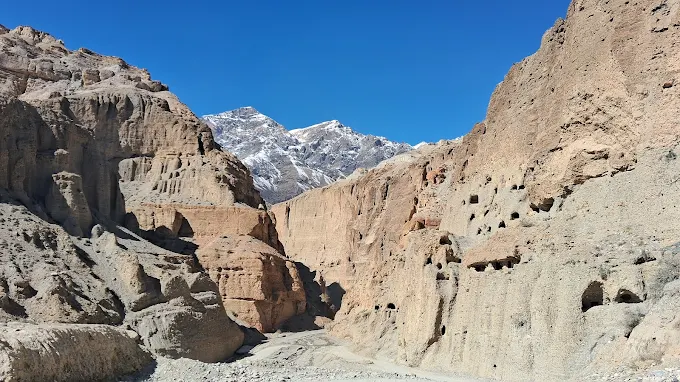
Jomsom is often described as a gateway to Upper Mustang because it is one of the main access points for journeys heading north through the Kali Gandaki Valley.
However, there is an important distinction:
Jomsom is the regional transport and service hub; Kagbeni is the key gateway/checkpoint before entering the Upper Mustang restricted area.
That distinction matters when planning permits and itineraries. Travelers generally continue from Jomsom toward Kagbeni before entering the restricted Upper Mustang area.
Upper Mustang is a protected/restricted destination requiring a special trekking permit, while the Department of Immigration administers restricted-area trekking permits.
So, if your trip combines the Annapurna Circuit with Upper Mustang, Jomsom is where the two travel experiences effectively converge.
How to Get to Jomsom
There are two principal ways to reach Jomsom:
- By air
- By road
Your best option depends on your budget, schedule, weather tolerance and whether you want to experience the journey itself.
1. Pokhara to Jomsom by Flight
Flying from Pokhara to Jomsom is the quickest conventional way to reach the town.
The flight follows the Kali Gandaki Valley and provides spectacular mountain scenery when weather conditions allow.
However, travelers should understand that mountain flights are weather-dependent.
Morning conditions are generally more favorable, while strong valley winds can affect operations later in the day. Therefore, it is wise to avoid building an important international-flight connection around a same-day Jomsom flight.
Practical advice: If your itinerary includes a Jomsom flight, leave some flexibility for weather-related delays.
2. Pokhara to Jomsom by Road
Jomsom is also accessible by road from Pokhara through the Kali Gandaki corridor.
The overland journey passes through changing landscapes and settlements, including areas around:
Pokhara → Beni → Tatopani → Marpha → Tukuche → Jomsom
Road conditions can vary depending on weather, construction and seasonal conditions.
The road option takes considerably longer than flying, but it can be a better choice for travelers who:
- Want more flexibility
- Are traveling with a private group
- Want to stop at villages along the route
- Prefer overland travel
- Are carrying more luggage
- Want to combine several Mustang attractions in one journey
Best Things to Do in Jomsom
Jomsom itself is relatively compact, but its surroundings offer plenty of reasons to slow down.
1. Walk Along the Kali Gandaki
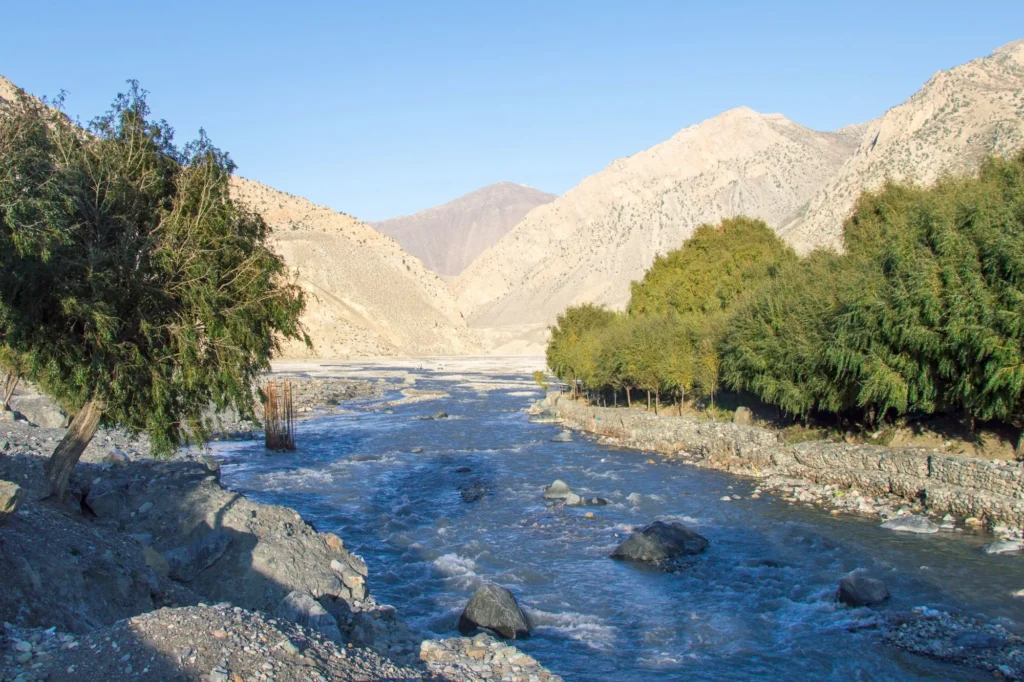
The Kali Gandaki is one of the defining features of the region.
A walk around the river valley provides an immediate sense of the landscape: wide riverbeds, dry slopes, dramatic mountains and the distinctive wind that moves through the valley.
Early morning is usually a more comfortable time for walking.
2. Explore Jomsom’s Local Culture
Jomsom is not simply a transportation point. Spend some time observing everyday life, visiting local shops and interacting respectfully with residents.
The wider Mustang region reflects a mixture of Himalayan and Tibetan-influenced cultural traditions, visible in architecture, religious practices, monasteries, food and village life.
Responsible travel matters here. Avoid treating villages as photo sets; ask permission before photographing people or religious ceremonies.
3. Visit Marpha
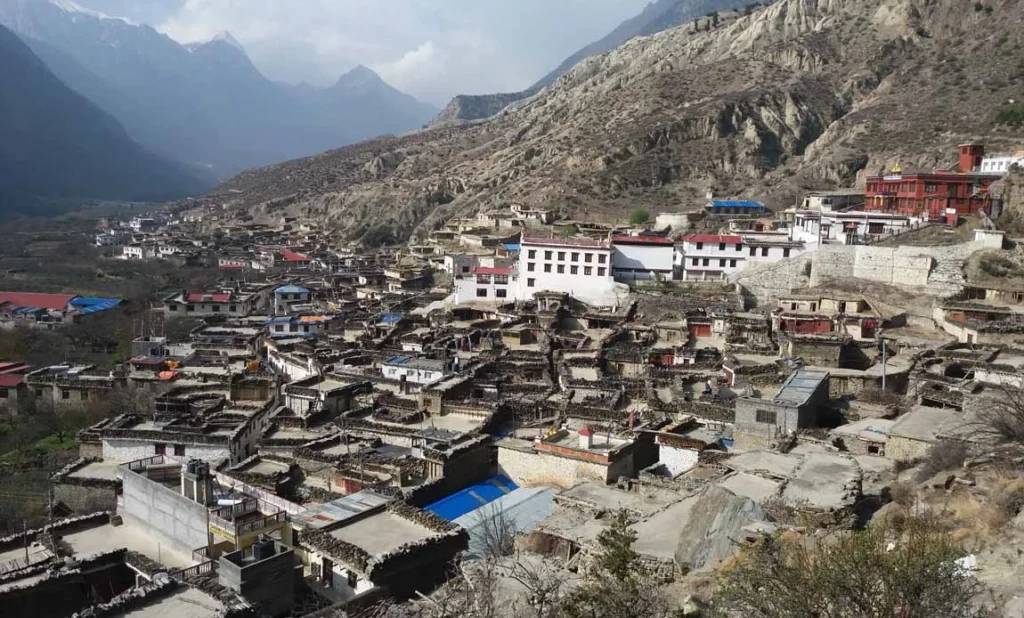
Marpha is one of the most popular stops near Jomsom. The village is known for its traditional stone-and-whitewashed architecture, apple orchards and mountain atmosphere.
It makes an excellent stop before or after Jomsom, particularly for travelers traveling overland. If your schedule allows, consider spending time rather than simply stopping for a quick photograph.
4. Explore Tukuche
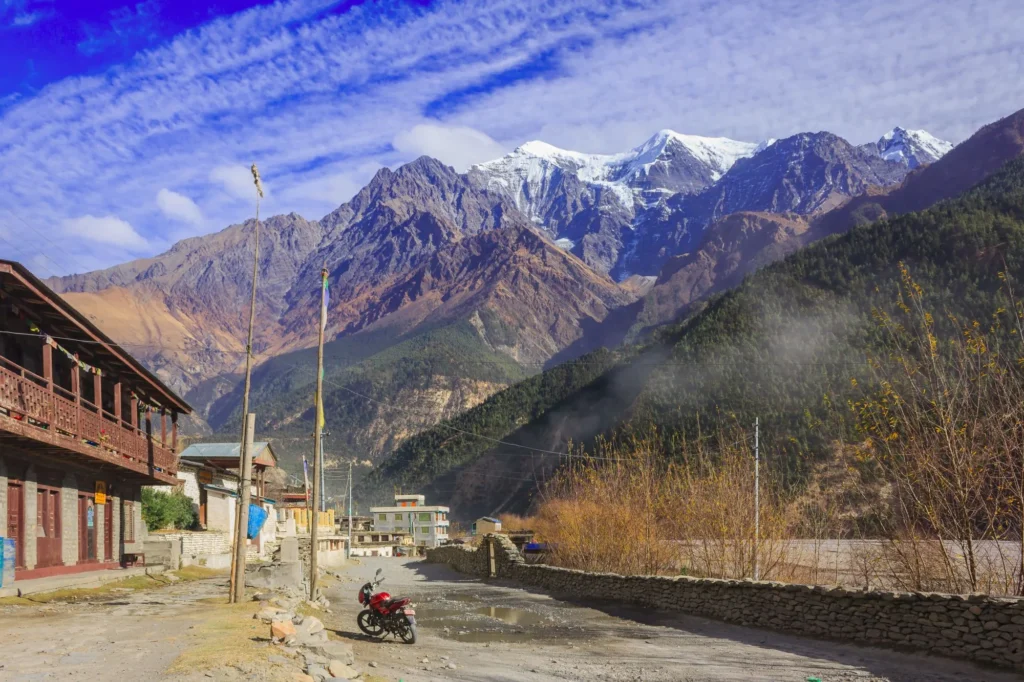
Tukuche lies farther south along the Kali Gandaki Valley. The village has historically been associated with trade through the valley and offers another opportunity to experience the architecture and culture of the region.
For travelers interested in the history of Himalayan trade routes, the Jomsom–Marpha–Tukuche corridor is particularly interesting.
5. Continue Toward Muktinath
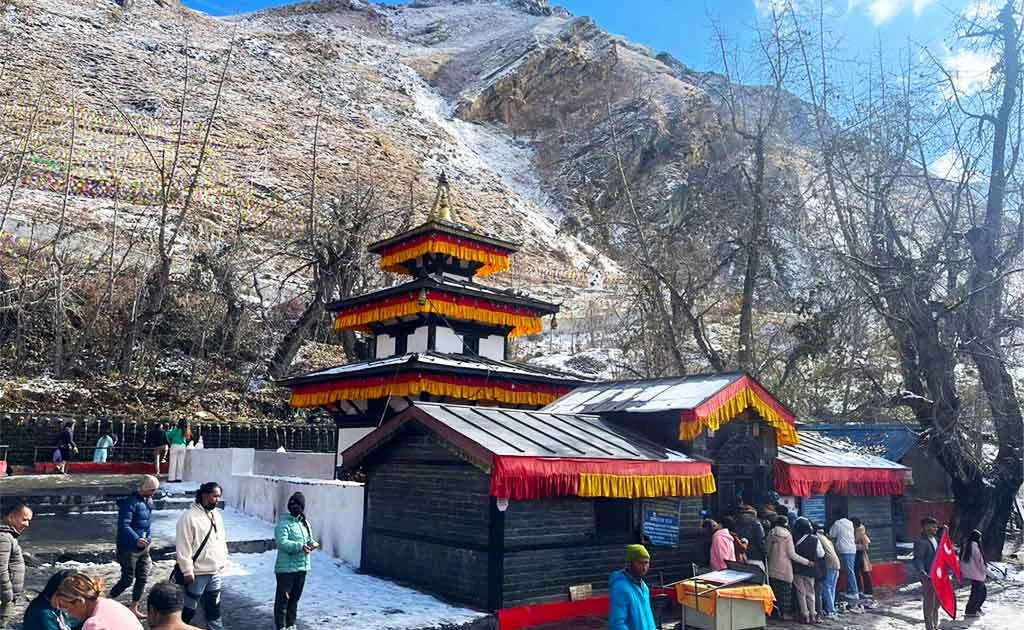
Muktinath is one of Nepal’s most significant pilgrimage destinations and is sacred to both Hindus and Buddhists.
The Nepal Tourism Board places Muktinath at roughly 3,800 metres and describes its religious significance, including the temple, 108 water spouts and the Jwala Mai shrine.
For trekkers, Muktinath is also closely connected with the Annapurna Circuit. From Jomsom, travelers can continue toward Muktinath by road or on foot depending on the itinerary.
Jomsom to Upper Mustang: What the Journey Looks Like
If your goal is Upper Mustang, Jomsom is usually not the final destination.
A common progression is:
Pokhara → Jomsom → Kagbeni → Chhusang → Chele → Ghami → Charang → Lo Manthang
The exact itinerary varies depending on whether you are trekking, driving by jeep, or combining walking and transportation.
The landscape changes progressively as you move north.
Near the lower Mustang area, you encounter more vegetation and cultivated land. Farther north, the terrain becomes increasingly dry, with dramatic cliffs, exposed rock formations and high-altitude desert-like scenery.
This gradual transformation is one of the reasons the journey itself is such an important part of an Upper Mustang experience.
Required Permits and Costs for Jomsom, Annapurna Circuit & Upper Mustang
The permits you need around Jomsom depend on where your itinerary continues. Simply arriving in Jomsom does not mean you need a special “Jomsom permit.” However, Jomsom lies within the Annapurna Conservation Area, so travelers entering the conservation area need the applicable conservation-area entry permit.
If you continue north toward Upper Mustang, additional restricted-area requirements apply.
Jomsom & Annapurna Circuit Permit Guide
| Route / Destination | Required Permit | Current Cost | Who Needs It? |
|---|---|---|---|
| Jomsom / Lower Mustang | Annapurna Conservation Area Permit (ACAP) | NPR 3,000 for foreign nationals | Travelers entering the Annapurna Conservation Area |
| Annapurna Circuit | ACAP + TIMS |
ACAP: NPR 3,000 TIMS: NPR 2,000 for FITs |
Foreign trekkers following the Annapurna Circuit |
| Upper Mustang from Jomsom/Kagbeni | ACAP + Upper Mustang Restricted-Area Trekking Permit + applicable TIMS |
ACAP: NPR 3,000 Upper Mustang: USD 50/day |
Travelers entering the Upper Mustang restricted area |
| Jomsom only as a transit stop | Depends on where you entered the conservation area and your overall itinerary | Varies | Travelers only passing through Jomsom |
Permit fees can change. Confirm the current rate with the relevant Nepal government authority or your registered trekking agency before departure.
The Nepal Tourism Board currently lists the Annapurna Conservation Area entry fee at NPR 3,000 per foreign visitor per entry.
For TIMS, the Trekking Agencies’ Association of Nepal (TAAN) currently lists the Green TIMS card for individual foreign trekkers (FITs) at NPR 2,000 per person, while group trekkers use the Blue TIMS card at NPR 1,000 per person. SAARC rates are lower.
For Upper Mustang, the Department of Immigration’s current detailed permit information lists USD 50 per person per day. Upper Mustang is a restricted trekking area, and the permit is issued through an authorized trekking agency.
What Does This Mean for Your Jomsom Trip?
The easiest way to understand the requirements is:
If you are visiting Jomsom as part of Lower Mustang:
You generally need the Annapurna Conservation Area Permit (ACAP) because Jomsom is within the Annapurna Conservation Area.
If you are trekking the Annapurna Circuit through Jomsom:
You should plan for the ACAP and applicable TIMS requirements. Your trekking agency can arrange the necessary documentation before the trek.
If you are continuing from Jomsom toward Upper Mustang:
You need the ACAP plus the Upper Mustang restricted-area permit and any other applicable trekking documentation. The restricted-area permit is substantially more expensive because Upper Mustang is a controlled trekking region.
Important: Upper Mustang Is Not the Same as Lower Mustang
This distinction is important when budgeting your trip.
You do not pay the Upper Mustang restricted-area fee simply because you arrive in Jomsom or travel around Lower Mustang.
The additional restricted-area permit applies when your itinerary enters the designated Upper Mustang restricted zones. The Department of Immigration identifies these areas within Lomanthang Rural Municipality, Lo-Ghekar Damodarkunda Rural Municipality, and specified areas of Baragung Muktichhetra Rural Municipality.
In practical terms, a route such as:
Pokhara → Jomsom → Marpha → Tukuche → Muktinath
is different from:
Pokhara → Jomsom → Kagbeni → Chele → Ghami → Lo Manthang
The second itinerary enters the Upper Mustang restricted area and therefore requires the additional restricted-area permit.
Do You Need a Guide for Upper Mustang?
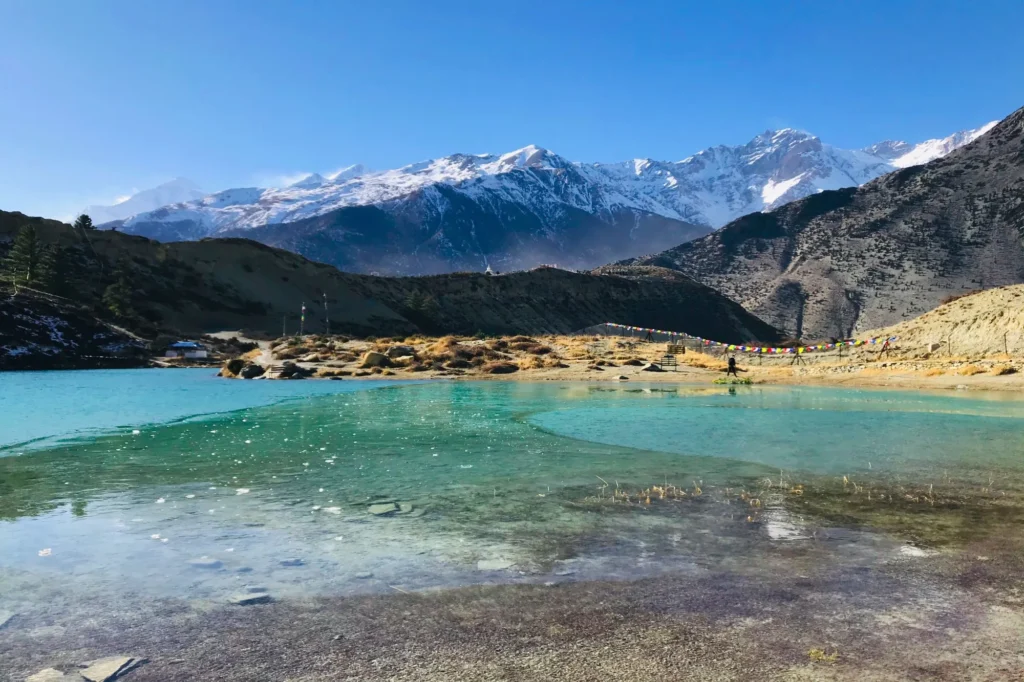
Upper Mustang is a restricted trekking area, so arrangements are different from an ordinary independent hike in Nepal. The trekking permits for restricted areas are issued through listed trekking agencies.
This is one reason it is important to arrange an Upper Mustang trip through a properly established trekking operator rather than arriving in Jomsom and trying to organize the restricted-area section at the last minute.
A professional local operator can help coordinate:
- Restricted-area permits
- Conservation-area requirements
- Licensed guides
- Accommodation
- Transportation
- Route planning
- Weather-related adjustments
- Emergency logistics
Is Jomsom Worth Visiting If You Are Not Trekking?
Absolutely. You do not have to complete the full Annapurna Circuit or Upper Mustang trek to visit Jomsom.
A Jomsom-based Mustang trip can be suitable for travelers who want to experience the Himalayan landscape without committing to a long high-altitude trek.
Depending on your interests, you can combine Jomsom with:
- Marpha
- Tukuche
- Kagbeni
- Muktinath
- Mustang villages
- Short walks
- Cultural sightseeing
- Scenic drives
This makes Jomsom particularly useful for travelers with limited time.
Best Time to Visit Jomsom
The best season depends on what you want to do.
Spring: March to May
Spring brings relatively favorable trekking conditions, with improving temperatures and good mountain scenery.
It is particularly suitable for travelers combining Jomsom with trekking in the Annapurna region.
Autumn: September to November
Autumn is traditionally one of Nepal’s strongest trekking seasons. The skies are often clearer after the monsoon, visibility is generally good, and temperatures are suitable for trekking.
September can still have some post-monsoon variability, while October and November are generally popular months.
Winter: December to February
Winter can be cold, particularly at higher elevations. Snow and freezing temperatures can affect routes and accommodation availability in more remote areas.
Jomsom itself can still be visited, but travelers should plan carefully and confirm transportation and accommodation conditions.
Monsoon: June to August
Jomsom and Mustang are unusual compared with many parts of Nepal. Much of Mustang lies within the Himalayan rain-shadow, meaning the region receives significantly less rainfall than many areas farther south.
The Nepal Tourism Board specifically notes that Upper Mustang can be visited during the monsoon because of its rain-shadow location.
However, reaching Jomsom can still be affected by monsoon conditions on roads and flight routes farther south.
So, Upper Mustang’s dry climate does not automatically mean every part of the journey is weather-proof.
Jomsom Weather and the Famous Mountain Wind
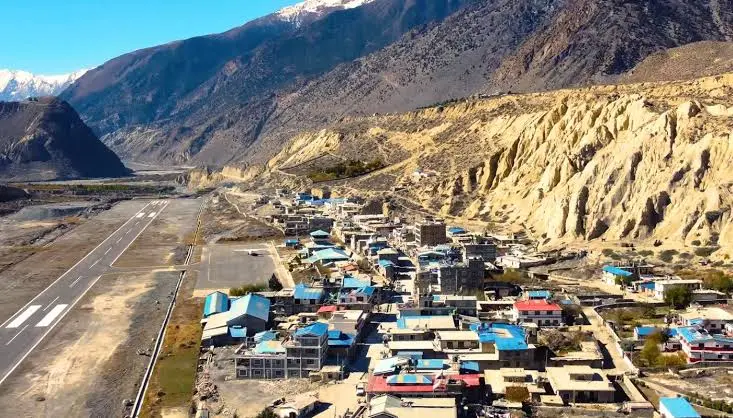
Jomsom is well known for strong winds in the Kali Gandaki Valley.
This is particularly noticeable later in the day.
For trekkers, this has several practical consequences:
- Start walking early when possible.
- Carry a windproof outer layer.
- Protect your eyes from dust.
- Keep water accessible.
- Do not assume warm sunshine means warm conditions.
- Build flexibility into flight schedules.
The combination of altitude, wind and dry air can make conditions feel colder than expected.
Jomsom Altitude and Acclimatization
Jomsom sits at approximately 2,720 metres, so altitude should not be ignored.
Many travelers arrive here after spending time at lower elevations, while Annapurna Circuit trekkers may arrive after crossing much higher terrain.
Your acclimatization needs therefore depend heavily on where you are coming from.
If you are arriving directly from a much lower elevation, avoid treating Jomsom as merely a quick transportation stop.
Stay hydrated, walk at a comfortable pace and pay attention to symptoms such as:
- Headache
- Unusual fatigue
- Dizziness
- Nausea
- Loss of appetite
- Difficulty sleeping
If symptoms become severe or worsen, seek medical assistance and descend as appropriate.
Where to Stay in Jomsom
Jomsom has accommodation options ranging from simple local lodges to more comfortable hotels.
The best choice depends on your expectations.
For trekkers
A basic lodge is often sufficient for a one-night stop.
For families and private travelers
A more comfortable hotel may be preferable, especially if Jomsom is being used as a rest day between long road journeys.
For Upper Mustang travelers
Consider the logistics rather than simply choosing the cheapest room.
A reliable lodge, convenient location and early breakfast can be more valuable than a small difference in room price when you have an early departure.
Food and Drinking Water in Jomsom
Jomsom provides considerably more food options than remote villages farther along the Mustang routes.
You can generally find a mixture of:
- Dal bhat
- Noodles
- Tibetan-style dishes
- Soups
- Rice and vegetable meals
- Bread
- Tea and coffee
- Local snacks
For longer journeys, carry some personal snacks such as energy bars, dried fruit or nuts.
Avoid assuming that every village farther into Upper Mustang will offer the same selection as Jomsom.
What Should You Pack for Jomsom?
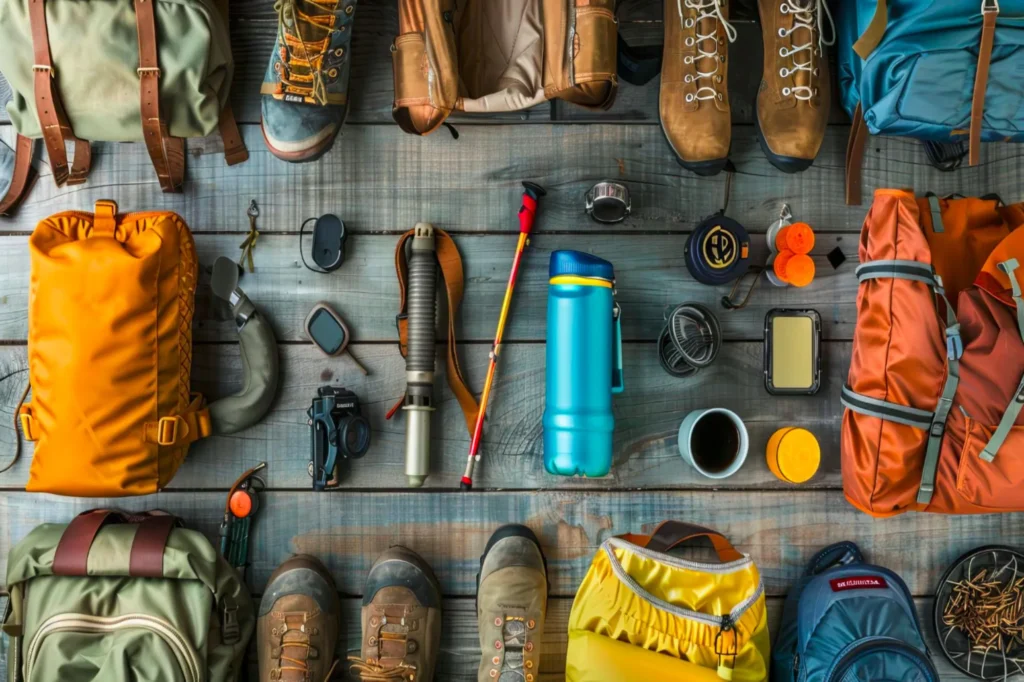
Your packing list depends on whether Jomsom is simply a stop or part of a longer trek.
For a typical Jomsom and Mustang trip, consider:
Clothing
- Warm insulating layer
- Windproof jacket
- Comfortable trekking trousers
- Moisture-wicking base layers
- Warm socks
- Gloves
- Hat or beanie
- Sun hat
Footwear
- Comfortable trekking shoes or boots
- Sandals or lightweight shoes for evenings
Sun and wind protection
- Sunglasses
- Sunscreen
- Lip balm
- Buff or face covering
Travel essentials
- Reusable water bottle
- Personal medication
- Headlamp
- Power bank
- Passport and permit documents
- Cash in Nepali rupees
- Small first-aid kit
If continuing into Upper Mustang, your equipment should be selected for longer periods at higher elevation and colder conditions.
Is Jomsom Safe for Travelers?
Jomsom is a well-established tourism and transport center, but Himalayan travel always requires some flexibility.
The biggest practical issues are usually related to:
- Weather
- Road conditions
- Flight cancellations
- Altitude
- Strong winds
- Changing trail conditions
The safest approach is not to plan your itinerary so tightly that one delayed flight causes you to miss an international departure.
For trekking beyond Jomsom, use an experienced guide and make sure your travel insurance covers the activities and elevations involved.
Jomsom vs. Kagbeni: What’s the Difference?
These two places are often confused because they are close to each other and both are associated with Upper Mustang.
| Jomsom | Kagbeni |
|---|---|
| Major regional transport hub | Historic village and trekking gateway |
| Has an airport | No commercial airport |
| District administrative center | Important cultural settlement |
| Major road/transport connections | Key point before Upper Mustang restricted area |
| Good place to organize logistics | Common staging point for Upper Mustang |
| Around 2,720 m | Around 2,800 m |
The important takeaway is simple:
Jomsom is the broader regional hub, while Kagbeni is the critical gateway immediately before Upper Mustang.
This distinction helps travelers understand why an itinerary can include both places without them being redundant stops.
How Many Days Do You Need for Jomsom?
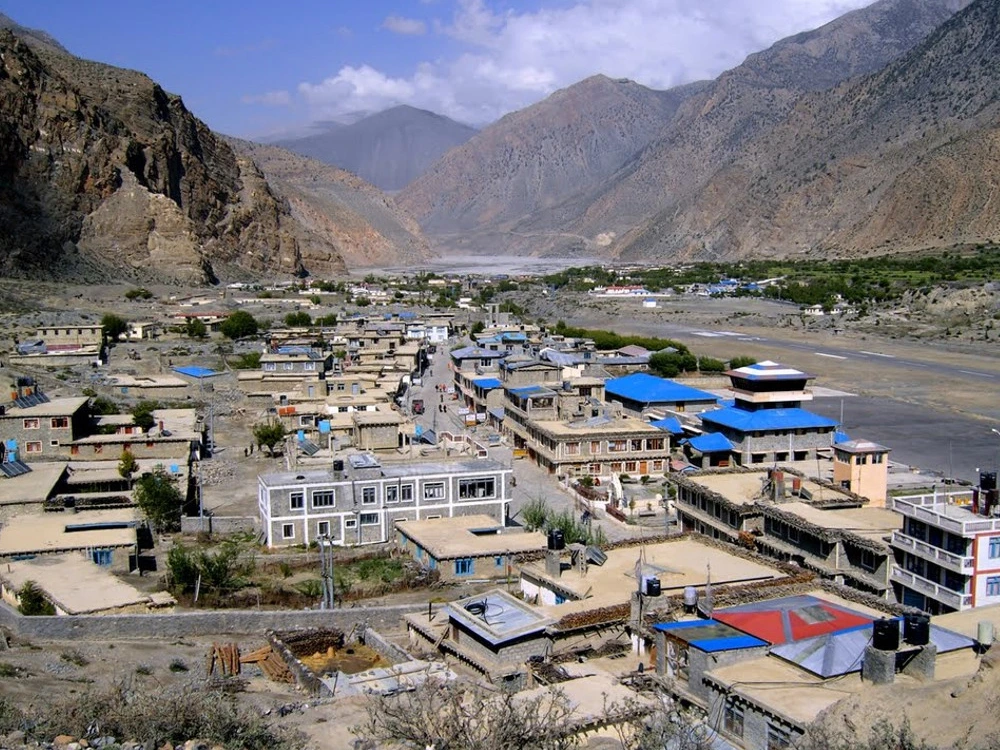
There is no single correct answer.
1 day: Suitable if Jomsom is simply a transport stop.
2–3 days: Better if you want to combine Jomsom with nearby attractions such as Marpha, Tukuche or Muktinath.
5+ days: Recommended when Jomsom forms part of a larger Mustang exploration.
10–14+ days: More appropriate for travelers planning a substantial Upper Mustang trekking itinerary.
The Nepal government’s published Upper Mustang outline, for example, includes Jomsom at both the beginning and end of a longer Upper Mustang route.
A Practical Jomsom Travel Itinerary
If you want to experience the area without doing the entire Annapurna Circuit, a simple itinerary could look like this:
Day 1: Pokhara to Jomsom
Travel by flight or road.
Spend the afternoon exploring Jomsom and the Kali Gandaki Valley.
Overnight: Jomsom
Day 2: Jomsom – Marpha – Tukuche
Explore traditional villages and the surrounding landscape.
Overnight: Jomsom or nearby village
Day 3: Jomsom – Muktinath – Kagbeni
Visit Muktinath and continue toward Kagbeni.
Overnight: Kagbeni or Jomsom
Day 4: Return toward Pokhara
Travel by road or, subject to operating conditions, fly from Jomsom to Pokhara.
This itinerary can be shortened or expanded depending on transportation and personal interests.
Who Should Visit Jomsom?
Jomsom is particularly suitable for:
- Annapurna Circuit trekkers
- Upper Mustang trekkers
- Adventure travelers
- Photographers
- Cultural travelers
- Pilgrims visiting Muktinath
- Families looking for a Mustang road trip
- Travelers who want Himalayan scenery without a long trek
- Visitors interested in Tibetan-influenced Himalayan culture
It is less suitable for travelers who want a completely relaxed resort-style vacation.
Jomsom is a mountain town, and the journey is part of the experience.
Why Travel to Jomsom With a Local Trekking Company?
The value of a local trekking company becomes particularly clear when an itinerary combines several regions.
A knowledgeable local operator can help you choose between:
flying vs. driving,
trekking vs. jeep travel,
short vs. extended itineraries,
and Lower Mustang vs. Upper Mustang.
For a restricted-area trip, professional permit coordination is also important.
Why Hi Nepal Travels & Treks?
Hi Nepal Travels & Treks is a Pokhara-based Nepal travel and trekking company offering trekking and tour experiences across the Himalayas.
Hi Nepal states that its team has 20+ years of experience in trekking and tour management and focuses on locally guided, personalized Himalayan experiences.
The company is also listed by the Trekking Agencies’ Association of Nepal (TAAN), which provides an additional point of reference when evaluating a trekking operator.
For travelers planning Jomsom, Annapurna or Mustang journeys, working with a local operator can make the trip easier to customize around transportation, trekking ability, accommodation preferences and available time.
Responsible Travel in Jomsom and Mustang
The landscapes around Jomsom are fragile, and tourism is closely connected with local communities.
Travel responsibly by:
- Carrying reusable water bottles
- Minimizing plastic waste
- Using established trails
- Avoiding unnecessary litter
- Respecting monasteries and religious sites
- Asking before photographing people
- Supporting locally owned lodges and businesses
- Following conservation-area regulations
- Avoiding damage to historic structures
A good trip is not only about seeing Mustang, it is also about leaving the destination in good condition for the people who live there and the travelers who follow.
Conclusion
Jomsom is more than a place where trekkers catch a flight or change vehicles.
It is a meeting point between several sides of the Nepal Himalayas.
The Annapurna Circuit brings travelers down from the high passes toward the Kali Gandaki Valley. The road and trail north lead toward Kagbeni and Upper Mustang. Nearby villages such as Marpha and Tukuche reveal the region’s distinctive architecture and culture, while Muktinath adds an important spiritual dimension to the journey.
That combination makes Jomsom particularly valuable for travelers who want to experience more than one side of the Annapurna and Mustang regions.
If you are planning your first trip to Mustang, think of Jomsom not simply as a stop on the map, but as the logistical and geographical crossroads that connects the Annapurna trekking world with the trans-Himalayan landscapes of Mustang.
Plan Your Jomsom & Mustang Adventure With Hi Nepal Travels & Treks
Whether you want to walk part of the Annapurna Circuit, visit Muktinath, explore Jomsom and Marpha, or continue north into Upper Mustang, a well-planned itinerary can make the difference between simply passing through Mustang and genuinely experiencing it.
Explore Nepal with Hi Nepal Travels & Treks
Frequently Asked Questions About Jomsom
-
What is Jomsom famous for?
Jomsom is known as an important town in Mustang and a major gateway for the Annapurna Circuit, Muktinath and Upper Mustang. It is also known for its location along the Kali Gandaki Valley and its airport connection with Pokhara.
-
Is Jomsom part of the Annapurna Circuit?
Yes. Jomsom is associated with the western section of the Annapurna Circuit, particularly the route through Muktinath and the Kali Gandaki Valley.
-
Is Jomsom the entrance to Upper Mustang?
Jomsom is one of the principal access points to Upper Mustang, but Kagbeni is the key gateway/checkpoint before entering the restricted Upper Mustang area.
-
How high is Jomsom?
Jomsom is approximately 2,720 metres (8,924 feet) above sea level.
-
Can you fly from Pokhara to Jomsom?
Yes. Jomsom has an airport with flights connecting the town with Pokhara, although flights are subject to weather and operating conditions.
-
Can you drive from Pokhara to Jomsom?
Yes. Jomsom is accessible by road through the Kali Gandaki Valley. Travel times can vary considerably depending on road and weather conditions.
-
Do I need a permit for Upper Mustang?
Yes. Upper Mustang is a restricted area and requires a special trekking permit. Current government information lists the restricted-area fee at USD 50 per person per day.
-
Is Jomsom suitable for a short trip?
Yes. Jomsom can be included in short Mustang trips, especially when combined with Marpha, Muktinath or Kagbeni.
-
What is the best month to visit Jomsom?
For general trekking in the Annapurna region, March–May and September–November are traditionally strong periods. Upper Mustang is unusual because its rain-shadow location also makes it possible to consider during the monsoon.
-
How many days should I spend in Jomsom?
One night is enough if Jomsom is only a transit point. Two or three days gives you more time to explore the surrounding Mustang area, while longer stays make sense when Jomsom is part of an Upper Mustang itinerary.