
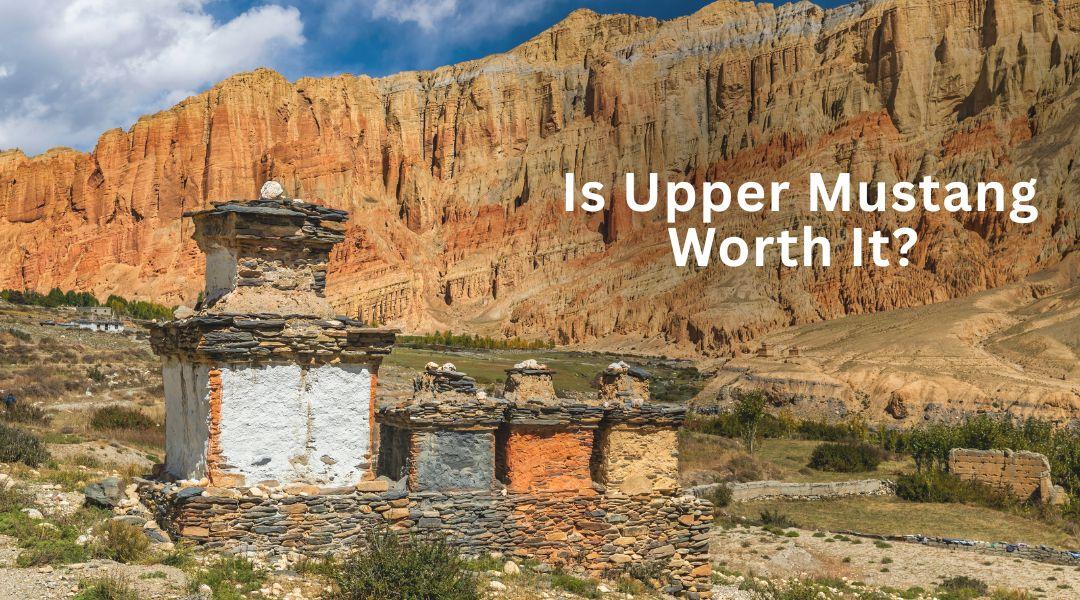
Yes, Upper Mustang is worth visiting from Pokhara if you’re drawn to Tibetan culture, desert canyons, and a trip that still works in the monsoon.
But if what you really want is big snow peaks right in front of you or a cheap, go-it-alone trek, this probably isn’t the one.
Pokhara spoils you with choices. Annapurna Base Camp, Poon Hill, and Mardi Himal all begin within a few hours of Lakeside. Upper Mustang sits at the far end of that list: farther away, pricier, and stricter to enter.
So the real question isn’t “Is it beautiful?” (it is). It’s whether it fits your time, budget, and travel style better than the alternatives.
This guide answers that honestly. We’ll look at how Upper Mustang compares with the other treks near Pokhara, the downsides nobody likes to mention, what the new permit rules mean for you, and who should go and who should skip it.
Quick verdict
- Go if: you love culture and photography, you’re traveling between June and August, you want something most travelers never see, or you’d rather ride in a jeep than walk for days.
- Think twice if: you want Annapurna or Machhapuchhre right in front of you, you have fewer than 5 days, you’d rather not hire a guide, or you want a comfortable hotel every night.
- Best length from Pokhara: 5 to 7 days by jeep‚ 10 to 14 days on foot․
What makes Upper Mustang different from other treks near Pokhara
Upper Mustang feels like a different country from the green Annapurna trails north of Pokhara. Here’s what sets it apart.
1. Desert, not forest. Most Pokhara treks climb through rhododendron forest and terraced farms. Upper Mustang lies behind the Annapurna and Dhaulagiri ranges, in a high, dry rain shadow. Instead of jungle and waterfalls, you get ochre cliffs, wind-carved canyons and wide, bare plateaus.
2. Tibetan culture, not Gurung villages. Ghandruk and Ghorepani give you a glimpse of Gurung and Magar hill life. Upper Mustang was the Kingdom of Lo, a Tibetan Buddhist realm that had its own king until 2008. Monasteries, mani walls, sky caves, and the walled capital of Lo Manthang are the main draw here, not the mountains.
3. Restricted, not open. Upper Mustang stayed closed to foreigners until 1992. Even today you need a special Restricted Area Permit, a licensed guide and a registered agency. That’s exactly why it stays so quiet compared with ABC or Ponn Hill.
4. Open in monsoon. From June to August, rain and leeches make most Pokhara treks miserable. Upper Mustang stays mostly dry. It is one of the few places in Nepal where summer is a good time to go.
If monsoon travel is on your mind, see our monsoon treks guide for other rain-shadow options.
Upper Mustang vs ABC, Poon Hill, Mardi Himal, Annapurna Circuit, and Lower Mustang
Upper Mustang wins on culture, uniqueness, and monsoon access. It loses on close mountain views and cost. This table shows where it fits next to the other trips most people consider from Pokhara.
| Trip | Days from Pokhara (approx.) | Max altitude | Difficulty | Best for | Crowds | Monsoon-friendly | Extra permit cost |
| Upper Mustang | 5–7 (jeep), 10–14 (trek) | 3,840 m (Lo Manthang) | Easy by jeep, moderate on foot | Tibetan culture, desert landscapes, caves | Low | Yes | USD 50/day RAP + ACAP |
| Annapurna Base Camp | 7–10 | 4,130 m | Moderate | Close-up Annapurna amphitheatre | High | No | ACAP only |
| Poon Hill | 3–5 | 3,210 m | Easy | Sunrise panorama, first-timers | High | No | ACAP only |
| Mardi Himal | 5–7 | 4,200 m (viewpoint) | Moderate | Machhapuchhre up close, ridge walking | Medium | No | ACAP only |
| Annapurna Circuit | 12–18 | 5,416 m (Thorong La) | Challenging | Big variety, high pass | Medium–High | Partly | ACAP only |
| Lower Mustang / Muktinath | 3–5 | 3,800 m (Muktinath) | Easy by jeep | Pilgrimage, Thakali villages, a taste of Mustang | Medium | Mostly | ACAP only |
Two honest takeaways:
- If mountains are your priority, ABC or Mardi Himal will give you more for less money. In Upper Mustang, peaks like Nilgiri and Annapurna are mostly seen from a distance.
- If you want a taste of Mustang on a tight budget, Lower Mustang and Muktinath give you the dry landscape and Kali Gandaki Valley without the restricted-area permit. You just won’t see Lo Manthang, the sky caves, or the old Kingdom of Lo.
For a wider list of options, have a look at our best treks from Pokhara.
The honest downsides of Upper Mustang
Upper Mustang is special, but it is not effortless. It’s better to know these trade-offs now than to discover them halfway up the valley.
- It costs more than other Annapurna trips. On top of the ACAP, you pay USD 50 per person per day inside the restricted area. A guide and an agency booking are compulsory, so there’s no cutting costs by going independent.
- Wind and dust are constant. Strong valley winds pick up from late morning, especially between Jomsom and Kagbeni. A buff, sunglasses, and a windproof jacket aren’t optional extras. You’ll use them every single day.
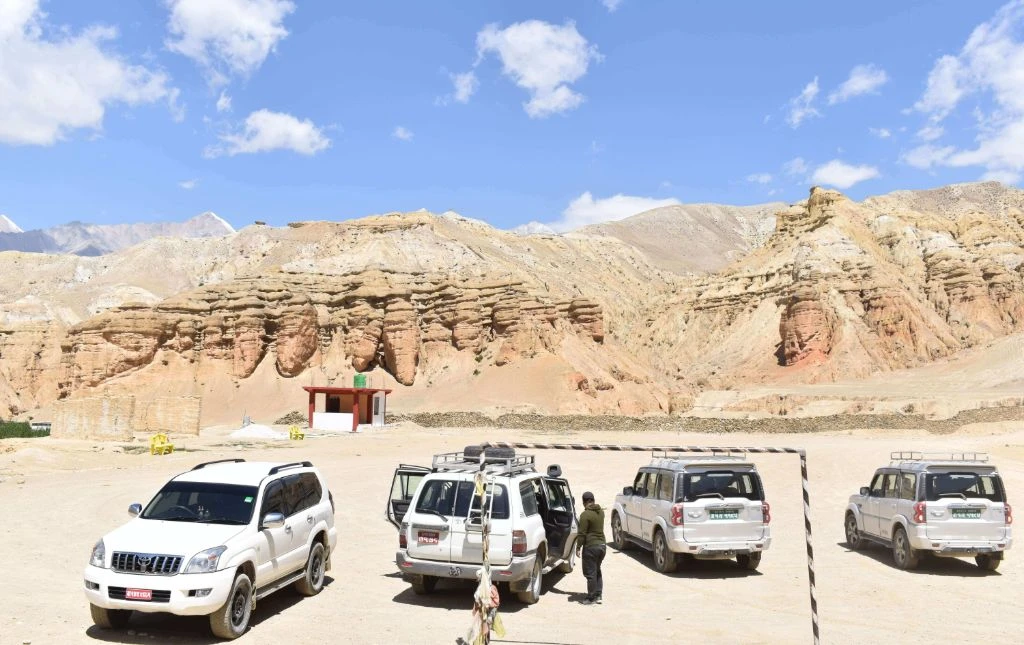
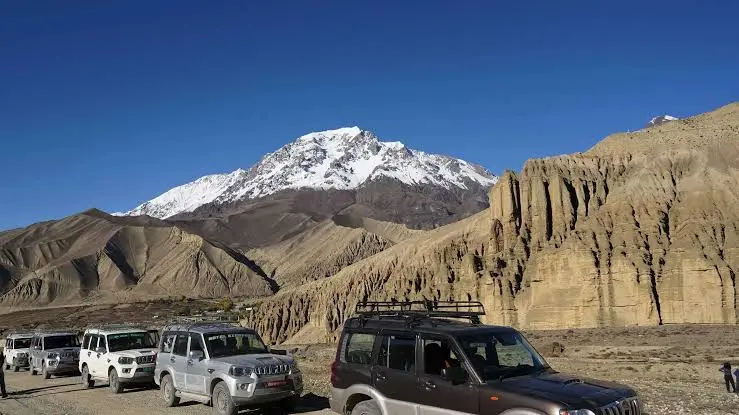
- The main route is now a road. Jeeps and motorbikes use the same track many trekkers walk. On some days you’ll be eating their dust.
- Lodges are basic. Expect simple rooms, thin walls, and limited hot water. Electricity and Wi-Fi can be unreliable beyond Jomsom.
- Nights are cold. Even in spring and autumn, Lo Manthang can drop below freezing after dark. Winter (December to February) is harsh and many lodges close.
- Jomsom flights often get delayed or cancelled. Wind limits flights to early mornings, and cloud can ground them for a day or more.
- No ATMs past Jomsom. Carry enough Nepali rupees for the whole restricted section.
- Altitude still matters. Lo Manthang sits at 3,840 m. Getting there fast by jeep gives your body less time to adjust. See our Upper Mustang difficulty guide for details.
- Big peaks are mostly distant. If you’re picturing yourself standing under an 8,000 m wall, this is the wrong trip.
None of these are deal-breakers for the right traveler. They just mean Upper Mustang rewards people who come for culture and landscape, not comfort.
Has the road ruined Upper Mustang?
No, but it has changed how you should experience it. The road made Lo Manthang reachable in a few days, brought supplies, and helped local businesses. It also means the old trekking trail now shares space with jeeps on several stretches.
The culture is still very much alive, though. Monks still chant in Thubchen and Jampa gompas, farmers still work barley fields by hand, and Lo Manthang’s walls and narrow lanes are intact. What you lose is the sense of isolation on the main route.
The good news is you can win most of it back with two simple choices:
- Walk the alternative trails. Experienced guides use older footpaths on the east and west sides of the Kali Gandaki, well away from the jeep track, through villages like Dhakmar and Ghar Gompa.
- Slow down in Lo Manthang. Spend at least one full day there. Early mornings, before day visitors arrive, show the town at its most authentic.
If you’re going by jeep, think of the drive as transport and the villages as the destinations. Stop often, walk between monasteries, and resist the urge to rush straight to Lo Manthang and back.
Getting to Upper Mustang from Pokhara: a quick overview
Every route from Pokhara goes through Jomsom first, then north via Kagbeni into the restricted area. You have three ways to cover the Pokhara–Jomsom leg.
| Option | Time (approx.) | Good for | Watch out for |
| Flight | 20–25 minutes | Short trips, saving a full day | Morning-only flights, frequent weather delays |
| Private jeep | 6–7 hours | Groups, families, flexible stops | Rough road, landslides in monsoon |
| Local bus | 8–10 hours | Lowest cost | Crowded, slow, less comfortable |
From Jomsom, a jeep reaches Lo Manthang in 1 to 2 days with stops. On foot, the walk from Kagbeni to Lo Manthang usually takes 4 to 5 days.
For full route details, jeep types and Kathmandu vs Pokhara starting points, read our Upper Mustang by jeep guide. For flights, roads and the town itself, see the Jomsom guide.
What the journey actually feels like
The trip is a slow change from green to gold. You leave Pokhara’s humid lakeside behind, follow the Kali Gandaki gorge between Annapurna and Dhaulagiri, and watch the forest slowly thin out past Tatopani and Marpha.
Kagbeni is the turning point. At the permit checkpoint in Kagbeni, the valley narrows and the colours shift to red, ochre and grey. Mud-brick houses with firewood stacked on the roofs take the place of the stone Thakali homes.
The middle days are about villages and silence. Between Chele, Syangboche, Ghami and Charang, you cross high passes with wide views, walk beside long mani walls and stop at small gompas where a single caretaker may unlock the door just for you. Mornings are calm and bright. Afternoons belong to the wind.
Lo Manthang feels like walking into the past. The walled town has narrow lanes, the old royal palace and centuries-old monasteries painted with detailed murals. A day trip north to the Chhoser sky caves, carved high into cliff faces, is often the highlight of the whole trip.
Evenings are simple and warm. Most nights end around a lodge stove with dal bhat, Tibetan bread or thukpa, and butter tea if you’re feeling brave enough to try it.
Guide tip: Add a short first-person note or quote from one of your Mustang guides here. Real field detail is what makes this section stand out from other blogs.
If you can, time your trip with the Tiji Festival in spring. It brings masked dances and three days if ritual to Lo Manthang’s main square.
Is Upper Mustang worth the money?
Honestly, Upper Mustang is better value now than at any time in the past 30 years. In November 2025, Nepal replaced the old flat fee of USD 500 for 10 days with a daily rate of USD 50 per person.
That change matters most for short trips:
- 5 days inside the restricted area: USD 250 in Restricted Area Permit fees, half the old minimum.
- 8 days inside: USD 400, still cheaper than before.
- 10 days or more: about the same as the old system.
You’ll also need the Annapurna Conservation Area Permit (ACAP), currently NPR 3,000 for most foreign nationals. Full rules are in our Upper Mustang permit guide.
So is it worth it? Think about what you get, not just what you pay:
- You pay for access, not luxury. The premium buys entry to a protected cultural region very few travelers see.
- A short jeep trip from Pokhara is now realistic. Five to seven days covers Lo Manthang and the caves without a long trek.
- The guide is part of the value. In a region full of monasteries and history, a good local guide turns a road trip into a cultural journey.
Trek, jeep, or a mix: which fits you?
The right way to see Upper Mustang depends on your time and fitness, not on which one sounds more “authentic”.
- Jeep (5–7 days from Pokhara): Best for families, older travelers, photographers, and anyone short on time. You’ll still walk around villages, monasteries and caves, just without the long trekking days.
- Trek (10–14 days from Pokhara): Best for fit walkers who want to feel the landscape change at walking pace. Pick an itinerary that uses alternative trails away from the road.
- Mix (7–10 days): Drive the dusty lower sections, then walk the most scenic stretches and the loop back via Dhakmar and Ghar Gompa. This is often the sweet spot.
Who should go and who should skip
| Traveller type | Verdict | Why |
| Culture and history lovers | Go | Monasteries, sky caves and a living Tibetan town in Lo Manthang |
| Photographers | Go | Unique colours, light and architecture you will not find elsewhere in Nepal |
| Monsoon travellers (June–August) | Go | One of the driest and most rewarding regions in summer |
| Families and older travellers | Go, by jeep | Little trekking needed; plan extra time for altitude |
| Repeat visitors to Nepal | Go | A completely different side of the Himalaya |
| Close-up mountain view seekers | Skip, choose ABC or Mardi | Big peaks are mostly seen from a distance |
| Tight budgets | Skip, choose Lower Mustang or Poon Hill | Permit and compulsory guide raise the base cost |
| Fewer than 5 days | Skip | Not enough time to reach Lo Manthang and enjoy it |
| Solo, independent trekkers | Skip or join a group | Restricted-area rules require an agency and guide; check current solo trekking rules |
| Winter travellers wanting comfort | Skip, December–February | Very cold, many lodges closed |
Not sure which season fits your dates? See our best time to visit Upper Mustang guide.
Before you book: 5 quick checks
These five questions decide whether your Upper Mustang trip feels smooth or stressful.
- Is there a buffer day? Jomsom flights and mountain roads both cause delays. Keep at least one spare day before any international flight.
- How many permit days are counted? The RAP is charged per day inside the restricted area. Ask for the exact entry and exit dates and confirm the fee is included in the quote.
- Has your guide worked in Mustang before? A guide who knows the monasteries, caretakers and alternative trails adds far more than one who only knows the road.
- Private or shared jeep? Shared is cheaper; private lets you stop wherever you like and change plans if the weather turns.
- Does your season match your goals? Spring for Tiji and mild weather, autumn for the clearest skies, summer for dry trails while the rest of Nepal is wet.
Conclusion: is Upper Mustang worth it from Pokhara?
For most culture-minded travellers, yes. Upper Mustang offers something no other trip from Pokhara can: a preserved Tibetan kingdom in a high desert, open even in monsoon, now cheaper to enter for short visits.
It is a weaker choice if you want towering peaks up close, the lowest possible budget or full independence. In those cases, ABC, Mardi Himal, Poon Hill or Lower Mustang will serve you better.
If Upper Mustang sounds like your kind of trip, plan 5 to 7 days by jeep or 10 to 14 days on foot, add a buffer day, and travel with a guide who knows the region well.
Ready to plan? Hi Nepal Travels & Treks runs Upper Mustang tours by jeep and on foot, starting from Pokhara or Kathmandu. Tell us your dates and we will suggest the best route for your time and budget.
Frequently asked questions
Is Upper Mustang worth visiting in monsoon?
Yes. Upper Mustang sits in a rain shadow and stays mostly dry from June to August, when most Pokhara treks are wet. The road from Pokhara to Jomsom can still face landslides, so keep a spare day.
Is 5 days enough for Upper Mustang from Pokhara?
Five days is the minimum by jeep. It lets you reach Lo Manthang and visit the caves, but the pace is fast. Six or seven days is more comfortable.
Upper Mustang or Annapurna Base Camp for a first trek?
Choose ABC if you want classic close-up mountain views and a lower base cost. Choose Upper Mustang if culture and unusual landscapes matter more, or if you are travelling in monsoon.
Is Upper Mustang worth it without trekking?
Yes. A jeep tour covers the main villages, Lo Manthang and the sky caves with only short walks. You still need to manage altitude, as Lo Manthang is at 3,840 m.
Is Upper Mustang better than Lower Mustang?
They suit different trips. Lower Mustang and Muktinath are cheaper, need no restricted permit and fit into 3 to 5 days. Upper Mustang adds Lo Manthang, the sky caves and a deeper dive into the Tibetan culture.
Is Upper Mustang worth it for solo travellers?
It can be, but you cannot trek it alone. Restricted-area rules require a registered agency and licensed guide. Many agencies can pair solo travellers or arrange a private guided trip.