
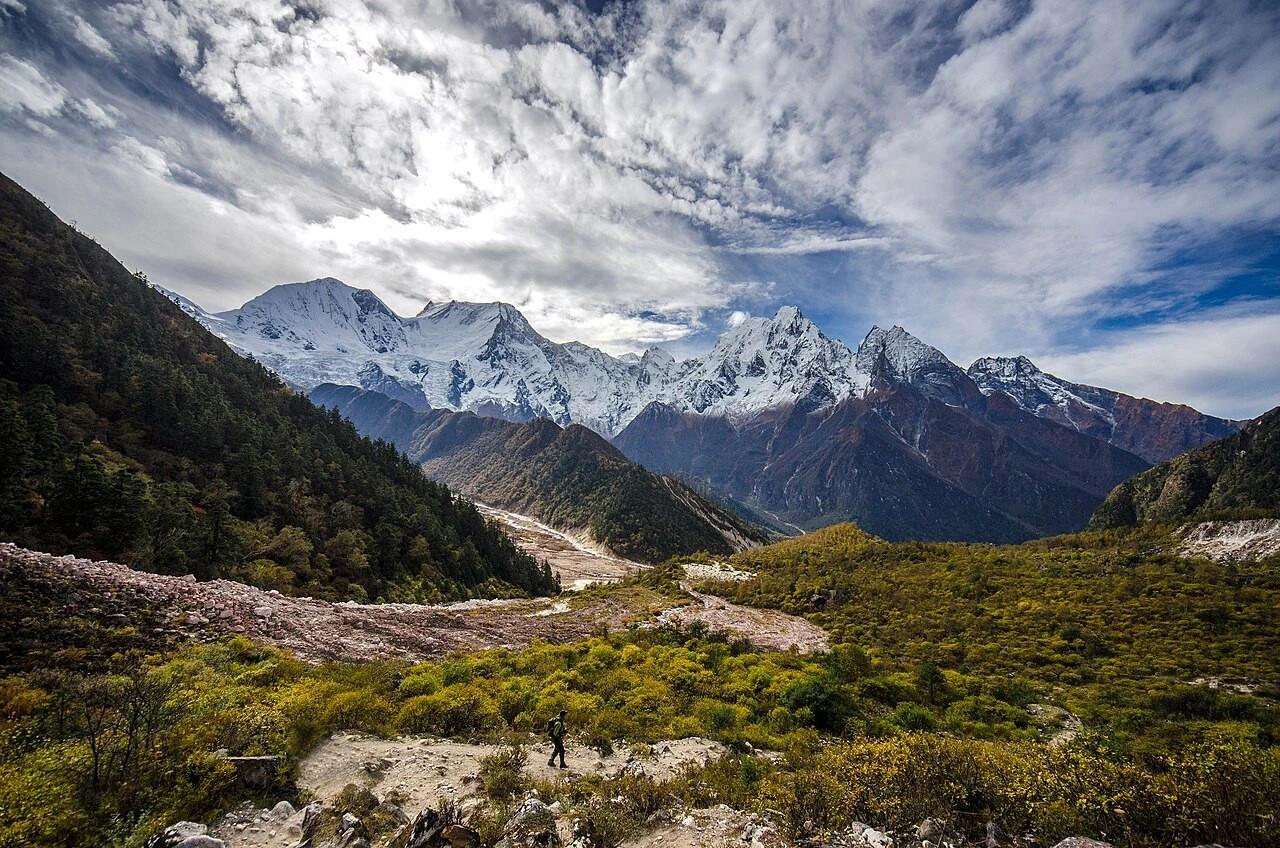
The Manaslu Circuit Trek is one of Nepal’s most awe-inspiring trekking routes, winding around the world’s eighth-highest peak, Mount Manaslu (8,163 m), through remote Himalayan villages, ancient Buddhist monasteries, and dramatic alpine landscapes. While most trekkers flock to this trail during the peak seasons of spring (March–May) and autumn (September–November), a growing number of adventurous hikers are asking a bold question: Is the Manaslu Circuit trek in monsoon season actually worth it?
The short answer? Yes, but only if you know what you’re getting into. Trekking the Manaslu Circuit in the rainy season (June to August) is not for the faint-hearted, but for those who are well-prepared, it offers a uniquely magical, crowd-free Himalayan experience that peak-season trekkers simply never get to witness.
In this comprehensive guide, written with first-hand trekking experience and expert local knowledge, we’ll break down everything you need to know about the Manaslu Circuit trek during monsoon, from trail conditions and safety to permits, gear, pros, and cons. Whether you’re a seasoned trekker or planning your first Himalayan adventure, this guide will help you make a confident decision.
What Is the Manaslu Circuit Trek?
The Manaslu Circuit Trek is a restricted trekking area located in the Gorkha District of northwestern Nepal, bordering Tibet. The classic circuit covers approximately 177 km (110 miles) and takes 14 to 18 days to complete, depending on acclimatization days and pace.
The route starts from Soti Khola (700 m) and ascends dramatically to the Larkya La Pass (5,160 m) before descending to Bimthang and eventually to Dharapani, where it connects with the Annapurna Circuit. The trail traverses diverse ecosystems, from subtropical forests and terraced rice paddies to high-altitude moraines and glaciers.
Because it lies within a restricted zone, all trekkers must obtain a special Manaslu Restricted Area Permit and a Manaslu Conservation Area Permit (MCAP). These regulations help limit trekker numbers and protect the pristine environment, which, ironically, makes the Manaslu Circuit trek in monsoon season an even wilder and more solitary adventure.
Understanding the Monsoon Season in Nepal’s Manaslu Region

Nepal’s monsoon season runs from mid-June to mid-September, with the heaviest rainfall typically occurring in July and August. The Manaslu region, however, has a slightly different microclimate compared to the rest of Nepal. The high mountain walls of the Himalayan range partially block the southwestern monsoon winds, creating a rain-shadow effect in some higher sections of the route.
Monthly Weather Breakdown for Manaslu Circuit Trek
| Month | Rainfall | Avg Temp (Low Altitude) | Trail Condition | Recommended? |
|---|---|---|---|---|
| June | Moderate–Heavy | 15–25°C | Wet, manageable | With prep |
| July | Very Heavy | 18–26°C | Challenging, leeches | Experienced only |
| August | Heavy | 17–25°C | Challenging, leeches | Experienced only |
| Sept (Early) | Moderate, tapering | 14–22°C | Improving | Yes, good value |
Pros of the Manaslu Circuit Trek in Monsoon Season
1. Breathtaking Green Landscapes and Lush Scenery
One of the most compelling reasons to trek the Manaslu Circuit in monsoon is the visual spectacle. The lower valleys transform into vivid shades of emerald green, with rice terraces glowing under overcast skies, waterfalls cascading down every cliff face, and wildflowers bursting with color along the trail. Photographers and nature lovers in particular often describe the monsoon Manaslu as the most beautiful version of the trek.
2. Virtually No Crowds on the Trail
The Manaslu Circuit is already far less crowded than the Everest Base Camp or Annapurna Circuit treks. During monsoon, you’ll often have teahouses entirely to yourself and spend full days on the trail without encountering another trekking group. This isolation is a powerful draw for those seeking a true wilderness adventure in Nepal.
3. Significantly Lower Costs
Teahouse accommodation rates drop by 20–40% during the off-season. Guided treks and trekking packages for Manaslu Circuit in monsoon are also substantially cheaper. If you’re trekking on a budget, the monsoon window offers genuine savings on everything from food to porter fees.
4. Richer Cultural Immersion
With fewer tourists, locals in villages like Samagaon, Samdo, and Lho are more relaxed and willing to engage. You may witness traditional Tibetan Buddhist ceremonies, village festivals, and daily agricultural life, including the rice planting season, in ways that peak-season trekkers rarely experience. The Manaslu region’s Gurung and Tibetan communities offer warm hospitality that feels far more authentic when the trail isn’t busy.
5. The Rain Shadow Effect at Higher Altitudes
Above approximately 3,000–3,500 m, Manaslu region benefits significantly from the Himalayan rain shadow. Many trekkers are surprised to find that the upper sections of the trail around Samagaon (3,530 m), Samdo (3,875 m), and Dharamsala (4,460 m) receive far less rainfall than the lower portions. The skies often clear in the early mornings, offering stunning mountain views, including Mount Manaslu’s dramatic summit, before clouds roll in by midday.
6. Unique Wildlife Sightings
Monsoon is actually excellent for wildlife viewing in the Manaslu Conservation Area. Animals are more active, vegetation is dense, and shy species like the red panda, Himalayan black bear, and various deer species are more frequently spotted. Birdwatchers will particularly enjoy the season, as many Himalayan bird species are active during this time.
Cons and Challenges of Trekking Manaslu Circuit in Rainy Season
1. Slippery Trails and Landslide Risk
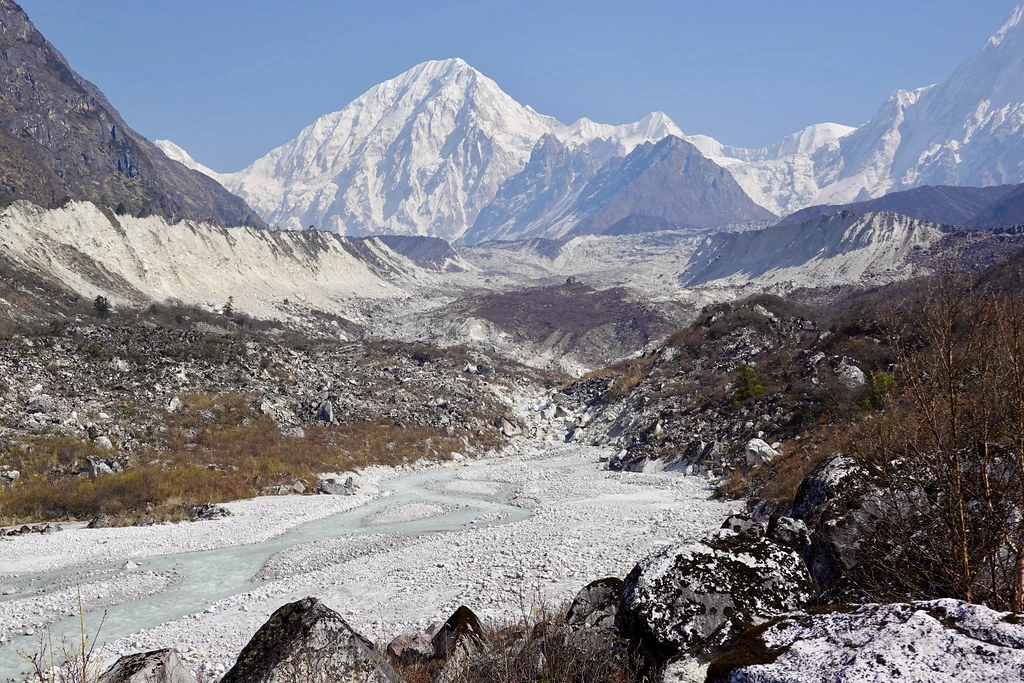
The most significant danger of the Manaslu Circuit trek in monsoon season is the risk of landslides. The heavy rainfall saturates steep slopes and can trigger rockfalls and debris flows, particularly in narrow gorges and river valleys like the Budhi Gandaki Valley between Jagat and Deng. Several sections of the trail require extreme caution, and it’s essential to trek with a knowledgeable local guide who can assess conditions in real time.
Trails become slippery, especially on stone steps and clay paths. Trekking poles are not optional, they are essential for monsoon trekking.
2. Leeches
Below 3,000 m, leeches are an unavoidable reality of monsoon trekking. They appear in large numbers on vegetation and trail surfaces, particularly after rain. While not dangerous, they are unpleasant and can cause secondary skin infections if not properly removed. Leech-proof gaiters and insect-repellent applied to shoes and socks are effective countermeasures.
3. River Crossings Can Become Hazardous
The Budhi Gandaki River and its tributaries swell enormously during monsoon. Suspension bridges may be washed out or in poor condition. Some river crossings that are straightforward in October become genuinely dangerous in August. Always check bridge conditions with your guide or local teahouse operators before crossing.
4. Reduced Mountain Views
Cloud cover is persistent throughout much of the day during peak monsoon months. If your primary goal is to see Mount Manaslu up close and clear, June–August can be disappointing. Views from Larkya La Pass, the emotional and visual high point of the trek, may be entirely obscured by clouds. For mountain photographers, this is a significant drawback.
5. Flight and Route Disruptions
Flights to Kathmandu can be delayed or cancelled during heavy monsoon periods. Domestic flights to and from Besisahar (the common starting point for road access) can also be affected. If you’re on a tight schedule, build at least 2–3 buffer days into your itinerary.
Manaslu Circuit Trail Conditions During Monsoon: A Stage-by-Stage Breakdown
Soti Khola to Machha Khola (Day 1–2)
This lower section is the most affected by monsoon. Trails are narrow, frequently muddy, and lined with dense vegetation. Leeches are common, and the path above the Budhi Gandaki River can be slippery. Trekkers should start early each morning to maximize dry morning hours.
Jagat to Deng (Day 3–5)
The gorge sections here are subject to rockfall and trail washouts. This is the most critical zone to have a local guide. Some trail deviations may be required. The teahouses at Philim and Deng are generally well-maintained year-round.
Deng to Namrung / Lho (Day 6–8)
As elevation increases, conditions improve noticeably. Trails are still wet but less landslide-prone. Morning views of Manaslu, Himalchuli, and Peak 29 are often spectacular during clear morning windows. The forest sections are lush and incredibly photogenic.
Samagaon, Samdo, and Dharamsala (Day 9–12)
This is where the rain shadow truly kicks in. The upper Manaslu valley often has clear or partly cloudy skies, even during peak monsoon. Samagaon is a particularly rewarding village, the Pungyen Gompa monastery here is magnificent, and the views of Manaslu Base Camp glacier are often clear in the early morning.
Larkya La Pass Crossing (Day 13)
Crossing Larkya La Pass (5,160 m) during monsoon is doable but requires careful planning. The pass can receive significant snowfall even in summer, and trails may be icy. Weather windows are unpredictable. Most trekkers cross the pass before dawn, typically leaving Dharamsala at 3–4 AM, to reach the pass before afternoon clouds and possible storms move in. This timing strategy works well during monsoon.
Bimthang to Dharapani (Day 14–16)
The descent is stunning during monsoon, with the valley below Bimthang lush and green. However, the final section toward Dharapani can be muddy and road journey back to Besisahar or Kathmandu may be affected by landslides on the Marshyangdi Highway.
Permits Required for Manaslu Circuit Trek in Monsoon

Permit requirements remain the same year-round. Here’s what you need for the Manaslu Circuit trek in monsoon season:
| Permit | Cost (USD) | Notes |
|---|---|---|
| Manaslu Restricted Area Permit (RAP) | USD 100 (first 7 days) + USD 15/day after | Mandatory; must trek with registered guide |
| Manaslu Conservation Area Permit (MCAP) | USD 30 | One-time fee |
| Annapurna Conservation Area Permit (ACAP) | USD 30 | Required for the Larkya La–Dharapani section |
See Exact Manaslu Circuit Trek Permit Costs & Requirements (2026 Update) →
Essential Gear and Packing List for Manaslu Circuit Trek in Monsoon
Waterproof Essentials
- High-quality waterproof trekking jacket
- Waterproof trekking pants or rain shell trousers
- Waterproof trekking boots with ankle support (must be well broken-in)
- Waterproof backpack cover (bright color recommended for visibility)
- Dry bags or waterproof stuff sacks for electronics and sleeping bag
- Gaiters (standard gaiters for mud; leech-proof gaiters for lower trail)
Trekking Equipment
- Trekking poles, absolutely essential on wet, slippery trails
- Headlamp with extra batteries (for early Larkya La crossing)
- First aid kit including blister care, antiseptic, and bandages
- Insect repellent spray for leeches (DEET-based is most effective)
- Sleeping bag rated to -10°C (nights at high altitude are cold year-round)
- Trekking gloves (waterproof outer layer for Larkya La Pass)
Clothing Layers
- Moisture-wicking base layers (synthetic or merino wool, avoid cotton)
- Mid-layer fleece or down jacket
- Warm hat and buff/balaclava
- Light sun hat or cap for lower altitudes
- Sandals or camp shoes for teahouse use
Documents and Essentials
- All trekking permits in waterproof document bag
- Passport copies in separate dry bag
- Travel insurance documents (rescue coverage is mandatory, see below)
- Emergency cash in Nepali Rupees (ATMs are not available on the trail)
- Satellite communicator or GPS device (recommended for monsoon)
Safety Tips for Manaslu Circuit Trek in Monsoon Season
Safety during monsoon trekking requires a different mindset than peak-season trekking. Here are the most important safety guidelines from experienced Himalayan trekking guides:
1. Always Trek with a Licensed, Experienced Local Guide: This is both a legal requirement and a genuine safety necessity during monsoon. A good Manaslu guide will know which river crossings are safe, which sections are prone to landslides on any given day, and when to wait out weather rather than push forward.
2. Start Each Day Early: Morning hours are generally clearer and drier. Most landslides, flash floods, and afternoon storms happen between 1 PM and 5 PM. Aim to reach your teahouse before noon or early afternoon.
3. Carry a Comprehensive Travel Insurance Policy: This cannot be overstated. Your policy must cover high-altitude helicopter evacuation (to at least 5,200 m). Medical evacuation from the Manaslu region can cost USD 5,000–15,000 without insurance. Check that your policy explicitly covers trekking above 4,000 m.
4. Monitor River Conditions Daily: Speak with your guide and local teahouse owners every evening about conditions ahead. Flash floods can make previously safe crossings impassable within hours.
5. Never Push Through Dangerous Conditions: The monsoon Manaslu demands flexibility. If conditions are unsafe on the Larkya La approach or at any river crossing, wait. No summit or schedule is worth compromising your safety.
6. Acclimatize Properly: Altitude sickness does not take a monsoon break. Follow proper acclimatization protocols regardless of season. Symptoms of AMS (acute mountain sickness) include headache, nausea, dizziness, and loss of appetite. Descend immediately if symptoms worsen.
Best Time to Trek Manaslu Circuit: How Does Monsoon Compare?
Let’s put monsoon season in context with the full year:
| Season | Months | Trail Conditions | Mountain Views | Crowds |
|---|---|---|---|---|
| Spring (Peak) | Mar–May | Excellent | Good (some haze) | Moderate |
| Pre-Monsoon | Late May–June | Good to Wet | Clear early mornings | Low |
| Monsoon | July–Aug | Challenging | Limited (clouds) | Very Low |
| Post-Monsoon | Sept–Early Oct | Excellent | Crystal clear | Low–Moderate |
| Autumn (Peak) | Oct–Nov | Ideal | Best of year | High |
| Winter | Dec–Feb | Snow/Closed | Clear but cold | Very Low |
The ideal monsoon window within the rainy season itself is early June (pre-peak monsoon) and early September (post-monsoon transition). Both offer dramatically improved conditions compared to July–August, while still delivering the crowd-free, lush-green experience that makes monsoon trekking so special.
Find Your Best Time to Trek Manaslu Circuit →
Who Should (and Shouldn’t) Trek Manaslu Circuit in Monsoon?
Ideal Candidates for Monsoon Manaslu Trekking
- Experienced trekkers who have completed at least 2–3 multi-day Himalayan treks
- Nature and landscape photographers seeking dramatic, unusual scenery
- Budget-conscious adventurers looking for maximum value
- Trekkers who prioritize solitude and authentic cultural experiences over mountain views
- Those with flexible schedules who can wait out bad weather
- Travelers combining the trek with a June–September Nepal visit
Who Should Wait for a Better Season
- First-time trekkers with no previous high-altitude or multi-day trail experience
- Those whose primary goal is clear, unobstructed mountain photography
- Trekkers with tight itineraries or non-refundable onward travel bookings
- Anyone with underlying health conditions that could complicate altitude sickness management
- Families trekking with children under 12
Responsible Trekking and Sustainability in the Manaslu Conservation Area
The Manaslu Conservation Area is a UNESCO-recognized biodiversity hotspot and a culturally sacred landscape. Whether you trek in monsoon or peak season, responsible trekking practices are essential:
- Stay on marked trails to prevent erosion, particularly on rain-softened slopes
- Carry out all plastic waste, there are no waste management facilities in remote villages
- Use established teahouses and pay fair prices, don’t undercut local livelihoods
- Respect local customs at monasteries and sacred sites (remove shoes, dress modestly)
- Hire local porters and guides from Gorkha District communities where possible
- Avoid picking wildflowers or disturbing wildlife in the conservation area
- Use water purification tablets or filters rather than buying single-use plastic bottles
Final Verdict: Is the Manaslu Circuit Trek in Monsoon Worth It?
After breaking down every angle of this question, here’s our honest answer: The Manaslu Circuit trek in monsoon season is absolutely worth it, for the right trekker.
If you’re an experienced hiker who values solitude, dramatic natural beauty, cultural authenticity, and a genuine off-the-beaten-path adventure, then trekking Manaslu in the rainy season will likely be one of the most memorable experiences of your life. The lush green landscapes, roaring waterfalls, ancient monsoon-soaked monasteries, and the quiet intimacy of having the trail almost to yourself create a trekking experience that is simply unavailable during peak season.
The challenges are real, wet trails, leeches, limited mountain views, and elevated safety risks demand respect and preparation. But with a licensed guide, the right gear, proper insurance, and a flexible mindset, the Manaslu Circuit in monsoon season is a fully manageable and deeply rewarding adventure.
Our top recommendation: target early June or early September for the best of both worlds, manageable monsoon conditions with the lush green scenery intact. If you’re committed to July or August, book an experienced local guide, invest in quality waterproof gear, and keep your itinerary flexible.
The Manaslu Circuit in monsoon is not just worth it. For the adventurous soul, it might just be the best time of all.
Frequently Asked Questions
Is it safe to trek Manaslu Circuit in July?
July is the most challenging month for the Manaslu Circuit due to peak monsoon rainfall and elevated landslide risk. It can be done safely with an experienced local guide, proper gear, and flexible scheduling. However, we recommend June or September as safer and more rewarding alternatives within the broader off-season.
Can I see Mount Manaslu clearly during monsoon?
Mountain views are limited during July and August due to persistent cloud cover. However, trekkers frequently report clear morning windows, especially at higher elevations (above 3,500 m) where the rain shadow effect applies. Early September often provides stunning clarity as the post-monsoon skies clear.
Do teahouses stay open during monsoon season on Manaslu?
Yes, the majority of teahouses along the Manaslu Circuit remain open during monsoon season. With fewer trekkers, you’ll often have your choice of rooms and more personalized service from local hosts. Some smaller, seasonal teahouses at extreme altitudes (near Larkya La) may have reduced capacity or staffing.
Do I still need a guide for Manaslu Circuit in monsoon?
Yes, absolutely. A licensed guide is legally mandatory for Manaslu Circuit year-round, and this requirement is even more critical during monsoon when trail conditions change rapidly and local knowledge is essential for safety.
Are permits cheaper during monsoon season?
Permit fees are fixed by the Nepal government and do not change by season. The Manaslu Restricted Area Permit costs USD 100 for the first 7 days and USD 15 per additional day, regardless of when you trek. The savings during monsoon come primarily from reduced accommodation and package costs.
What is the best alternative to the full circuit during heavy monsoon?
If conditions on the lower trail sections are severe, some trekkers opt for a shorter Manaslu Base Camp Trek or the upper Nubri Valley section only. Discuss options with your guide based on real-time conditions.